





![MORE THAN A GAME. With two diving catches in the outfield, the Lions showed up defensively, aiding in their victory over the Pacers. One catch was made by Atwood, and the other by McGraw. Throughout the game, the Lions knew that it wasn’t just about their victory today. “I think [playing for cancer] makes it bigger than just a game,” McGraw said. “Knowing that you have a bigger impact in this world than just who you are as one person.”](https://bestofsno.com/wp-content/uploads/2026/05/I70A1454-1-1200x800.jpg)


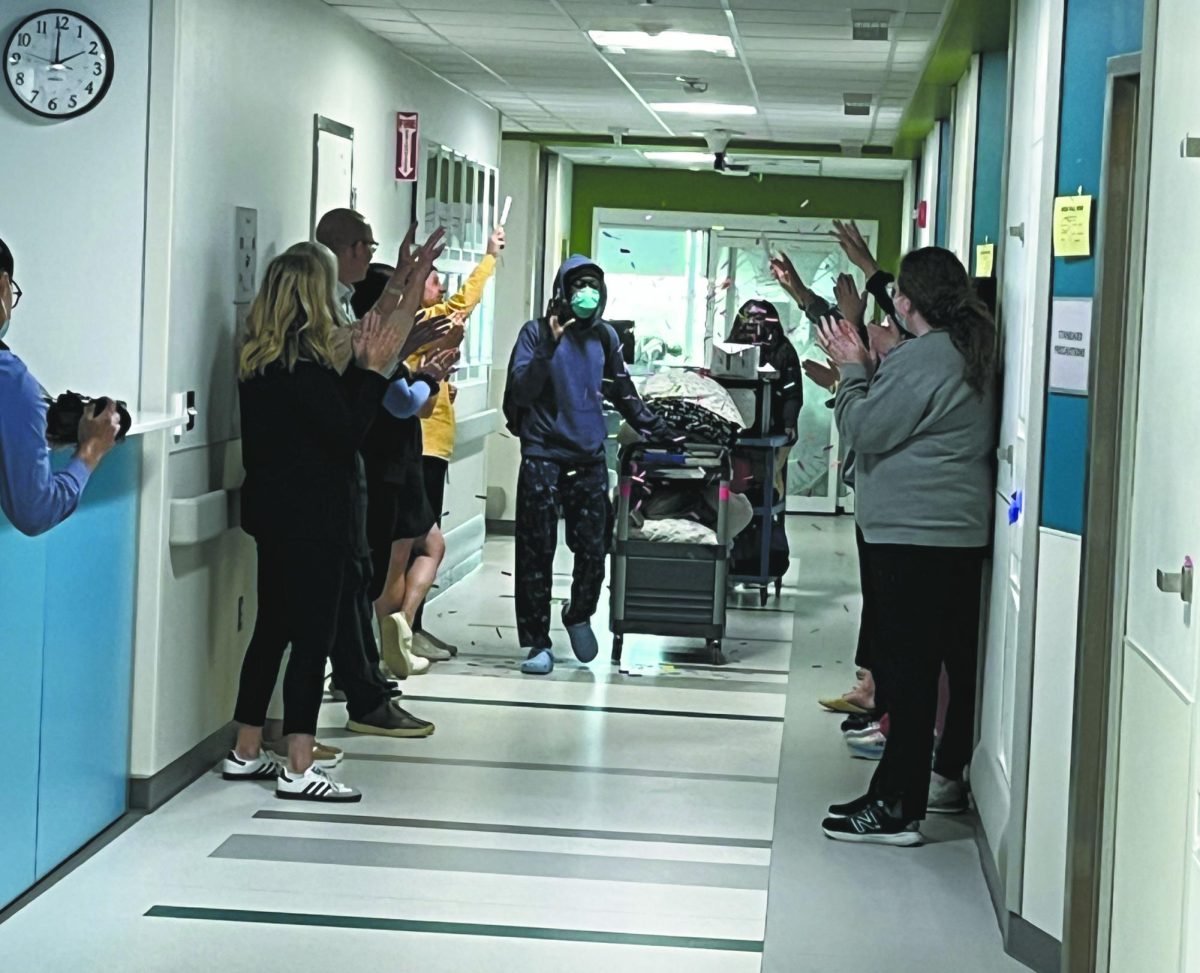
Former Bellevue East student, 21-year-old Martin Mwita Jr. begins the year sickle-cell-free after becoming the first patient from Nebraska to receive the newly approved gene therapy for sickle cell disease in St. Louis.
The gene therapy was approved by the Food and Drug Administration (FDA) to treat sickle cell. Washington University School of Medicine in St. Louis, together with St. Louis Children’s Hospital, is one of the few academic medical centers in the country to offer this treatment. The complex procedure was overseen by Shalini Shenoy, MD, a pediatric professor at WashU Medicine and a leading pediatric hematologist and oncologist at St. Louis Children’s Hospital.
“Gene therapy is different because it uses the patient’s own cells. Doctors collect the patient’s stem cells, fix the genetic problem in a lab, and then put the corrected cells back into the body,” Shenoy said. “This approach, if successful, aims to address the genetic cause of the disease itself, not just the symptoms. Because the cells come from the patient, the risk of immune complications such as graft versus host disease and delayed immune recovery with susceptibility to serious infections is lower than with transplants from other donors.”
Sickle cell disease is a life-threatening condition in which red blood cells become sticky and clump together, blocking blood flow and reducing oxygen delivery throughout the body. Martin Mwita Jr.’s mother, Jacinta Mwita, discovered that Martin Mwita Jr. was born with the disease. By the time he was an infant, he had suffered strokes and blockages in the blood vessels of his lungs, which left him in a coma for three weeks before he recovered. The life expectancy for individuals with sickle cell disease is approximately 35 years.
“The doctors told me that the life expectancy at the time was 35 years, but you don’t know what kind of 35 years you’re going to get,” Jacinta Mwita said, “so right away, quality of life, obviously, when you’re thinking long term, of course, you want to live and I want to see my grandbabies and by that’s God’s grace, so it was a sight for life.”
Martin Mwita Jr. experienced recurring complications when he was young, such as pain crises, strokes and organ failure. As a child, even routine physical activity or changes in the weather could trigger intense pain, leading to frequent hospitalizations. Basketball was a sport Martin Mwita Jr. enjoyed but had to give up. His previous treatment at the University of Nebraska Medical Center (UNMC), his primary clinic at the time, involved blood transfusions every two to three weeks, a strategy that carries risks like infections.
“Internally you just realize at some point that other kids aren’t going through the same kind of thing that you are,” Martin Mwita Jr. said. “But we worked with a team of doctors and nurses at UNMC and they made sure that I was very educated on it. So from a very young age, I was learning that I needed to stay hydrated, limit physical activity, or avoid certain weather conditions because it might affect this or it might trigger that.”
After extensive research, discussions with his pediatrician, and bringing the treatment option to UNMC, Martin Mwita Jr. was presented with the opportunity to live sickle-cell-free. He received a gene therapy called Lyfgenia made by Bluebird Bio, a biotherapeutics company in New Jersey.
“This represents a major leap forward because gene therapy was not considered a possible cure just a decade ago,” Shenoy said. “Only a few centers in the U.S. currently offer this treatment. The success of this treatment also made it possible to develop gene therapy for several other genetic disorders.”
The procedure is complex and was the most expensive procedure at the hospital ever, costing about $3.1 million. According to WashU Medicine, the treatment involves mobilizing the patient’s stem cells into the bloodstream, collecting them, genetically modifying them in a lab, preparing the body with five days of high-dose chemotherapy, and then infusing the modified cells back so the body can produce healthy red blood cells.
“Generally, the treatment process itself usually takes about 3 to 6 months,” Shenoy said. “After the treatment is finished, the body still needs time to start making healthier blood cells. This typically takes another 6 to 12 months, and doctors watch the patient closely during this time to see if hemoglobin levels are rising and if pain episodes are decreasing. Because gene therapy is still relatively new, patients are monitored for up to 15 years to make sure the treatment continues to work and to watch for rare or delayed side effects.”
After the procedure, Martin Mwita Jr. was placed in an apartment in St. Louis over 400 miles away from his home and family to undergo stem cell collection, then the treatment and recovery in December 2024. He went to the hospital for multiple tests that would be sent to the Mayo Clinic, the only lab that can measure the new cells. He was soon allowed to go back home, but had to stay in a quarantined state because his immune system was weak.
“It was just the two of us [Martin Mwita Jr. and Jacinta Mwita], literally the entire time,” Jacinta Mwita said. “I had to be trained as a parent. I had to flush his lines twice a day. I had to take his pressure a few times and document what he was eating, and how much he’s drinking.”
Martin Mwita Jr.’s sister, freshmen Abigail Mwita, also lives with sickle cell disease and faces many of the same challenges as her brother. She has experienced severe complications that required extensive neurological care, including multiple brain surgeries last summer. Abigail is now preparing to undergo the same gene therapy treatment and is expected to be the youngest patient to receive it.
“I know that the process of being cured and being in the hospital for a long time is hardno one likes being in the hospital,” Abigail Mwita said. “I just can’t wait to not have sickle cell so that I can just live my life without having any worries.”
Mwita Jr. has now reached the final stage of his recovery, with only routine immunizations remaining. He is able to live more freely and with less stress, staying as active as possible and playing basketball regularly with his friends. His story was told in a YouTube video titled “A Cure Within: A First in the Treatment of Sickle Cell Disease.”
“I would say for anyone, you know, who’s going through something similar, perhaps the exact same thing [sickle cell]… just trust God,” Martin Mwita Jr. said, “You know, our faith is what’s gotten us through this.”
This story was originally published on The Tom Tom on December 11, 2025.