





![MORE THAN A GAME. With two diving catches in the outfield, the Lions showed up defensively, aiding in their victory over the Pacers. One catch was made by Atwood, and the other by McGraw. Throughout the game, the Lions knew that it wasn’t just about their victory today. “I think [playing for cancer] makes it bigger than just a game,” McGraw said. “Knowing that you have a bigger impact in this world than just who you are as one person.”](https://bestofsno.com/wp-content/uploads/2026/05/I70A1454-1-1200x800.jpg)


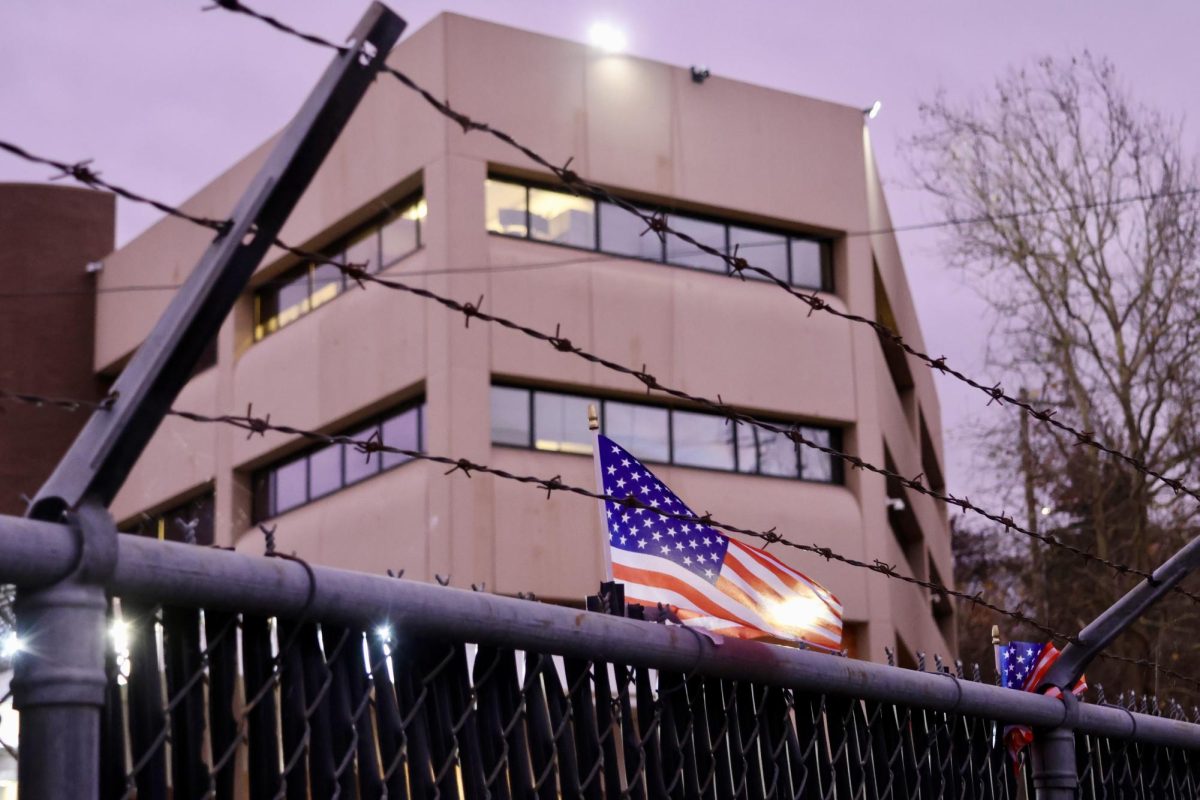
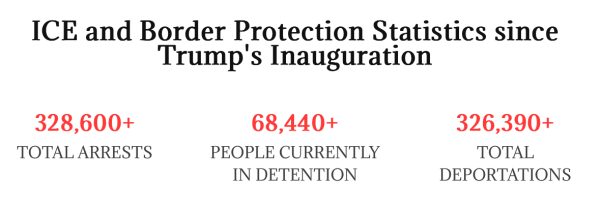
Since President Donald Trump vowed to “take America back” and launched a campaign of mass deportation at the start of his second term, with at least 1,100 arrested by Immigrations and Customs Enforcement (ICE) agents in Oregon, the sanctuary state has become a focal point both for the Trump administration and those who oppose it. The effects are reverberating through communities in every part of Oregon — including La Salle.
“I know that there are students here at La Salle who are deeply impacted by either their community members or their family members feeling like they may be under attack,” counselor Ms. Chris Babinec said. “It is stoking fear in our community to have militarized vehicles in the streets and to have people with face coverings and automatic weapons near our schools.”
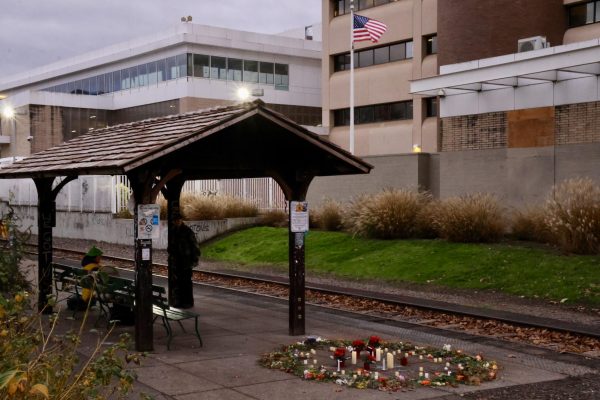
Director of Equity and Inclusion Mr. Mario Garza lives in Woodburn, the largest predominantly Hispanic community in Oregon, where he said those broader effects are obvious.
“The town is different,” Mr. Garza said. “The stores are slower, the restaurants are slower … People are not going out.”
His wife, who works for a social service organization serving predominantly low-income and immigrant communities, has witnessed the shift firsthand at community events.
“She says it’s like being at a cemetery,” Mr. Garza said. “People aren’t necessarily getting that support anymore because they’re afraid to do things.”
But he can also attest to the effects on individuals in the school community.
“We have had families, even starting last year, that are living with a big sense of fear,” Mr. Garza said.
That sense of fear, and its effects, while ever-present for many in the community, are not obvious to everyone.
“Even if we don’t show it on the outside, on the inside, we’re kind of stressed about it,” junior and UNIDOS leader Rebeca Rodriguez said.
Fellow UNIDOS leader and junior Elena Rodriguez described similar unease beneath the surface of daily life. Her father is a U.S. citizen, though not born in the country, and she said his limited English and accent leaves him vulnerable to assumptions about his immigration status.
“We see each other every day, so you think, ‘Life is just going on like any other day,’ but I’ve had serious conversations with my parents,” she said. “I’ve had conversations with my mom like, ‘What would happen if my dad wasn’t here?’ … Maybe I’d have to drop out of school to work too. And it’s crazy, because it hits me sometimes, in class, thinking about it, and I’m like ‘Oh my gosh, like, it’s a possibility that I wouldn’t be here and I’d be working.’”
While the Trump administration has framed its immigration enforcement campaign as targeting “the worst of the worst” criminals, advocacy groups have criticized the campaign for indiscriminately targeting people of Hispanic heritage, with the lion’s share of those detained having no criminal convictions.
These concerns have been amplified as immigration raids have broadened their scope to include many of those following proper legal pathways, and even those on the brink of citizenship or already possessing it.
Immigration attorney Shelylin Waxler, who has worked on humanitarian and family immigration cases for years, emphasized that the delays plaguing the system aren’t new, but the enforcement approach has shifted.
For those following the legal pathways and attempting to gain legal residence in the United States, even when fleeing danger at home or being vouched for by a citizen spouse, wait times are often counted in years.
“It doesn’t make sense to me that they would detain people who are in process, to punish people for delays that are not because of their delay, but are because of the delays of the government process,” Waxler said.
As a lawyer, Waxler has watched the changing contours of the immigration situation for decades and hopes the younger generation is inspired to take action.
“I really hope that young people are inspired to speak up — especially young people who maybe didn’t know about the immigration situation,” she said. “Everybody should be speaking up for a just system where people have the opportunity to become lawful permanent residents in the United States.”
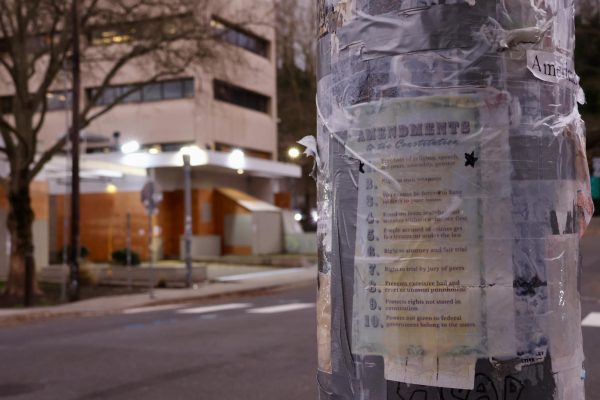
Among La Salle students, perspectives on current immigration enforcement span a wide spectrum.
Some, like senior David Sharyan — Chairman of the National High School Republicans — see the issue through the lens of law and order. His parents are immigrants who came through legal channels, which, he said, shapes how he views the current situation.
“I think both sides absolutely misunderstand each other,” Sharyan said. “The way we solve issues in our country is sitting down and talking to each other … I think if we just settle down and understand, on the one hand, ‘Hey, it’s just about enforcing the laws.’ And on the other hand, if you don’t like the laws, talk to your member of Congress to change it.”
For him, there’s a distinction to be made between the legislature surrounding the recent ICE crackdown and immigration as a wider topic.
“Another misconception is that people who are for ICE and what they’re doing, that they’re anti-immigration,” Sharyan said. “I’m pro-immigration — my parents are immigrants — but I’m anti-illegal immigration. And I think that’s what’s getting kind of confused there.”
Still, he acknowledges the complexity inherent in the issue and emphasizes how things are rarely black and white.
“It’s hard, because it’s the law, but it’s also people’s lives [that] are being upended,” he said. “I’m torn.”
He believes the solution lies in conversation, not conflict.
“People need to settle down and have some dialogue, stop alienating and really demonizing people on both sides,” Sharyan said. “Honestly — not just with this issue but in most issues — if we actually sat down and had a conversation, a lot of people would agree.”
Juniors Jackson Sprando and Vivienne Bishop find themselves weighing similar tensions, with both citing safety as a significant factor in their thinking.
For Sprando, “the only reason why I am in the middle and am not on one side is the safety concerns that come with letting a lot of people in our country — and it doesn’t matter legally or illegally,” he said.
Even with that in mind, Sprando is adamant that “you shouldn’t be categorizing an entire group of people that are trying to live here off of the few bad things that a few of those people have done.”
For Bishop, her perspective as a woman adds another layer to how she thinks about questions of security and policy. Safety is already a constant consideration in her daily life, which shapes how she approaches broader debates.
“It’s pretty scary to just go places alone in general,” Bishop said. “In that aspect, I just think about safety.”
Their main critique of the ICE focuses on execution rather than intent.
“We agree with what they want to do; we disagree with how they do it,” Bishop said.
Senior Miles Timberlake takes a different approach, distinguishing between ICE as an institution and how it’s currently being used.
“ICE is not something that Trump founded,” he said. “ICE has been an agency that has always been for the underlying goal of essentially border protection and immigration services.”
To Timberlake, border enforcement serves a legitimate purpose, but the current administration has pushed the agency beyond its intended scope.
“You can see why they exist,” he said. “It’s the fact that borders need to be protected and immigration enforcement needs to be followed through, but right now, I feel like ICE is being manipulated in a way where it’s going beyond that.”
That distinction matters to Timberlake because he believes the real problem isn’t being addressed.
“Closing the borders and kicking people out is not the way to solve the immigration crisis,” Timberlake said. “It needs reform, because the process we have now is just not enough to meet the constant growth of immigration that’s happening in our country.”
What concerns him is how easily misinformation fuels the debate, pointing to the role of rhetoric in shaping public opinion.
“Hate can translate, almost always, into action … It’s easier to hate,” Timberlake said. “Hate can be tied a lot with misinformation, and it’s honestly a lot of work trying to find the truth behind things, which is partially the reason why hate is so easy, because hate can be built on a lie, and love is something that needs to be built on truth.”
For several students, La Salle’s El Otro Lado immersion trip to El Paso last year marked a turning point in how they understood immigration.
Senior Sawyer Kerrigan described one moment that stayed with him: standing at the border wall itself, looking at the other side through the bars.
“The two sides are the same,” Kerrigan said. “That was the most striking image, just seeing the two sides on the side of the border, and you’re like, ‘It’s the same land’ … That shouldn’t separate us.”

For senior Max Deggendorfer, who also attended the immersion, the experiences he had there are now hitting closer to home.
“Before, it was like, ‘Oh, it’s just in Texas, just in El Paso,” Deggendorfer said. “Well, now it’s more Portland. Now it’s my mom.”
His mother works at Hogan Cedars Elementary School, a Title I school in Gresham, where ICE activity has increased significantly in recent weeks. The fear among families at the school is palpable, and for Deggendorfer, it’s made the situation feel that much more concrete.
“It doesn’t make sense that we’re talking about elementary school students coming home to their families being gone,” Deggendorfer said. “That just shouldn’t be a real discussion.”
Another El Otro Lado attendee, senior Rya Gibbons, acknowledges that her perspective comes from a position of relative safety. She’s white, born in the United States, with no theoretical risk of detention. Yet even from that distance, she said, the enforcement campaign scares her.
For her, the implications extend beyond immigration policy itself.
“If you can easily take away this big group of people, who is next?” Gibbons said. “What other voices are gonna also be taken away? … As a female, are my rights getting taken away? Is my voice getting taken away?”
She notes how the U.S. has long been a nation of immigrants.
“America is a country built on immigrants,” Gibbons said. “How can anyone be illegal if you came in and took this land from people who had it first?”
Gibbons also draws on her own family history when considering who faces enforcement.
“There’s always been discrimination against non-white immigrants — that’s important too,” Gibbons said. “There are a ton of immigrants who come here and are totally fine.” She pointed to her grandparents as an example of this, who immigrated from England but aren’t “worried whatsoever.”
“I think that’s also an important distinction: it’s not all immigrants,” Gibbons said. “It’s not about keeping America American, but just keeping America white.”
Despite everything happening locally — the raids, the fear permeating communities like Woodburn and Gresham, the La Salle families affected — many students note a striking silence about the issue on campus.
“Other students, they don’t really talk about it that much,” Rebeca Rodriguez said. “I feel like they’ve been avoiding the topic.”
Kerrigan attributes part of that silence to the charged nature of the topic itself. As he and several other students noted, immigration has become so politically polarized that many students worry about saying the wrong thing or being judged for their perspective.
“I feel like it’s a pretty dividing topic,” he said. “People have really different opinions on it, and by injecting that fear into it, it just gives it all that more heat that people don’t really want to talk about. They’re worried that they’ll get judged.”
Senior Alex Sale, another student who attended the El Otro Lado immersion, sees the lack of transparency in ICE enforcement as part of the problem.
“There’s been accidental deportations, and that’s a really scary thing,” Sale said. To him, it’s a “sensitive topic because people are just assuming that people are in the wrong.”
According to Kerrigan and Sale, that lack of discussion can be a significant barrier to creating change, both at La Salle and in the country as a whole.
“The less we know, the less we can fight against it, talk about it,” Kerrigan said. “And making it a scary subject to talk about makes it harder to converse about … We can’t talk about it without addressing the biases and assumptions that will come with that. It’s scary to do that.”
Without family members at risk or direct connections to affected communities, it’s easy to remain unaware of what’s happening just miles away, he also said.
“It disappears if you’re not looking for it,” Kerrigan said. “It’s hard to get in touch with the issue if you’re not actively searching for it,”
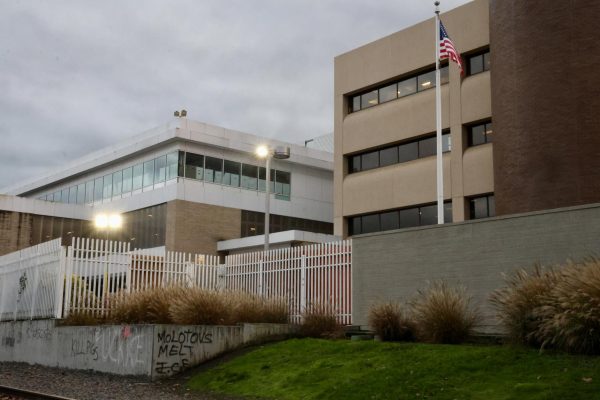
Sprando points to another obstacle shaping how students may understand the issue. Most young people get their news through social media, where what appears in their feeds is determined by what they’re already engaged with.
“With politics in general … you are what the algorithm feeds you,” he said.
Gibbons believes that awareness naturally leads to engagement, but that first step — choosing to learn about something that doesn’t directly affect you — requires intentional effort.
“Like anything, the more you know about it, the more you care about it,” she said.
Elena Rodriguez, who has watched family members cancel plans out of fear of traveling, urges for more acknowledgement of the situation, no matter how big or small.
“Just bringing it up in prayer, some random Tuesday … it tells me that you are thinking about it,” Elena said.
In pursuing that discussion at La Salle, Ms. Babinec emphasizes the importance of sparking it in a healthy way.
“I think it’s tricky business, because you don’t want to put the responsibility on students of color to educate white students about their experience,” Ms. Babinec said. “When adults lead and role model … when we create normalcy around talking about different ethnic traditions, cultures, experiences — and that is a part of our daily conversation, rather than celebrated once a month or on a particular month — I think that that’s going to have a larger impact and bring a lot of people closer.”
Regardless of the range of perspectives held by community members on immigration, Lasaillian core values should lie at the heart of the discussion, Mr. Garza said.
“I respect everybody’s opinion, and I think debate is important — even the immigration debate,” Mr. Garza said. “But we need to look at ways that humanize all people, instead of dehumanizing those [affected].”
This story was originally published on The La Salle Falconer on January 7, 2026.