




![MORE THAN A GAME. With two diving catches in the outfield, the Lions showed up defensively, aiding in their victory over the Pacers. One catch was made by Atwood, and the other by McGraw. Throughout the game, the Lions knew that it wasn’t just about their victory today. “I think [playing for cancer] makes it bigger than just a game,” McGraw said. “Knowing that you have a bigger impact in this world than just who you are as one person.”](https://bestofsno.com/wp-content/uploads/2026/05/I70A1454-1-1200x800.jpg)


Freshman Jackson Voelker follows Instagram Reels made by Bryce Crawford, a 22-year-old social media evangelist who often participates in street evangelism, going out on the streets of cities like LA to talk to people about Jesus.
Crawford always ends his conversations with people on the streets by asking to pray with them. Having started his online missionary movement at 18, Crawford espouses a core idea of Christianity: love the sinner, not the sin.
“I really like him because his testimony is definitely relatable to many youth. He was saved at the lowest point in his life and turned his life around for good,” Voelker said. “He’s only a little older, which also means many kids look up to him.”
A new generation of religious leaders, including Crawford, has connected with younger people, likely helping create an interesting shift in Americans’ attitudes toward religion. A Pew Research Center survey showed the long-running decline in people identifying as Christian in America has plateaued since 2020.
Young people seem to have played a role in this.
In previous Pew surveys, the youngest people would be less likely to identify as Christian than all of the older age groups. But in the most recent survey, people ages 18 to 24 were just as likely to call themselves Christians as people aged 24 to 34, with 46% of each group identifying as Christian. And 24% of the 24- to 32-year-olds attend church at least monthly, while for those 18 to 24 years old, that figure was slightly higher, at 25%.
Meanwhile, the New York Post reported that a recent Harvard study showed that the number of people who identify as Catholic increased by six percent from 2022 to 2023. And according to the Pew survey, other religions are on the rise as well.
“The share of Americans who identify with a religion other than Christianity has been trending upward, from 4.7% in 2007 to 7.1% today,” according to the survey.
It’s perhaps not so much of a surprise to see young people taking an interest in religion in recent years. Many have had a screen shoved in front of them since early childhood. COVID-19 caused a huge setback in their social skills. The country is divided politically, and the price of college is so outrageous that students must consider the possibility of accumulating hundreds of thousands of dollars in debt.
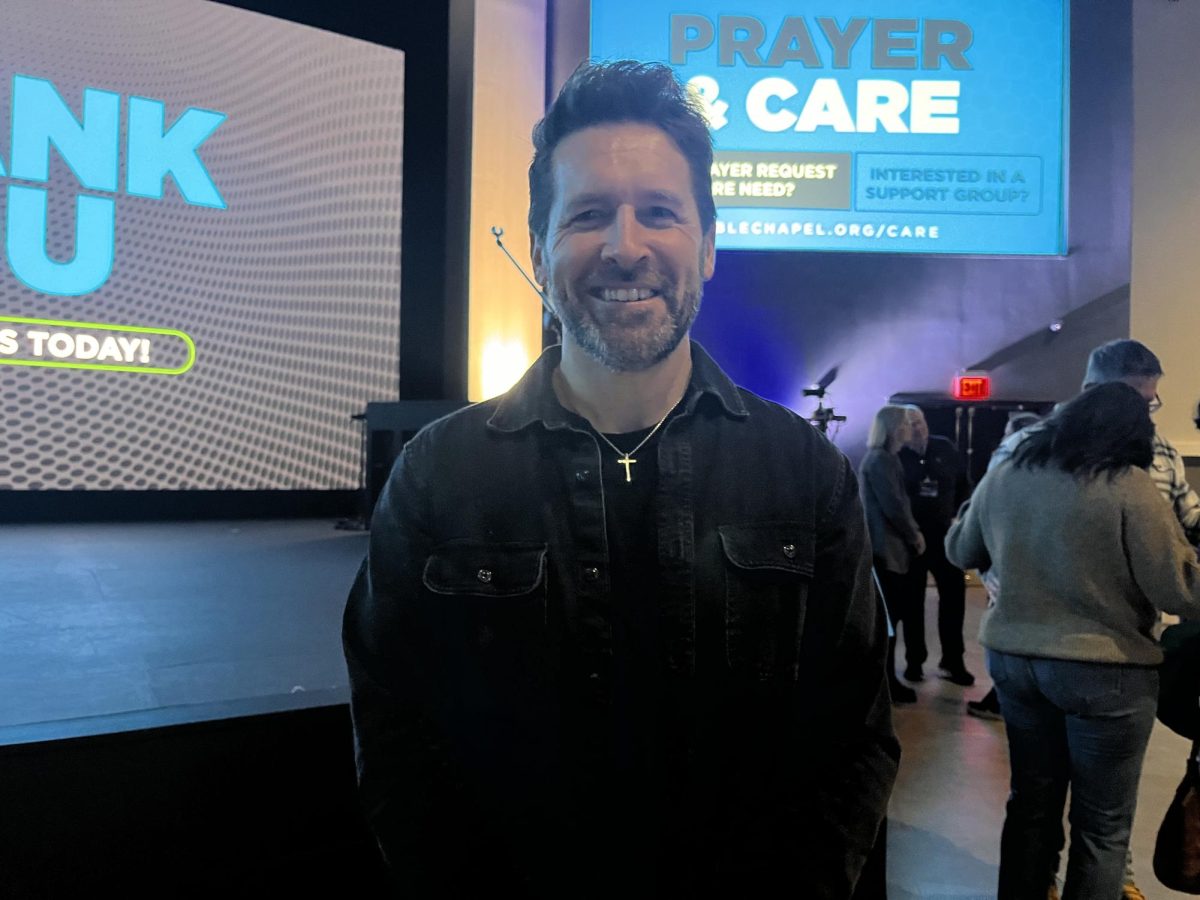
“(Gen Z and Gen Alpha) are the generations growing up in the overload information age, where you have information thrown at you like never before,” Dave DiDonato, the lead pastor of the non-denominational Bible Chapel in McMurray, said, “I believe that all of this has led to this new wave of the next generation, who say they’re done – who want substance, not confusion,” DiDonato said. “Young people are then saying, ‘You know what, I need to look at religion.’ They’re drawn to that.”
Rev. Cristy Wise, a professor of biblical ministries at Waynesburg University, agreed.
“Young people have been and are searching as they sense that what they know is not
working – recognizing there has got to be something beyond this earth,” Wise said.
Imam Chris Caras, the religious director of the Islamic Center of Pittsburgh, said that as young people become aware of the current state of the world, they want to separate themselves from it. Religion is a way to do that.
“The more that people pull back the curtain and realise these things, then the more they want to be divorced from it and go back to the roots of their own identity,” Caras said.
Eric Dart, an associate professor in the theology and philosophy department of Gannon University, believes that there is a new general openness to religion that is unique to young people.
“When we look around the world, I think we are bombarded by bad information that skews the truth, the ugliness of war, and all sorts of bad possibilities,” Dart said. “Religion is a place where questions about goodness, truth, and beauty are given expression and answers.”
Freshman Marissa Brain, a Catholic, sees this as well.
“People are realizing that there is one truth,” Brain said. “People are coming back to God and really listening to him more.”
Sophomore Naima Juma, a non-denominational Christian, said her faith is the backbone of her life.
“The role religion plays in my life is significant,” she said. “It is the basis of my values, how I view the world, and it also influences the kind of person I would like to be.”
Senior Phurba Sherpa, a Buddhist, said he considers his religion as a way of life.
“To me, religion is just a way of living. This is because I am a believer of Buddha, someone who taught people the same lesson in thousands of different ways on how to live a peaceful life,” Sherpa said. “It helps me understand more about life and how it should be lived.”
Not everyone sees young people returning to religion, however.
“I actually see them pushing religion away, and there is nothing wrong with that, since everyone makes their own decisions about how they live their life,” Sherpa said.
Rabbi David Young of the Rodef Shalom Congregation in Oakland said he still sees younger people seeking alternatives to organized religion.
“I’m finding that younger people would rather build their own version of Judaism that is not connected to the way any one organization does it,” Young said.
Certainly, each generation has its own take on religion. During the 1960s and ‘70s, the Jesus movement saw young people pairing liberal or countercultural fashions and attitudes toward traditional church services with a more conservative, Christian attitude.
“I think every generation has its own unique challenges when coming to terms with the
circumstances and context of life,” Dart, from Gannon University, said. “What’s always unique is how truth, beauty, and goodness are pursued.”
The role of social media
Unlike televangelists of earlier decades, who typically preached traditional, structured sermons and were often in affiliation with large churches, social media evangelists like Crawford are often independent. He tailors his approach specifically to the issues the younger generation faces and shows a profound openness to people who are not of the faith.
Crawford is not alone. Pillars of the social media evangelizing community also include Cliff and Stuart Knechtle, a father-and-son duo who often post about their trips to college campuses to answer hard questions from the next generation. Even Christian music artists like Forrest Frank have been contributing to this movement.
With all of these popular Christian social media influencers being relatively young, it makes it easy for young people to resonate with them. But Voelker and Brain see both positives and negatives with social media.
“Sometimes I’ll end up being on it all day, and that pulls me further from getting that time to talk to God. It can also be a positive, teaching me more about faith and how to improve it,” Brain said.
Voelker agreed, saying that among the many good people who can help teach and explain the faith, there are those who hate and try to tear it down.
Juma said she believes that social media can be a front for “lukewarm” Christianity.
“I personally see a lot of youth saying that they are Christian. But for most, it’s just that – saying they are, but not actually practicing the faith apart from putting a scripture in their bio or reposting a video on Jesus,” Juma said. “Some of these people are what Christians call lukewarm, where they do Christian-like things out of routine or to be likable rather than doing it to grow their own faith or by conviction.”
Several area religious leaders, though, said social media is mostly negative. Young, of the Rodef Shalom Congregation, believes that social media can prove harmful.
“When we get something that we can access for free 24 hours a day, seven days a week, we are the product,” Young said.
Caras said that since its creation, technology has been used more for bad than for good.
“I think for the longest time, technology and social media have been avenues for people to push anything to fulfill people’s desires,” Caras said. “A lot of hedonistic content to push the envelope further and further in different ways.”
However, Caras believes more young people are starting to wake up to the harm social media presents and turning to religion instead.
“I would say in the past year, there has been a sort of awakening and awareness that that was the goal (of social media) – to take people away from religion,” Caras said. “And when people realize that, they want to fight back and take control by grounding themselves with something that has thousands of years of stability.”
Rev. Wise, the Waynesburg professor, said technology plays an enormous role in guiding young people to explore religion.
“This is the age of technology, and many churches even streamline their services. Podcasts that are speaking truth about Jesus and sharing the importance of a relationship with him are powerful,” Wise said. “Technology can be a good thing when used with balance and reaching people for Jesus.”
DiDonato agreed, saying that churches need to accept that technology can be used for good.
“Technology is a tool,” DiDonato said. “Post-COVID, we’re seeing the church and Christian leaders grab hold of technology. It’s because that’s where (Gen Z) lives.”
Politics and religion
Charlie Kirk, with his strong influence over social media and young people, guided potentially thousands of them to look into Christianity – and his message was amplified further following the shock of his murder.
“I think we cannot ignore the movement of Charlie Kirk,” DiDonato said. “Yes, there’s a political side, but he was encouraging a biblical worldview, values, and the gospel all the time in his content.”
According to the New York Times, politics likely does play a significant part in the resurgence occurring in recent years. David Campbell, a political scientist from the University of Notre Dame who was interviewed for the Times story, said conservatism and Christianity have become synonymous with each other.
Voelker said his political views would be the same even if he weren’t Christian.
“If I took religion out of politics, I would still have the same views, definitely being conservative,” Voelker said. “I have the same views on politics with and without my religion in play.”
Brain agreed, but she added that this is not the case for everyone.
“I believe being Christian does align with conservative values for the most part. However, it is different for everyone,” Brain said. “I don’t really like talking about politics, but my religion and beliefs do affect my political beliefs.”
As for the future, only time will tell if more young people turn to religion, and if they will stick with it. Juma, though, thinks the future looks bright for religion.
“I think more young people turning back to religion or having a legitimate standpoint on religion will affect the world positively, because people will begin to have some sense of belonging and sense of self,” Juma said.
Wise thinks that with time, more people will feel free to voice their views about faith with confidence. That, Wise said, will lead to a better world.
“The hope is the world will become a better place to live as each person, young and old, realizes they can and do make a difference in the world, starting in their own neighborhoods,” Wise said.
Caras advises religious leaders to stick to the fundamental truths of the faith, but also understand that everyone sees issues differently.
“These values are going to be fairly similar across the board even if their theologies are different,” Caras said. “For example, in Islam, differences of opinion are tolerated, just like many aspects of our own faith. And so we do not let ourselves be divided by those things.”
Religious leaders need to be prepared when young people come to explore their faith. One of the most important ideas when nurturing spiritual growth is intentional discipleship, DiDonato said.
“We can’t just have young people come and get emotionally fired up, and then it fades. Or they come, and we don’t have a place or a plan for them. We want them to know when they come to our church that ‘these people are serious about my demographic,’ ” DiDonato said. “Be real with the teens, be authentic with them, and respect them for their maturity already.”
Simply listening to what young people have to say is vital, Young said. He recognizes this through his own children.
“With my three kids, they don’t want to be told how to do things. They want to experience, and they want to learn, but they don’t want to do it our way because it’s how we’ve always done it,” Young said. “It is extremely critical that faith leaders listen. It all starts with listening.”
This story was originally published on Purbalite on January 13, 2026.