




![MORE THAN A GAME. With two diving catches in the outfield, the Lions showed up defensively, aiding in their victory over the Pacers. One catch was made by Atwood, and the other by McGraw. Throughout the game, the Lions knew that it wasn’t just about their victory today. “I think [playing for cancer] makes it bigger than just a game,” McGraw said. “Knowing that you have a bigger impact in this world than just who you are as one person.”](https://bestofsno.com/wp-content/uploads/2026/05/I70A1454-1-1200x800.jpg)


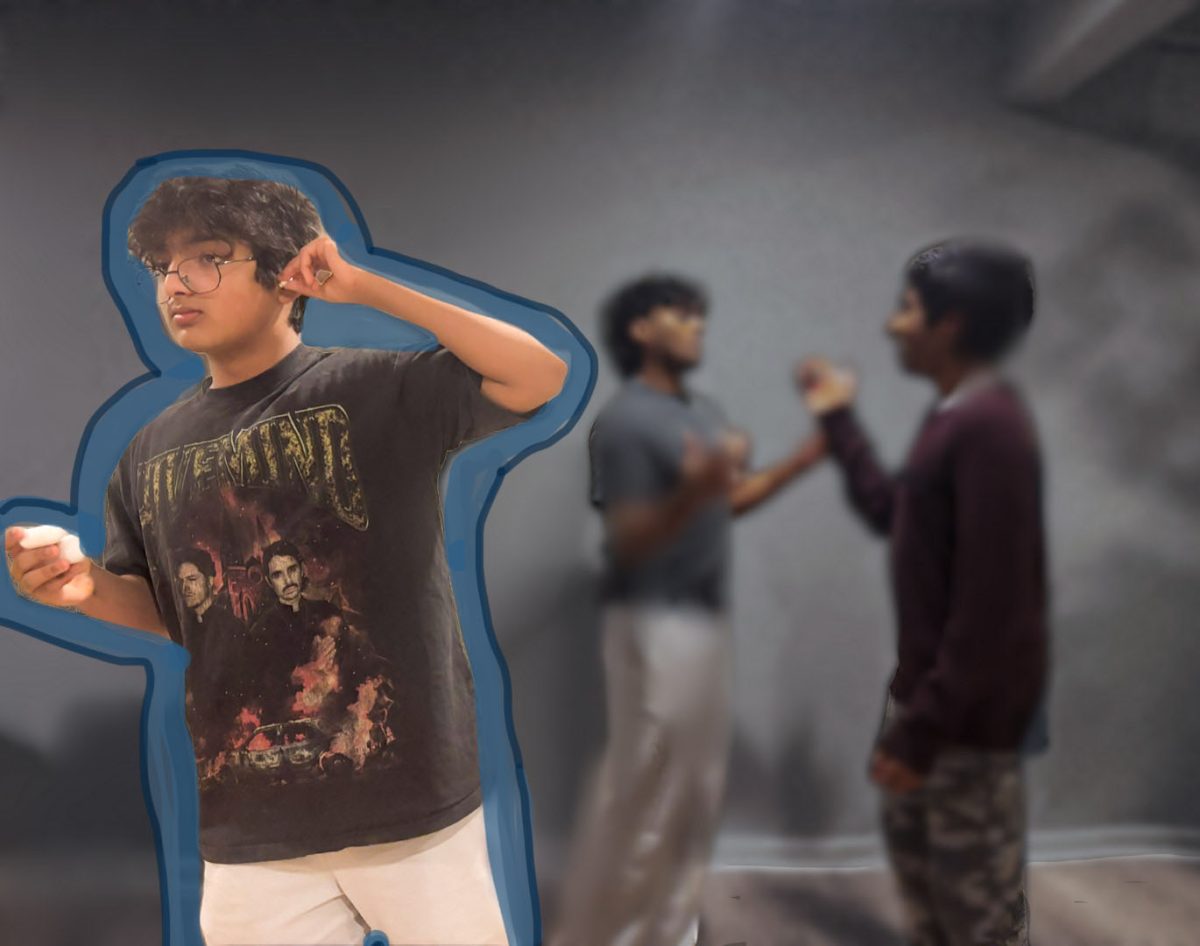
It starts with a small hum, filling the ear with rhythmic beats. Each note gets louder. The world begins to dim as voices fade, footsteps lose their sound, and others fade into the background. Barriers begin to grow, forming walls around people, their voices, and their thoughts — barriers that follow some students into their classrooms and social life at Rock Ridge.
At Rock Ridge, this barrier isn’t metaphorical. It’s real. So real, in fact, that you can find it almost everywhere in the form of foam and plastic. Headphones are everywhere, whether that be over ears during advisory, dangling out of someone’s pocket, or under a hoodie in the back of a classroom.
The appeal for headphones is straightforward: control. In a school where over 1,500 students share hallways, gyms, classrooms, and a cafeteria, headphones offer something unique that not many other things can — the ability to choose what you hear.
Whether it’s to drown out background noise to focus, listen to music for entertainment, or escape from reality, many students at Rock Ridge rely on their headphones.
Yet, when the comfort of headphones is brought to the classroom, that’s when it can start to create issues. “A lot of teachers post stuff already, so I like to go ahead and look at it before the lesson,” junior Peyton Rodgers said. “If they’re just going over what I already went over, I’ll put [my AirPods] in and just kind of not pay too much attention.”
Some students wear their AirPods with the intention of simultaneously listening to music and their teacher’s instruction. “I’ve used it during class, but I only put one AirPod in, so I can hear music and listen to what the teacher’s saying as well,” sophomore Braylen Ozele said. “I do it sometimes to zone out, but also sometimes I might miss some material the teacher’s explaining, so then I’ll take the AirPod out.”
Yet, what teachers have noticed is that the students who wear headphones during instructional time are unable to multitask, which, in return, disrupts their learning. “[I] notice that the kids who are using headphones [are] not even trying to pay attention in class,” AP Psychology and global studies teacher Nicole Spage said. “They’re missing instruction, and so I think, [for] some of those kids, it’s affecting their grade.”
In fact, it’s a complaint heard around departments and levels of education.
“Because students would have music on while I was trying to teach them, and even if they only had one ear going, they still were not able to take in what I was saying,” Latin teacher Emily Gilmore said. “Sometimes students have their AirPods in, and you can’t see it because it’s under their hair, and so just to make sure that people could focus as well as possible, I made sure to ask them to take out their earbuds or take off their headphones because I knew that if they had music playing, they would not be able to [listen].”
Although some students believe they can effectively listen to both their music and instruction from their teacher, according to Johns Hopkins University professor of cognitive science Michael McCloskey, it is a difficult feat, as the human brain isn’t wired to split attention. “A lot of us have the feeling that we can do several different things at one time without much loss on any of them, but it’s really not true,” McCloskey said. “Our ability to divide our attention among different things is pretty limited, especially when they’re both challenging processes, [like] language. It’s not that you’re just listening to two different people talking in the same room. You’re dealing with two completely different mental spaces, and that’s hard to deal with.”
Yet these barriers don’t just prevent students from listening to their teachers in class; they also limit spontaneous social interactions between students, as seen by math teacher Amina Attab. “When they do group work, it’s important for me that they communicate with each other and talk to each other because I noticed in the past, when I used to allow some students to wear them during practice, while they were very focused on their work and doing the assignments, I noticed that they didn’t communicate at all,” Attab said. “[There was] no social interaction whatsoever.”
Spage has also noticed similar behavior among her students. “In psychology class, we sit at tables for a reason because we talk about a lot of issues, and we want to encourage discussion,” Spage said. “When you wear headphones, and you’re taking yourself out of the conversation, then you’re losing out, and the rest of the people around you are also losing out on what you have to say.”
As part of an effort to increase communication among students, the Loudoun County School Board enacted policy 8655 in early January, which prohibits the use of all personal devices, including wireless headphones, for the entire school day. The reasoning stands by the Virginia Department of Education’s statement: “It is essential that students have the opportunity to develop face-to-face conversations and critical in-person communication skills during unstructured school hours.”
Although Rock Ridge is still in the beginning stages of enforcing this policy, not all teachers agree with the idea of a complete ban of headphones — they still believe there are some positive uses of headphones that should be considered.
Some teachers, including Spage, believe that, while headphones should be put away during instructional time, there are some cases when the use of headphones can be beneficial, like for reducing stress and anxiety. “[When] we’re working on a presentation, or we’re getting ready to take a test, we’re setting up a situation where it creates anxiety for them, and for some kids, headphones help tune out everybody else’s chatter, which can add to anxiety for some kids, and sometimes [wearing headphones] helps relax them.”
Other teachers, like English teacher Paul Koch, believe that headphones should be allowed for some instances like independent writing time, which is frequently done in his English classes. “[For] writing in your notebook [and] one-on-one time, headphones on is great,” Koch said. “I do, in particularly my creative writing class, a lot of music related, notebook, journal entries, where we’ll look at, for example, a plot diagram, and I’ll have students find a song that that follows a plot diagram and then practice the freight tags, pyramid, and plot diagramming, and it’s rather confusing when you have 25 kids, and they’re all playing their song out loud.”
Yet, when headphones are used for more than just individual work time in class, creating an almost invisible bubble surrounding a person, a bubble that pushes peers away, — that’s when it can lead to isolation. “When you see someone wearing headphones, and they’re locked in doing their work, head down, focused, you don’t want to bother them,” senior Sadhika Boggavarapu said. “That’s just kind of a sign to leave them alone and [let them] finish their work. So that’s what I want other people to feel like when they see me. When I’m trying to get my work done, I don’t want people to talk to me. I want to just be able to finish it without distractions.”
However, sometimes this bubble doesn’t just stop at the classroom — sometimes it follows them through their daily life and social situations. “There was a time [at] a party [when] I didn’t really know a lot of the people there, and I would just kind of [use] my AirPods so I wouldn’t be forced to talk to [people],” Ozele said. “If they were to ask me a question, they can see my AirPods and [not talk to me].”
Ozele is not alone in using headphones to avoid interaction. “When I was at a wedding, [and] I didn’t know any of [the] people, I put my headphones in immediately,” Rodgers said. “[If I wore my headphones], I wouldn’t have to talk to these awkward 50-year-old people that know me, but I don’t know them, [so I wear headphones] more of just to avoid awkward situations.”
Though students may not realize it, to others, this trailing bubble is often not so invisible. “[When I see someone with headphones, I] probably [would] stay away from them because, in my perspective, I’d probably think they’re in their own world,” junior Rithvik Ravishankar said.
This almost mutual agreement of “Don’t talk to me” when headphones are plugged in not only pushes peers away, but creates a stigmatization that can be seen as disrespectful, even if unintentional, according to Koch. “I think it’s rude,” Koch said. “Like, take your AirPods out if you want to talk. If you want to have a conversation, show me that you’re engaged because, whether you can hear or not, my immediate thinking is you’re working, you’re doing something else, listening to a song, or on FaceTime with someone, [and] I’m not your priority.”
Koch believes this issue is rooted specifically in Gen Z. “I think it’s not just a classroom thing,” Koch said. “[I also see] Gen Z people outside of school who have headphones on all the time. I’ve been talking with my students about the perception that an older person, [such as me who is] Gen X, has on someone who’s holding a conversation with [someone who is Gen Z] while they have headphones in.”
As the use of headphones is becoming more prevalent in the Gen Z population, so is the rise of loneliness. “[We’re seeing] loneliness in young people, which we usually just see in older people, people in their late, late years, and it doesn’t do [this generation] well,” associate professor of developmental psychology at Virginia Commonwealth University Richard Bargdill said. “[In fact, many people in this generation] never develop [sufficient] skills to talk to anybody else about anything; [they] feel awkward speaking to [another] person.”
What Bargdill speaks to mirrors the amount of lonely Gen Z’ers in society. In fact, a Barna 2024 poll revealed that one in three Gen Z’ers report feeling lonely, a number higher than any other generation.
School psychologist Dallas Swirchak believes headphone use limits sociability at a key stage in teen development, contributing to the loneliness epidemic. “[Especially, during the] teenage and adolescence [years, which are a] really critical period [for] your brain development, headphones [have] really reduced our opportunity for spontaneous social interaction: those casual conversations or shared experiences that you might have with someone in the hallway,” Swirchak said. “When students are frequently disengaged by having headphones, [they] miss those chances or opportunities to read social cues, respond to others, or build those relationships.”
This social avoidance can ultimately lead to mental health issues later on. “[Headphone usage] can also reinforce social anxiety or reliance on solitary coping strategies: coping strategies that you do by yourself versus coping strategies that could involve other people,” Swirchak said. “The less that you interact with others, the less confident you’re going to feel in your peer interactions or talking with other people, and over time, it can reinforce that avoidance. Those relationships with other students are especially meaningful during your teenage years, [and] isolation can have those lasting, emotional effects if it hasn’t been addressed.”
As the use of headphones grows, a clear division between what is healthy and what is harmful arises. “Students should try to be aware of when it is and is not an appropriate time to use headphones,” Gilmore said. “If the teacher’s talking, if they’re telling you directions, if they’re giving you information, don’t use the headphones, but if you’re working by yourself, if you’re watching a class-related video, then yes, that is appropriate.”
Yet, when social barriers start to form and follow students around until they’re trapped in their own bubble — when opportunities for social interactions fade into the background as the music in their ears blares louder — that’s when comfort can turn into isolation.
“When going to the real world and working, people need to work in collaboration,” Attab said. “They need to work with other people [and] be able to communicate. I don’t like the isolation headphones can [give students] on a daily basis, where students are choosing to listen to music while doing their work and not interacting with others at all.”
This story was originally published on The Blaze on January 30, 2026.