





![MORE THAN A GAME. With two diving catches in the outfield, the Lions showed up defensively, aiding in their victory over the Pacers. One catch was made by Atwood, and the other by McGraw. Throughout the game, the Lions knew that it wasn’t just about their victory today. “I think [playing for cancer] makes it bigger than just a game,” McGraw said. “Knowing that you have a bigger impact in this world than just who you are as one person.”](https://bestofsno.com/wp-content/uploads/2026/05/I70A1454-1-1200x800.jpg)


The sound of ping-pong paddles and rustle of hackysacks fills the plaza courtyard, as swarms of boys tussle with others in a feverous competition to champion their respective sports.
These games are not typical sports, but rather student-engineered activities that transform classroom furniture into playing arenas. These matches have become more than just a hobby – they are community-building activities derived from student creativity.
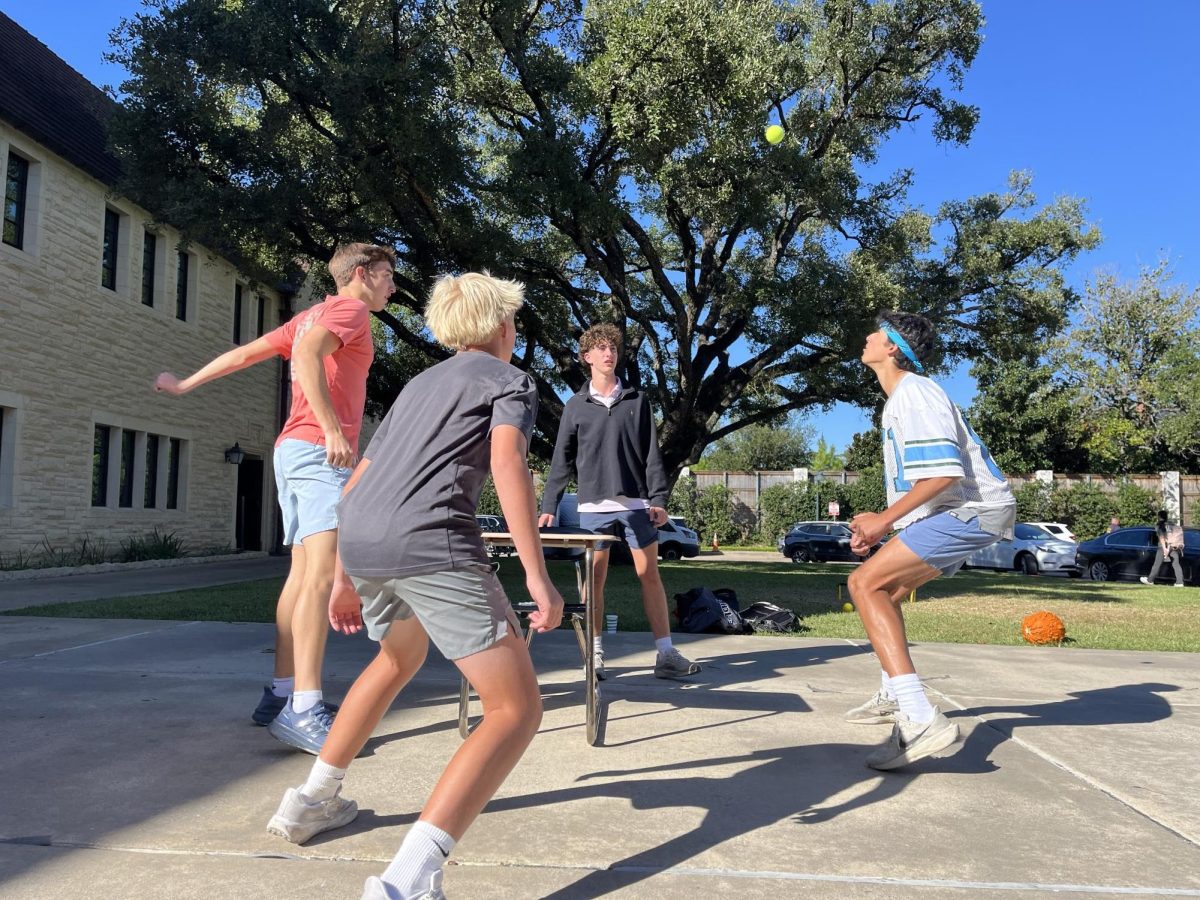
After the plaza’s Spikeball net mysteriously vanished, most students would have forgotten about it. But for a group of sophomore boys, the disappearance meant that they needed to innovate. With nothing but a classroom desk and a stray tennis ball, they created a new campus pastime: Spike Tennis.
“We hauled the desk and tennis ball out to the Great Lawn. It essentially has the same rules as Spikeball – we just swapped the net for a desk,” sophomore Hudson Peakes said.
Players then team up in duos and match up against each other in a king-of-the-hill style.
The hierarchy of skill within Spike Tennis is especially influential to the sophomores. To them, being the best at Spike Tennis translates to character qualities such as personality and respect.
“The most respected person is definitely correlated to the best and most skilled Spike Tennis player,” sophomore and co-founder of Spike Tennis Nathaniel Dow said.
Dow shed light on his partner in crime, sophomore Calder Major, and his perspective on the power rankings within the game.
“We are no doubt the best team in the game,” Dow said after going undefeated for three straight days.
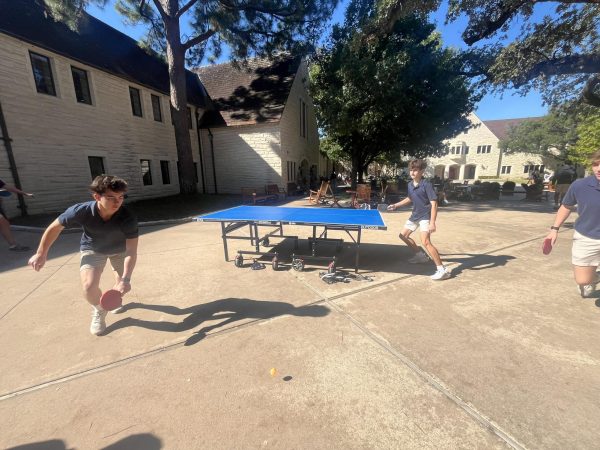
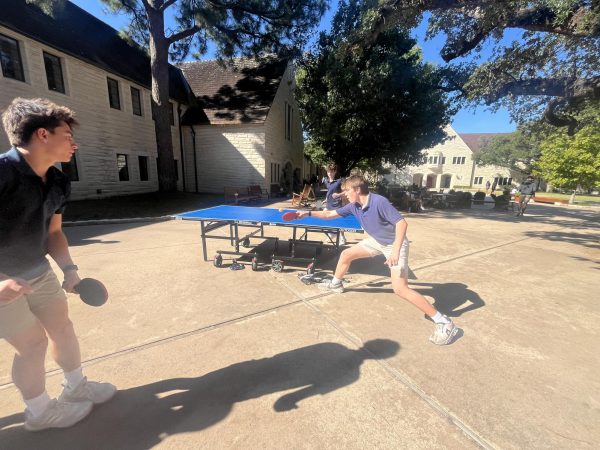
Another mutant game that has caught the attention of students on campus is Jungle Pong, a variant of ping-pong.
“In a normal ping-pong game, there is a net where you hit the ball over back and forth. In Jungle Pong, players are in teams of two,” junior Wyatt Brooks said. “You let the ball bounce on the ground, and you hit it up to your teammate where they can hit it wherever they want.”
However, the current Jungle Pong played on campus is merely an interpretation of the original, carefully molded into a more substantive version of the game.
“When I went to camp, I created Jungle Pong. I saw this game going on, and I felt like I could think of something better. So I went to the drawing boards and created a variant that everyone is going to love,” Brooks said.
For Brooks, his version of Jungle Pong not only is better than the original, but pushed past the harrowing task of promoting diversity and connection.
“I connected the St. John’s community. The more people you have playing, the more likely it is to be a more diverse culture that you’re bringing,” Brooks said.
Although many have reported their enthusiasm for Jungle Pong, they also note the physical toll the game takes on their body. Sophomore Thomas Perich describes some risks of playing Jungle Pong and the best strategies to avoid injury.
“Jungle Pong injuries are pretty scary, so I have a pre-game routine to avoid getting hurt. My routine consists of stretching and running sprints around campus before I play,” Perich said. “You never know what motions you need to use because it’s such a physically-demanding game, and you want to make sure your season doesn’t come to an unfortunate end.”
For Perich, Jungle Pong was less of a fun game to immerse himself in, but more of a lifestyle that fueled and demonstrated his dedication to these games.
“I incorporate Jungle Pong into every aspect of my life because that is what separates the good players from the great players,” Perich said, “My goal is to play at a higher level, maybe in college, and then enter professionally.”
Similar to Spike Tennis, Jungle Pong has a hierarchy of its own that places the elite players in a separate tier.
“Cameron Powell, George Ligums and I are the big three, also known as the three-headed monster, or the three best players in the grade,” Perich said.
This “three-headed monster” is referred to as an unstoppable force on the Jungle Pong court that is not to be reckoned with.
On the Great Lawn, the freshmen have imported their own culture, playing different games such as soccer juggle circles and frisbee.
“You don’t have classes with everybody, so during lunch or DaVinci, getting together and playing games is a stress reliever for everyone,” freshman Leo Blossom said.
All these activities ultimately stem from the original game, the genesis of the campus activities, otherwise known as ping pong.
Before this year, ping pong was the most common game on campus, generating enormous amounts of traction. To appreciate the innovation on campus right now requires a nuanced understanding of the grandfather of Jungle Pong and Spike Tennis.
Brandon Wu, a senior, is one of the several in his friend group that spent the entirety of their high school careers heavily invested in ping pong.
“I have been actively playing ping pong since freshman year,” Wu said. “During any downtime we had, we would just go out there and play until we were tired.”
For many players of the newly created games, ping pong was a precursor, and their innovation would never have come to fruition had it not been for the original ping-pong.
Another important perspective requires an outlook from the eyes of nonparticipants in the games.
Senior Eliza Dorros, a common spectator to the activities, comments on the gender barrier that comes with these games.
“It’s the male friend groups that dominate the games, so girls don’t feel like they can play unless they are in a group of only girls,” Dorros said. “Unless you are friends with the guys that play, it’s difficult to fit in.”
A more positive outlook is held by frequent bystander, Upper school science teacher David Castillo, whose classroom overlooks the Great Lawn, where many of these games occur.
“It makes me happy to see the lengths that students will go through to do something fun and have a competitive game,” Castillo said. “At one point, they came into my room and they made a ball out of tape to just play with that.”
For Castillo, the activities are one of the best things brought to campus, and in particular, he appreciates how the games have brought the school community together.
From the original ping-pong to the new to the innovative Jungle Pong, these games have brought a sense of community on campus, connecting diverse groups and grade levels.
“Most of the time, you see a group of only three or four people sitting at a table. But with the games, you’ve got groups of 9-10 all together as a community,” Castillo said. “That’s not something we see often.”
This story was originally published on The Review on February 12, 2026.