





![MORE THAN A GAME. With two diving catches in the outfield, the Lions showed up defensively, aiding in their victory over the Pacers. One catch was made by Atwood, and the other by McGraw. Throughout the game, the Lions knew that it wasn’t just about their victory today. “I think [playing for cancer] makes it bigger than just a game,” McGraw said. “Knowing that you have a bigger impact in this world than just who you are as one person.”](https://bestofsno.com/wp-content/uploads/2026/05/I70A1454-1-1200x800.jpg)


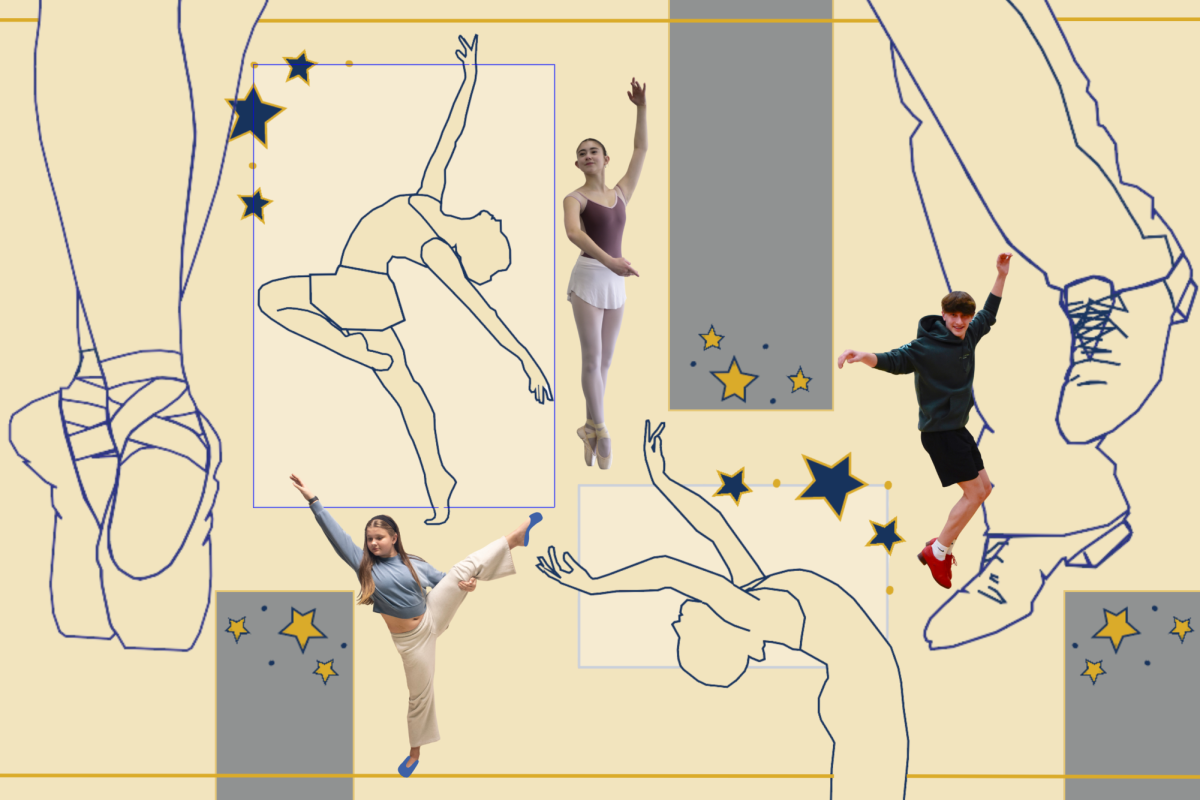
Keeping an audience engaged for hours demands the same passion that first draws dancers to the studio. However, once the curtain lowers and the auditorium seats grow cold, the community forged through endless rehearsals and relentless pressure gives rise to what is known as dance culture.
Nolte Academy is one of the dance studios with the highest enrollment in the Iowa City area. With many West High dancers growing up at Nolte, dance culture has influenced the upbringing — both professionally and socially — of these students. Grace Walker ’26 has been a dancer at the academy for 16 years. Nolte offers a wide variety of dance styles, ranging from ballet to jazz and even modern. Although Walker used to participate in all dance styles, she has specialized in ballet and modern dance since the COVID-19 pandemic.
“I really loved how much of a challenge ballet is — how perfectionistic it is, how there’s always something to be working on,” Walker said. “That is the truth with all styles of dance, but I felt it more with ballet. I also love my ballet teachers and feel at home doing ballet.”
Ballet is a highly coordinated, classical dance form, while modern dance focuses on free-form expression; however, both demand rigor and commitment. Dedicating roughly 30 hours per week to dance, Walker notes how her responsibilities as a senior dancer have accumulated.
“Each day I’ll have my [technique] class, my pointe class and maybe another class. I’m working hard every single day, and it takes a toll eventually,” Walker said. “[Dance] has definitely gotten more intense because it takes up a big part of my life. I’ve always loved it, but there’s a complex love-hate relationship.”
A hectic schedule is not unique to Walker, as many dancers find long hours challenging. Elsie Harms ’28 dances at Nolte and with West High’s dance team while balancing schoolwork and sleep. The Mayo Clinic recommends that teenage athletes get 8-10 hours of sleep to maintain peak athletic performance. Harms, who spends between 15 and 30 hours a week dancing, finds her academic and athletic responsibilities often accumulate, leading to less sleep.
“A lot of times, our workouts get hard and I stay up late to do my homework. After dance, a full day of school and morning practice, I feel like I can’t do any more,” Harms said. “Then I go to bed and wake up, and I’m basically a new person again.”
In order to manage the workload between dance, academics and sleep, Walker employs strategies to resist procrastination.
“[I do] three hours max of schoolwork each night, because school is not a priority over sleep. I have dance all weekend, [so I have to] randomly find time to do it, and it’s a really hard balance because I’m a procrastinator,” Walker said. “I have to throw my phone out of my room, put it on the ground in the hallway and close my door. That’s the only way I can lock in.”
Although the work-life balance is often difficult to grapple with, Harms notes that dance serves as both a creative and a social outlet.
“Dance is my social life. When I’m not at school, I’m usually at dance. [Most of] my friends are also in dance,” Harms said. “I do have friends outside of it, but I’m so much closer to the friends in dance because I see them so often.”
Although dance requires significant physical endurance and time commitment, Walker believes the mental strain is often harder to navigate.
“Not every day is going to be perfect. On bad days, I get really frustrated with myself, like, ‘I hate ballet; I’m going to quit,’” Walker said. “That’s the mentality you sometimes get into, but you have to remember to take a step back and be like, ‘It’s going to be okay.’”
These doubts haven’t restrained Walker; instead, they have fueled some of her greatest accomplishments. For the last 12 years, Walker has performed in the Iowa Conservatory — a Nolte-owned performance and visual arts school — for its annual production of “The Nutcracker.” This past year, Walker danced the role of the Sugar Plum Fairy, one of the production’s lead characters. Although this production demanded more commitment than in prior years, including missing a week of school for rehearsals, Walker values “The Nutcracker” for its multifaceted characters and creative opportunities.
“Sugar [Plum Fairy] is always going to have a special place in my heart,” Walker said. “My other favorite role is Arabian Lead, because the music is slower and I can put my own character into it. A lot of students are like, ‘Oh, it’s just dancing, I’m just going to smile,’ but putting something into it is more fun.”
Carter Wagner ’28 has 11 years of tap dancing experience and has competed at Nolte for five years. Echoing Walker’s emphasis on expression, he channels his own emotions through tap inside and outside the studio.
“Dance is a very expressive thing, I can always express who I am through it,” Wagner said. “Whenever I’m stressing at my desk, you’ll see me tapping my feet.”
Although Wagner uses dance as an outlet for stress, he also finds that his nerves are heightened moments before performing onstage. In order to relax and promote creativity, Wagner engages in backstage rituals with other Nolte dancers.
“Our biggest [backstage ritual] is called a merde circle,” Wagner said. “We go around and hold each other’s hands, and we squeeze, and we say, ‘merde.’ It’s our form of good luck.”
Similarly, a confluence of emotions — excitement and nerves — defines Harms’ experience as a West High dance team competitor. Although the backstage atmosphere can be intense, Harms recalls that there are still moments when dancers bond and support each other.
“In the dressing room, [the atmosphere] is fun. Backstage, everyone is super focused on themselves, so you don’t feel judged,” Harms said. “It’s intimidating before I go on stage, but once I’m on, the nerves go away.”
This competitive atmosphere is seen across the nation. For Walker, she notices this at the San Francisco Ballet School’s Summer Program, one of the nation’s leading ballet summer intensives.
“At these [programs], you’re friendly toward everyone because you never know when you’re going to meet them again. But there was this underlying, intense competitive energy where everyone was like, ‘I’m not your friend, I’m trying to beat you for something,’ even though there was nothing to compete for because we were already there,” Walker said.
This high standard also permeated into the eating habits at the San Francisco Ballet, with Walker finding that many dancers were highly conscious of their food choices as athletes.
“I was in the elevator with this girl, and I was like, ‘I got these cupcakes, [and] I’m so excited to eat them.’ She was like, ‘Oh, those are cool, are they sugar-free?’ And I was like, ‘No, they’re cupcakes.’ And then she’s like, ‘I don’t eat any sugar at all,’” Walker said.
According to a 2024 study from the Translational Health Research Institute, athletes often cut weight through eating disorders — most commonly anorexia and bulimia — under the misconception that lower weight will enhance performance. However, research shows that these practices impair strength due to energy deficits, causing fatigue and reduced stamina, which negatively impacts athletic performance.
Harms has witnessed the prevalence of this issue deeply embedded in the dance community. She believes undereating can negatively impact the quality of a dancer’s performance.
“I’ve noticed that, a lot of times, people who really think about how their body looks are usually less energetic. It’s a lot harder to dance full-out when you don’t have as much fuel,” Harms said. “You can tell that they’re still trying, but it no longer looks like it because they don’t have enough energy. Their body can’t keep up with what they need to do.”
When compared to non-dancers and male dancer counterparts, a 2022 National Library of Medicine study found that female dancers are known to suffer from greater body image dissatisfaction and dysmorphia. However, male dancers face separate treatment in dance culture. As a male dancer, Wagner has noticed how competitive dance culture favors men.
“There definitely is a big male privilege in the dance community, and in theater too,” Wagner said. “There aren’t that many [guys], so they have more opportunities for bigger roles, because [everyone thinks], ‘Wow, a guy can dance; he’s so cool.’”
However, this advantage doesn’t stop Wagner from dedicating hours to the craft. As a dancer at Nolte, a frequent member of Theatre West’s cast and the drama board’s dance captain, he has numerous responsibilities both onstage and behind the curtain.
“Being a dancer, you have to learn that you can’t just get what you want by being there — you have to put in the work and actually try for it,” Wagner said. “The harder you work, the better you get; the better you get, the more you get. I feel like that applies to everything.”
Even as dance culture is widely criticized for its abundance of self-destructive competition, Wagner finds that Nolte’s community is more than just instructors and peers working together.
“Everyone knows everyone. It’s like a family,” Wagner said. “The older kids take care of the little kids, especially [during] competition season. … When someone’s not there or someone’s feeling down, we make sure they’re okay, and we try our best to help each other.”
This story was originally published on West Side Story on January 23, 2026.