





![MORE THAN A GAME. With two diving catches in the outfield, the Lions showed up defensively, aiding in their victory over the Pacers. One catch was made by Atwood, and the other by McGraw. Throughout the game, the Lions knew that it wasn’t just about their victory today. “I think [playing for cancer] makes it bigger than just a game,” McGraw said. “Knowing that you have a bigger impact in this world than just who you are as one person.”](https://bestofsno.com/wp-content/uploads/2026/05/I70A1454-1-1200x800.jpg)


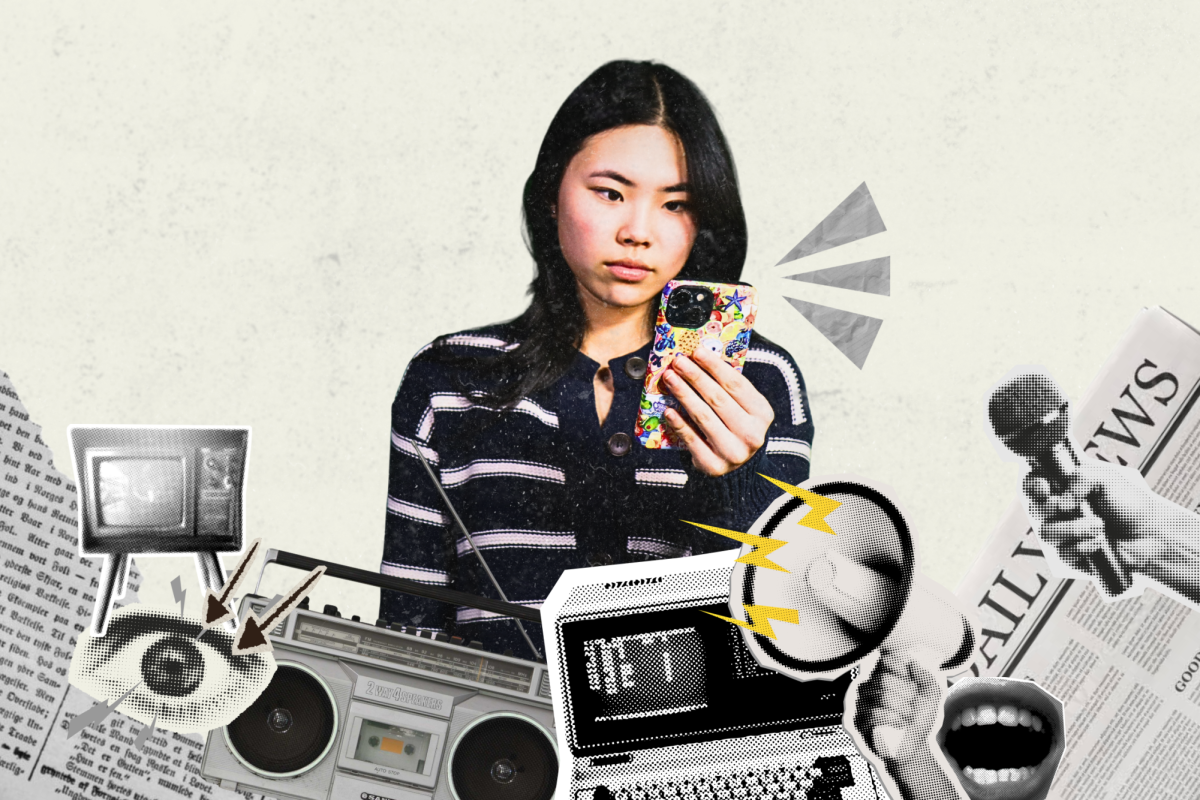
Many can relate to the feeling of scrolling through social media, watching cat videos or “outfit of the day” blogs when, seemingly out of the blue, one is hit with a scary statistic set to high-paced music or sad stories in heartbreaking videos. These come as a result of the changes the internet and social media have had on the way people receive news today.
A phrase that has recently gained traction within media is “news finds me.” This refers to the phenomenon of passively receiving news rather than actively seeking it out. With the rise of the internet, and specifically social media, algorithms tailored to specific political or general news tastes have made it vastly easier to simply rely on algorithmic recommendations for news.
This is a trend not only seen in Gen Z. It has extended to older generations as well, and has significant effects on journalists and how they work to share news. Dr. Sang Jung Kim, an assistant professor at the University of Iowa, defines traditional news as dependent on the journalists themselves, a fact that has shifted with the creation of social media.
“News has been defined as how journalists would select or shape media, drawing on their training to seek trustworthy information that the public should pay attention to,” Sang said. “However, I think social media [has] redefined news as an information piece that is most interesting to the [viewer].”
Background
Almost unfathomable from today’s world, where a score of stories can be found by just a tap on the phone, news used to be incredibly expensive and inaccessible for the average person in America. This shifted in the early 1830s after printing advancements were made, making news more accessible to the general public and laying the groundwork for the news landscape we know today.
Newspapers continued to rule the media industry for decades, only briefly hindered by radio. The two eventually combined, with newspapers buying radio stations to reach a wider audience. Radio served as an immediate news source while newspapers worked better for in-depth coverage.
It was only at the invention of the TV that there was a real shift in the way people interacted with news. It made stories more interactive and immediate, but also caused a shift to increasingly sensationalized, visually attention-grabbing stories. This sometimes came at the expense of in-depth, thoughtful news stories, which is something the internet has exacerbated.
The internet and social media
The internet initially had a slow start for journalism. Erin Jordan, a professor at the University of Iowa’s School of Journalism and Mass Communication, began working in the 1990s, before news was widely posted online.
“When I first started in journalism in the ‘90s, most newspapers or TV stations had just started having a website. We didn’t really know what the potential was for putting content online,” Jordan said.
When online news became popular, it became popular fast. The “internet boom” of the early 2000s turned the internet into a household necessity, which drove demand for online news as well. In fact, according to Pew Research Center, there was an 83% growth in the number of internet users that reported receiving political information from the internet between the years 2000 and 2004.
Now, the internet, largely through social media, is feeding into a system of passively receiving news. It does this primarily through short-form content, which allows people to scroll through their for-you pages and wait for their news to show up.
Conversely, this could actually stimulate personal discovery, as people need to use specific searches to find content and creators they like. However, in general, this has become a minority and doesn’t offset the large numbers of people who often don’t actively seek out information.
Senior Tirza Overholt, having recently organized a school walkout protest about U.S. Immigration and Customs Enforcement, is incredibly active in the political world. Though they still occasionally fall into the trap of seeing media on their for-you page or reposted by their friends without verifying if the information is true.
What Overholt struggles with is finding time to review, fact-check and search for credible news, aside from what is already presented to her from her phone. With the vast amounts of information online, it’s difficult to find time and money for credible news sources independently.
“I don’t really have the time to go and think, ‘I wonder what’s happening in the world today,’ unless I physically build it into my schedule. Because of homework and my involvement in the musical, I’m busy,” Overholt said.
Effects
The trend towards social media news content has had a significant impact on the ability of news stations to function. It has become harder by the year for traditional news programs, and often the journalists that go with them, to find funding for their work. This has led to mergers or staff cuts for publications across the country just to make ends meet.
“People are no longer reading the print product, so the newspapers can’t charge premium prices for advertising, and that really just cut the legs out underneath newspapers for their revenue to support journalism,” Jordan said.
Because social media sites’ goal is to keep users online for as long as possible, recommended news usually needs to be presented as dramatic and attention-grabbing. This often leaves journalists in a limbo as they try to balance the need to be neutral and factual with being engaging enough to attract viewers.
As journalists and media platforms work to keep eyes on their content, it can become draining to the people watching. Overholt feels the constant barrage of expressive content can overwhelm people, which leads people away from news entirely, even from finding more neutral content themselves.
“All you hear and see on social media is how people are being killed, people are being sexually assaulted. There’s so much and we’re 18 and younger. We shouldn’t have to deal with all of the world’s problems and feel like they’re on our backs,” Overholt said.
Sourcing the majority of your news content online also creates algorithmic echo chambers, which have been linked to higher rates of misinformation and political polarization. Employing a “news finds me” mindset on social media can reinforce existing social biases and make people less tolerant of other beliefs.
“Social media is like that double-edged sword. It’s fast, and a lot of people can get information, but people also jump to conclusions, and then they repost it,” Overholt said.
While these concerns are often discussed on a national level, they are reflected in student habits as well. A survey conducted at West found that a majority of students rely on social media as their primary source of news. Few reported actively seeking out news multiple times a day, and many indicated they do not seek it out at all because they believe it reaches them through their feeds. The data illustrates how the “news finds me” mindset has taken hold among students.
How do students at West interact with news? by Minna Abdalla
Conclusion
There are numerous impacts social media news has had on journalists and their audiences. However, according to Jordan and Sang, this shift doesn’t have to be all bad; it is simply changing the way journalists have to operate in a digital environment.
Social media allows journalists to reach a wider audience in new and creative ways like infographics, videos and podcasts, and Jordan encourages her students to take advantage of the different options available for presenting information. By using social media to promote stories in a way that doesn’t overwhelm audiences, journalists can still connect and share their work while benefiting users who are looking for credible news.
While there are concerns with how journalism is progressing within an increasingly digitized world, Jordan also emphasizes how there will always be a demand for trustworthy journalism, which will allow journalists to overcome the challenges presented to them. Some small ways to expand past the “news finds me mindset” is setting aside a few minutes a day to read or listen to credible sources, fact-checking before sharing, or supporting publications through subscriptions or donations.
“I do have hope and confidence that because journalism is such an important part of supporting our democracy, we’ve got to find a way to do it. And I think throughout our country’s history, when we needed to do something, we did it,” Jordan said.
Additional reporting by Minna Abdalla
This story was originally published on West Side Story on March 3, 2026.