





![MORE THAN A GAME. With two diving catches in the outfield, the Lions showed up defensively, aiding in their victory over the Pacers. One catch was made by Atwood, and the other by McGraw. Throughout the game, the Lions knew that it wasn’t just about their victory today. “I think [playing for cancer] makes it bigger than just a game,” McGraw said. “Knowing that you have a bigger impact in this world than just who you are as one person.”](https://bestofsno.com/wp-content/uploads/2026/05/I70A1454-1-1200x800.jpg)


Whether collecting 12 CDs of Taylor Swift’s “The Tortured Poets Department” or constantly refreshing social media pages during the Golden Globes, fan culture — a globalized phenomenon connecting fans through their love for celebrities, media or sports — has become a normalized part of everyday life. However, fans across different communities can start to toe the line between innocent appreciation and obsession.
With the rise of Hollywood stars such as Clara Bow and Charlie Chaplin, fan culture first emerged in the 1920s, characterized by adopting the latest movie-star hairstyles to sending out heartfelt letters to their favorite actors. By the 1960s, entertainment ranged from live performances to films as the number of television users skyrocketed from 8,000 to 45.7 million. This influx of at-home screening paved the way for the growth of many series, including “Star Trek” and “Charlie’s Angels,” and the start of fandom conventions. Alongside the expansion of television fandoms, a new era of rock and roll music emerged, marked by Beatlemania and fervent Rolling Stones fans. Dr. Kembrew McLeod, the Chair of Communication Studies at the University of Iowa, explains how these fandoms expressed their passion during the mid-20th century.
“Before social media, there were what were called ‘zines,’ which is short for magazine. They’re DIY, amateur-made publications,” McLeod said. “When [they] first emerged, punk rock was ignored by mass media or misrepresented, so they had their own media outlets. Fans would go to a show, interview their favorite band and publish the interview in [zines].”
Since then, the rise of social media in the early 2000s has redefined the connection between celebrities and their audiences. In contrast to previous media outlets like tabloids and newspapers, social platforms such as Instagram and X, formerly known as Twitter, serve as a new medium to facilitate communication between celebrities and fans. Social media extends beyond the scope of in-person interactions, sharing the latest personal updates with fans at unprecedented rates. At West, Davis Day ’28 echoes this growth in internet fan culture firsthand through one of his favorite artists, Madison Beer — a rising pop singer-songwriter.
“Madison Beer is very personal with her fans at events. She’ll talk to them on Twitter, and she knows so much about them,” Day said. “I definitely think [her fan] base creates a [sense of] community.”
Lily Polgreen ’27, an avid movie enthusiast and student at West High, embraces the positive face-to-face interactions that fan communities offer, sharing her passion through conversations with others.
“I can bring up a lot to conversations when talking to other people who have shared interests [in] film, arts and pop culture. It [conveys ] a sense of understanding, not having to justify my interests to somebody else because they like it too,” Polgreen said. “[You don’t] feel like you’re going to be judged, or what you’re interested in is dumb or weird.”
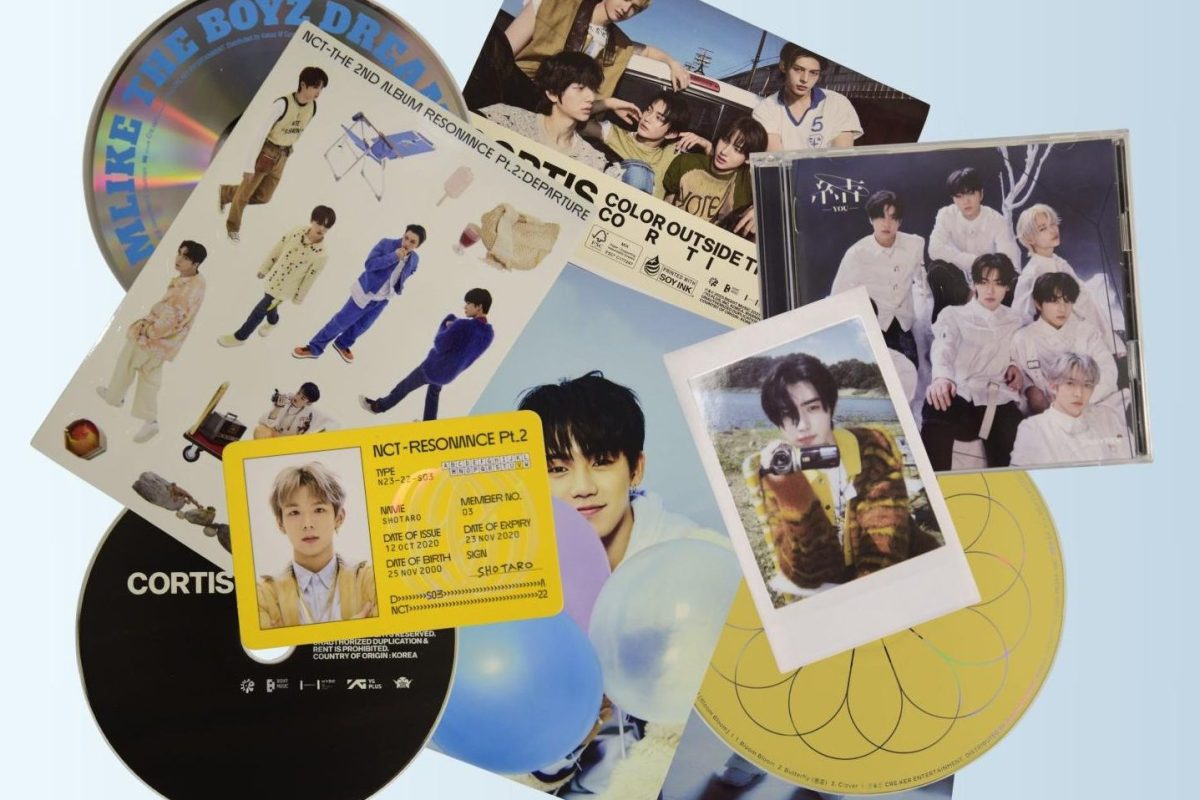
Thousands of miles away in South Korea, K-pop has been around since 1992, capturing various music styles ranging from hip-hop to R&B. The genre broke into the Western music industry predominantly through social media and global exposure in the 2000s. Thara Rajagopal ’26, a member of West High’s Kpoppies dance club, has been a K-pop fan since 2019, first listening to BTS, and now listening primarily to CORTIS. She explains how her passion for K-pop was initially fueled through these online communities.
“It started with BTS and BLACKPINK. I found them on YouTube, and people were making fun of me because it wasn’t mainstream,” Rajagopal said. “During quarantine, I used to post K-pop TikToks, and I had a bunch of online friends. I could talk to them about it, and it was nice because no one in person was also into it.”
In the past, K-pop idols were criticized for their weight, skin tone and their problematic portrayal of black culture. However, Rajagopal has noticed that K-pop has evolved to diversify the representation of beauty and cultures alike.
“K-pop has always taken inspiration from Black American music and Black culture. It used to be tied with a lot of racism, and they used to not respect the culture that they got most of their music inspiration from. Now it has more appreciation: you see idols working with Black artists or Black choreographers.” Rajagopal said. “Black American style translated into K-pop too, especially with the new bands. They’re more global, [and] they don’t cater as much to Korean beauty standards.”
Today, devoted fans have become an essential part of the entertainment industry, affecting both marketing and production. Sales are driven by consumerist behaviors from fans emotionally invested in certain celebrities’ lives. The digitization of mass media has allowed fans to embrace both a physical and virtual sphere to connect with their idols, leading to what is known as a “fan economy.” McLeod explains how stars have embraced this dynamic into their entire brand persona.
“[For] some celebrities, that’s the brand they establish — that they are this transparent person. That becomes how they’re marketed, and what their appeal is,” McLeod said. “A lot of the ways that complete unknowns build themselves up into being stars is by marketing themselves as someone who’s accessible and relatable to their fans.”
Recently, TikTok has become a popular app for emerging artists to cater to a more niche audience than previously possible, allowing them to make music that doesn’t strictly follow industry norms. McLeod highlights the opportunities social media provides for people to expand their followings.
“Within social media today, there’s a way you can sustain a career where you’re not a Taylor Swift or Miley Cyrus at a multiplatinum, visible stature. You can build a career that’s much more mid-level, but still sustainable,” McLeod said.
For the most part, fan culture has led to positive additions to these industries, allowing new artists and actors to build a loyal following through these relationships. However, with new live location updates, personal pay-to-chat apps and the free use of generative AI, celebrities’ lives are no longer their own. As a result of increased accessibility to celebrities’ lives, parasocial relationships — one-sided emotional relationships with celebrities — run rampant, with 61.1% of teens experiencing a parasocial relationship in their lives, according to the National Institutes of Health. Day believes there is a difference between appreciating a celebrity and being obsessed with them.
“It’s a fine line; it has a lot to do with perception,” Day said. “That line is crossed when people don’t see them anymore as an artist. They see them as something more personal, [and] feel like they’re entitled to know things.”
These relationships are prevalent in the entertainment industry, where fans can unintentionally blur the lines between actors and their characters. Polgreen finds that this is especially true when people only see a celebrity’s on-screen persona.
“A lot of people act like they know these [actors], and sometimes it’s hard to separate that. When you see someone on TV, you think that they’re exactly like that in real life, but that’s not the case; it’s acting,” Polgreen said.
Similar to movies and music, sports have dominated television broadcasting since the 1960s, drawing in a large fan base who want to experience the thrill of rooting for a certain player or team, not unlike how other fans attend their favorite artist’s concert. John Boylan, an AP English Language and Composition teacher at West, explains how his passion for basketball started with his grandfather, Johnny Orr, who held the Iowa State University head coaching position from 1980 to 1994.
“I grew up going to all of the games,” Boylan said. “My family was super involved. We used to travel around for all of those games around the conference and around the country for NCAA tournaments.”
However, these intense emotional investments can be exploited, with the recent development of online sports betting apps like FanDuel or DraftKings creating tense atmospheres among fans during games. People have become increasingly upset with players after losing bets on certain game statistics or results, leading to 37% of Division I athletes receiving negative comments on social media. As a non-betting fan, Boylan emphasizes the importance of empathy and staying realistic while watching the games.
“The thing that feels toxic to me, especially as I get older, is the real resentment that a lot of people have towards young people who are positive or trying their best,” Boylan said. “I’m like, ‘Man, that’s a kid who’s like 19.’”
Despite criticism from other teams’ supporters, Boylan describes how emotional reactions to the game and being in one space continue to drive the connection between fans.
“There’s such a sense of togetherness, shared joy, frustration, excitement and anger [in fan culture]. All the human feelings are really raw, and you’re [experiencing] them live together,” Boylan said. “That’s kind of the fun and magic of it. It’s like [you have] personal connections with people over this shared interest and hobby.”
This story was originally published on West Side Story on March 7, 2026.