




![MORE THAN A GAME. With two diving catches in the outfield, the Lions showed up defensively, aiding in their victory over the Pacers. One catch was made by Atwood, and the other by McGraw. Throughout the game, the Lions knew that it wasn’t just about their victory today. “I think [playing for cancer] makes it bigger than just a game,” McGraw said. “Knowing that you have a bigger impact in this world than just who you are as one person.”](https://bestofsno.com/wp-content/uploads/2026/05/I70A1454-1-1200x800.jpg)


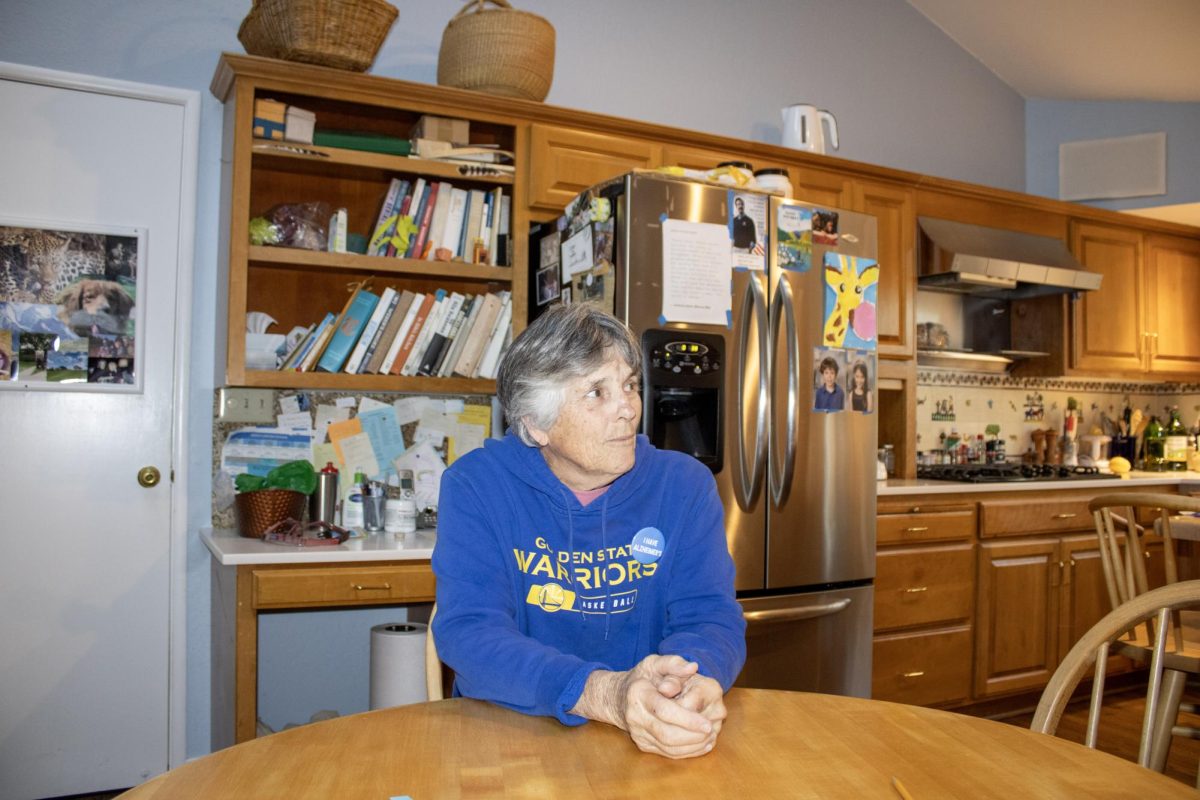
Longtime Los Altos High School volunteer, Anne Battle, called her daughter, Lisa, with a simple request. Anne wanted a shirt with the statement “I have Alzheimer’s” on it. A few minutes later, Anne called again. Perhaps a pin was better — it could be adapted to any outfit.
“She just needed someone to say it out loud,” Lisa, who teaches English and acting at LAHS, said.
Alzheimer’s is a neurological disorder that destroys cognitive functioning, resulting in memory loss, and is no stranger to the Battle family. When Anne’s mother was struggling with it through the late 90s and early 2000s, her dad forbade the family from using the “A-word.” Now, several years after her mother’s passing and her own diagnosis, Anne wears the pin in public to bring awareness to it.
“ I want to normalize it like cancer,” Anne, 73, said. “ I want people to say, ‘You have Alzheimer’s? I have Alzheimer’s! How is it for you?’ Because it’s not the end of the world.”
Anne recalled one particular moment that reminded her of this desire.
Waiting to check out at her local Goodwill, Anne was talking football with a 49ers fan when he abruptly exclaimed: “I have Alzheimer’s.” He didn’t share his diagnosis looking for a response, nor did he seem to know Anne has it too.
Anne said it was refreshing to see someone claim the condition without shame.
Anne’s condition is nowhere near uncommon. More than 7 million Americans live with Alzheimer’s, making it the seventh leading cause of death. Still, Anne has struggled to find anyone — besides her serendipitous Goodwill encounter — who will talk openly about it.
“We don’t understand what she’s going through,” Lisa said. “I don’t know what it’s like to not trust your own brain.”
Fitting with a personality that many who know her describe as “blunt,” Anne speaks often and directly about her experience with Alzheimer’s to anyone who will listen, and to a therapist every other week.

Alzheimer’s has been passed down by Battle women for generations — two-thirds of Americans with Alzheimer’s are women, according to Harvard Health. A few years after her mother’s passing in 2008, a 23andMe test reported the presence of both APOE genes, essentially a promise she would develop Alzheimer’s. Anne said it was hard to come to terms with this certainty, and for several months, she felt angry and depressed.
Anne knew she needed to take action. She soon started researching Alzheimer’s and clinical trials to reclaim agency of her life despite the looming disorder.
“ I don’t think [her mindset] is a switch; it’s not overnight,” said Laura Reed, Anne’s longtime friend. “Two steps forward, a couple steps back — at times, certain days are better than others. But her attitude now is, ‘I just wanna be positive.’”
“When she learned that she had this disease, she was not going to take it lying down,” Lisa said. “She was going to find ways to make the biggest, brightest future for herself.”
In true Ted Lasso fashion — a show Anne said she has watched eight times — sometimes “being a goldfish” has its perks.
“There’s a lot of things that have gone well for me since that point,” Anne said. “I’m way less judgmental now because I’m screwing up all over the place.”
Putting hope into practice

During her research, Anne found “The End of Alzheimer’s,” a New York Times bestseller by neuroscientist Dale Bredesen. The book outlined a protocol that supposedly helps reverse the cognitive decay of Alzheimer’s.
For the next five years, Anne religiously followed the Bredesen Protocol: she took an array of daily supplements, cut out gluten, alcohol and sugar and exercised excessively.
“It got to a point where the dog got tired” keeping up with her, Lisa said. In the process she lost 50 pounds.
While the Bredesen Protocol brought Anne a healthy lifestyle, she said it also gave her hope — which she now recognizes as false. After talking to a doctor several years later, she realized it did almost nothing for her condition.
“It was bullshit,” Anne said. “Not all of it, but a lot of it. The title was not fair; it’s not the end of Alzheimer’s.”
Now Anne spends her time learning new talents. She said she’s moved by music, and often retreats to play guitar in Lisa’s childhood bedroom.
Anne said she is fascinated by how Alzheimer’s has changed her brain chemistry — “The Luckiest” by Ben Folds, a recent “on repeat,” often washes away her anger. Outside of her musical hobbies, Anne flexes her mental muscles by playing ping-pong, Bridge and beating her friend Librarian Gordon Jack in Wordle.
Years after her diagnosis, Anne often has a gut feeling that she’s forgotten something. Lisa said she usually does so once every hour. To combat her memory loss, Anne works with a speech pathologist to strategize memory recall — besides physical hand movements and mental categorization, Anne uses sticky notes on a whiteboard to document upcoming events.

(Matilda Haney Foulds)
“ You forget things in a remarkable way,” Anne said. “ I saw it, I recognized it, it was in my brain and it was gone.”
For the last year, Anne received blood transfusions at UC San Francisco, carpooling once a month with friend and former LAHS English teacher Joanne Miyahara. However, she was forced to stop after experiencing intense headaches — which she learned were caused by micro-bleeds in her brain.
“Now I feel like I need to start accepting that I can’t do much else, I can’t make it better,” Anne said the day after ending treatment.
Now, after a week of reflection, Anne said she’s feeling more resolved. Going forward, she plans to focus on living.
Family bearings & burdens
Near the end of her life, Anne’s mother, Carol, forgot most things — but she always remembered Anne. Lisa said her grandmother loved pudding, was self-assured like Anne and, most of all, full of positivity.
Anne said she must have inherited that from Carol.
For 10 years, Anne took care of Carol, knowing her fate would be a close reflection. That wasn’t easy for Lisa to watch.
“It was hard for me, knowing that my rock was watching her rock disappear slowly,” Lisa said.
When Lisa visited her grandmother, she was often asked if she got admitted to Stanford — Carol and Anne’s alma mater. To escape reliving disappointment, Lisa told a white lie.
“One time I said, ‘Whitman is like the Stanford of Washington,’ and she asked, ‘Is it part of the campus?’” Lisa said. “I’m like, ‘Yeah, totally.’”
Now Lisa wonders if she will follow in Anne’s footsteps.

A few years after graduating from Whitman, Lisa started writing a play about her family’s experiences with Alzheimer’s. She said she wanted to capture the particular pain of watching someone lose themselves slowly.
“It’s really weird to mourn someone in one piece at a time,” Lisa said. “You are grieving for someone while they’re in front of you, because you miss part of them that is now gone.”
Ten years later in 2021, Lisa finished “The Comfort to Come,” which she described as “The Notebook” meets “Alice in Wonderland.” During the pandemic, she shared the play with LAHS friends and family in an online production put on by Broadway actors.
In the midst of this process, Lisa found she had one of the APOE genes from a 23andMe test. At the very least, Lisa said she was glad she doesn’t have both.
In an attempt to live life her way, Anne pours time and love into her grandchildren — whom Lisa said worship her. Among the various knick-knacks circulating Anne’s home, their artwork covers the walls.
A quote from Anthony Doerr — Anne’s favorite author — is framed by blue duct tape on her refrigerator.
This story was originally published on The Talon on March 27, 2026.