





![MORE THAN A GAME. With two diving catches in the outfield, the Lions showed up defensively, aiding in their victory over the Pacers. One catch was made by Atwood, and the other by McGraw. Throughout the game, the Lions knew that it wasn’t just about their victory today. “I think [playing for cancer] makes it bigger than just a game,” McGraw said. “Knowing that you have a bigger impact in this world than just who you are as one person.”](https://bestofsno.com/wp-content/uploads/2026/05/I70A1454-1-1200x800.jpg)


Wood shavings fly in every direction as senior Roman McNichols steadies a smooth maple block against the spinning lathe. The machine vibrates, emitting a loud hum, but McNichols’s grip on the block remains steady. Soon, a thin sliver of wood peels away from the block and falls to the ground. McNichols leans in closer, watching a multitude of shapes emerge from the once square block. The room smells of fresh wood shavings and varnish. He pauses, runs his hands along the surface, then turns the block and begins all over again.
Moments like these are why he keeps coming back to the wood shop.
“When I was young, I didn’t do a lot of activities or sports or anything,” McNichols said. “I told my mom I needed to start doing something. I said maybe woodworking or something. It was kind of an offhand comment, and she signed me up for classes.”
Years later, the shop still holds his attention.
Across the United States, fewer young people are entering the field of skilled trades, such as woodworking or carpentry. The National Association of Home Builders reports that the construction industry faces a labor shortage of more than 400,000 workers each month. Trade schools and apprenticeship programs now push to attract younger students they can mentor and carry the art of these dying crafts forward.
For McNichols, woodworking offers a truly unique experience in our vastly digital world. The reward sits in your hands. “What truly drew me to woodworking is the reward you get from having something you made,” he says. “You can touch it, and look at it for a long time, and even give it to people.”
His first project still sits in his bedroom to this day.
“The first thing I remember making was a bid vase on the lathe,” McNichols said. “It was really ugly, but I still have it on a shelf in my room.”
Woodworking is an art that requires immense patience. One simple mistake can potentially erase weeks of work.
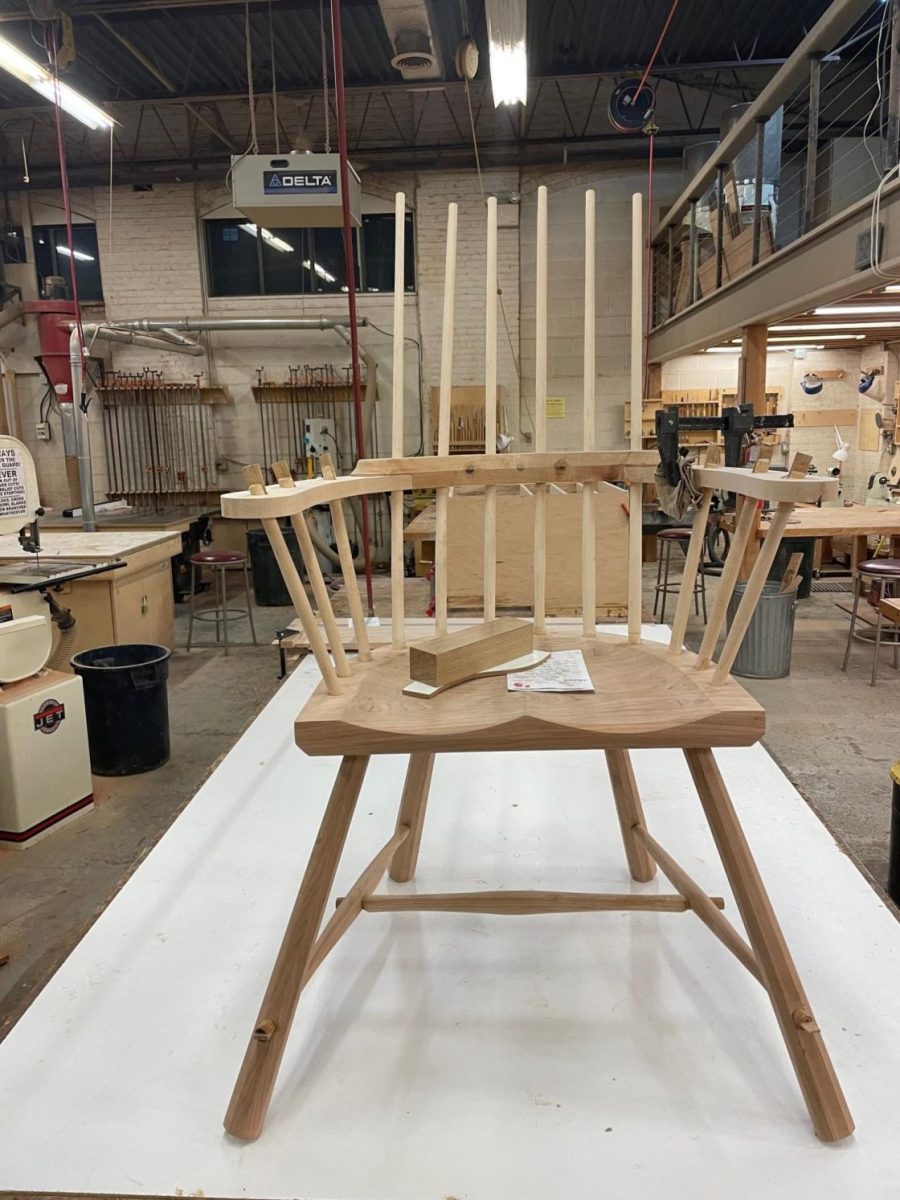
McNichols learned this during one of his hardest projects: a handmade chair. The whole building process stretched across months. Each week, he crafted a new part for his chair. One day was cutting, next was sanding, and finally came finishing. This process repeated until his chair was nearly finished.
But disaster struck; the final step of his project failed.
“When I went to glue it up, the central arm piece completely split,” he says. “I tried to salvage it for a while, but I ended up wasting that time.”
The damage ultimately forced McNichols to start again.
“I eventually decided I had to remake it. That was a really tough decision,” McNichols said.
Fortunately, his mentor Jack helped guide him through his second attempt. “[He] made the second glue-up smoother because he had experience. I jumped into it the first time without making a good enough plan,” McNichols said.
Now, McNichols approaches woodworking projects with caution and makes sure he has a solid plan before he begins any project, big or small. “It taught me to take things slow and deliberately,” he said. “Everyone is making their own things based on their own style, but the knowledge required to make those things is shared. I can walk up to anybody in a wood shop and ask what they are making, and they will explain to me the techniques and tools they used throughout the project.”
According to the Woodwork Career Alliance, mastering basic woodworking skills requires hundreds of hours of hands-on practice. It also takes ultimate precision, planning, and patience to create the foundation of the craft.
That culture inside the wood shop shapes how these young craftsmen learn to master their art. The veteran workers in the shop guide the beginners through the highs and the lows of woodworking, passing down knowledge from many years of apprenticeships and time.

Now, many months after the failed glue-up, McNichols finally finished the chair, with his piece sitting inside his home for all guests to see. The final version of this chair came out great. “Jack wasn’t sure I could totally do it,” he said.
After each project, he likes to take time and reflect on what he has just built. But then, a new challenge appears. Picking what to do for his next project. “When I look at a finished piece, I think back to everything that went into it. The final product doesn’t always capture how much time and attention to detail it takes,” said McNichols. “Starting new projects is difficult. It always fills me with dread.”
But no matter what, that lathe will still be spinning with wood chips flying in every which direction.
Somewhere on a shelf in his room sits the first bud vase he ever made, marking the start of this wonderful journey, and as a reminder of a new beginning.
This story was originally published on The Campus Lantern on April 8, 2026.