





![MORE THAN A GAME. With two diving catches in the outfield, the Lions showed up defensively, aiding in their victory over the Pacers. One catch was made by Atwood, and the other by McGraw. Throughout the game, the Lions knew that it wasn’t just about their victory today. “I think [playing for cancer] makes it bigger than just a game,” McGraw said. “Knowing that you have a bigger impact in this world than just who you are as one person.”](https://bestofsno.com/wp-content/uploads/2026/05/I70A1454-1-1200x800.jpg)


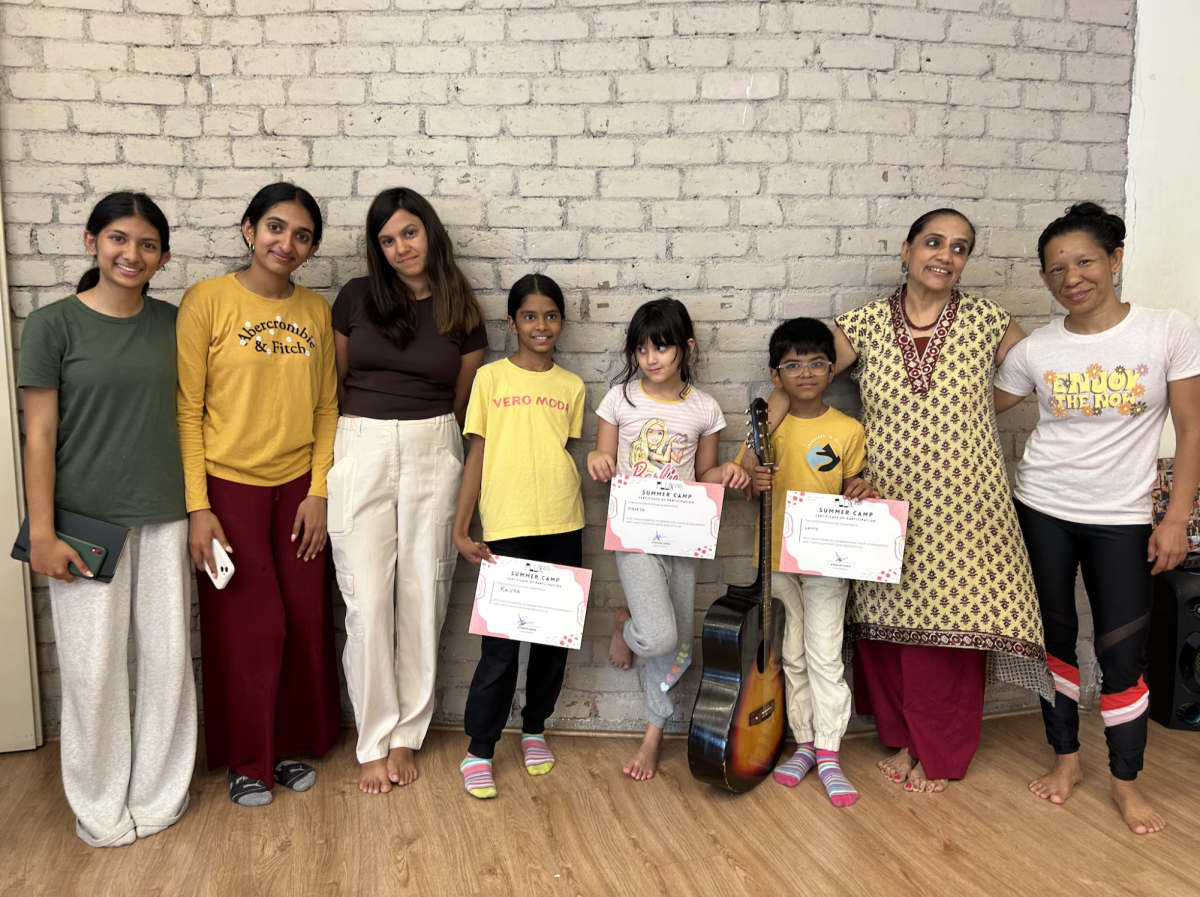
Menlo seniors Lavu Badjate and Diya Karthik didn’t just want to treat communities suffering from mental illnesses with traditional therapeutic approaches; they combined their shared passion for the arts and a desire to help those suffering from mental affiliations, to share “art therapy” with these communities.
Defined by the American Art Therapy Association as “a mental health profession that enriches the lives of individuals, families, and communities through active-art making, creative process, applied psychological theory, and human experience within a psychotherapeutic relationship,” art therapy brings communities together through diverse art forms.
Badjate and Karthik were familiar with the soothing effects of artwork and wanted to intertwine that with therapy. “From our own personal experiences, art had very healing qualities for both of us. So we wanted to use that to help others,” Badjate said.
Art is embedded in Indian culture, but mental health is highly stigmatized, so the two chose to travel to India to use art as a form of treatment to reduce that stress. Additionally, art therapy was an emerging practice in India, and lacked quantitative documentation, so Badjate and Karthik wanted to gain more perspective on the topic.
“We interviewed a bunch of different people [who] work at different art therapy organizations. Some were more focused on mental health, some were solo practitioners, and then [we] learned a lot from [those experiences],” Karthik said. “Interviews were one of the biggest parts of our process […] and [seeing] how this therapy in India differs from what already exists.”
They started their trip in Bangalore at Flux, a children’s development center where mentors introduced them to art therapy activities to incorporate into the curriculum they hoped to share with communities.
“One of the kids [we worked with] was really socially anxious, and he didn’t really want to participate in a lot of the group settings. So I worked with him […], both visually and through dance, to express himself and feel more open to involve himself in group settings,” Karthik said.
The duo next went on a retreat to a rural village to understand how people there incorporated art therapy into their daily lives, and translated what they learned to workshops they led.
“One of [the workshops] was the elderly workshop, [then] another one was at this Muslim community center. We did some play-making activities, and there were people of all different ages. After our trip that inspired us to do a community center art therapy workshop,” Badjate said. After the elderly and Muslim community center workshops, Badjate and Karthik partook in another local community workshop for people struggling with mental health issues, where they again incorporated art therapy into the curriculum.
Karthik feels as though the main takeaway from their trip was understanding the extent to which art therapy could be used as a treatment in almost all circumstances. “The main theme was working with as many different diverse communities as possible, and understanding both what was different in how we approached them, but then also how the goal of healing and mental health was connected,” Karthik said.
After their trip, Badjate and Karthik did not cease exploring the benefits of art therapy; they brought it to a Los Altos community workshop, where they led three activities with different therapeutic benefits. “We had this rock painting thing that was about writing affirmations, because one of the things that we noticed was that a lot of kids [we worked with] lacked self confidence.” Karthik said.
“Another one was using slime, connecting to the mud clay workshop, and exploring the therapeutic benefits of sensory activities and working with your hands. And the last one was collaging as a way to take different parts of your newspaper and create a piece of art as a way to metaphorically connect with your identity through different symbols.”
This story was originally published on The Coat of Arms on April 14, 2026.