




![MORE THAN A GAME. With two diving catches in the outfield, the Lions showed up defensively, aiding in their victory over the Pacers. One catch was made by Atwood, and the other by McGraw. Throughout the game, the Lions knew that it wasn’t just about their victory today. “I think [playing for cancer] makes it bigger than just a game,” McGraw said. “Knowing that you have a bigger impact in this world than just who you are as one person.”](https://bestofsno.com/wp-content/uploads/2026/05/I70A1454-1-1200x800.jpg)


April is recognized as National Autism Awareness Month: a month dedicated to understanding, supporting, and accepting autism.
To honor this month of awareness, The Forest Scout is profiling some of the people behind the scenes: the parents, siblings, friends, and teachers who dedicate their time to improve the lives of those with autism and break the stigma that follows it.
Mrs. Cat Catanzaro
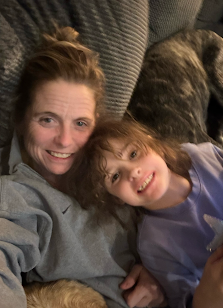
As a wellness teacher, field hockey coach, and lacrosse coach, Cat Catanzaro is a vital part of the LFHS community. On top of that, Catanzaro has two kids, one of whom has autism.

Nine-year-old Katie is Catanzaro’s youngest child. At the age of three, Katie was diagnosed with autism.
“It wasn’t until her doctor suggested she meet with a neuropsychologist for testing that it even crossed my mind. Even then it still did not seem real. It wasn’t until we started the testing process that it became something that was possible,” said Catanzaro.
Catanzaro deals with many misconceptions about autism, and that is something she understands she will have to face daily.
“Autism is not one-size fits all and it does not just go away; it will be a lifelong struggle. Autism looks very different for everyone. It is something that falls on a spectrum and because of that there are various degrees of disability,” said Catanzaro.
Being a parent of a child with autism has changed the way Catanzaro works with students.
“It has really helped me separate the student from the behavior. I know Katie does not want to be judged when she is having a meltdown because she is so de-regulated that she can not communicate in any other way. If she could control her behavior, she would. Because no one would choose to behave that way,” said Catanzaro.
Katie has so many strengths of her own that make her such an unwavering presence to be around, Catanzaro said.
“Katie is very bright and amazingly strong willed. Her problem solving and determination is something I wish I could bottle up and give to others. When she makes her mind up, there is nothing that will stop her,” said Catanzaro.
There are so many simple things kids do that parents may take for granted. It is these seemingly small accomplishments that mean so much more to Catanzaro.
“Katie told another student at her after school program that she liked his shirt. That seems like no big deal, but the fact she was communicating with another student in a way other than to meet her own needs was amazing,” said Catanzaro. “Most of her communication is need based, but she is starting to communicate other things and that is truly life changing.”
Catanzaro wants students to do more inclusive and supportive. She hopes student remind a simple mantra: be kind to everyone.
“Autism looks so different for everyone and I am sure there are students who are silently struggling. I have said to my family multiple times that I wanted to tattoo Katie’s forehead with ‘I am Autistic please be patient’ because when most people know she is different, they become so much more patient and kind, why can’t we just be kind regardless,” said Catanzaro.
Beyond posting online, spreading awareness means compassion for Catanzaro.
“Being aware that even though someone might look just like everyone else doesn’t mean they are not battling something you can’t see. Spreading the message of awareness means we talk about it more this month with the hopes that it allows more people to practice compassion moving forward,” said Catanzaro.
Danny and Joey
Sophomore Joey Van Camp is a bright, positive, and all around fun person. He will never turn down a high five in the hallway, and has as much Scout pride as anyone at LFHS.

Joey’s contagious energy is only one of his many standout qualities. Joey is also a very talented athlete.
Some students may also know Joey’s brother, Danny. The 2025 graduate left his mark on LFHS as both an student and a stellar athlete.
Danny emphasizes how exciting it was for Joey to start high school, and for them to be alongside each other.
“He was so excited to be in high school and to finally get to go to the same school that his two older brothers got to go to. The only person more excited was myself, and I thought it would be fun to drive to school together,” Danny said. “He said no, and instead wanted to take the bus, and the rest of my family got a great laugh out of it. Just shows how excited he was to grow up just like all of his friends and be a high schooler.”
One of Joey’s key personality traits is his humor. Danny notes that people who have been around Joey for a while know of his hilarious one-liners.
“Everything Joey does makes me laugh. Being his older brother I get to bust his guts constantly, and very often he doesn’t quite know how to respond. Yet, every time he does it’s memorable and something we can both laugh about. He’s just a funny, awkward kid like all of us, and we all do funny things that make people laugh,” Danny said.

Like Catanzaro, Danny has learned the importance of patience.
“I absolutely love being able to be Joey’s brother. I think the most notable change in my life personally has just been being more patient and finding joy in every day things. Of course some things don’t click quite as well as others, but on the other hand if he’s intrigued, everything clicks in an instant,” he said. “So for me, being patient and finding a common ground with him has just made me a better person in so many ways. Also he can have fun with anything he’s doing, and I think we all should learn from him.”
Danny wishes people would understand that he is no different than anyone else when they first meet Joey.
“Joey cares so deeply for everyone and everything he does. He might over explain or conversely feel distant while in a conversation, but the entire time he’s engaged and trying to find connections to what you’re saying with what he finds interesting. He’s incredibly social and loves to talk to people, so always say hi,” said Van Camp.
Danny acknowledges that when people only focus on the challenges of autism they can miss so much good in a person.

“I think autism can be boiled down to a disease, and I appreciate that people around the world are dedicating their lives to make the world easier for those fortunate enough to be on the spectrum. However, I think this can sometimes take away from the other beautiful parts of people who have autism. It’s so easy to label people and associate them to a single characteristic, but in reality, Joey has so much more personality than anybody I’ve ever met, including myself. It’s a shame when all that gets said about him at times is that he has autism, because then my only thought is that this person never had the amazing opportunity to be Joey’s friend,” said Van Camp.
Danny advocates that one thing students can do to be more inclusive to everyone around them is treating everyone equally.
“I’m so thankful Joey goes to such an amazing school, and just the other weekend when Joey visited me at Yale, one of the things he told someone he just met was that he had more friends than me. The funny part to me is that he’s absolutely right, and it might be his greatest trait,” said Van Camp. “The students around him have been so inclusive, supportive and respectful of Joey, that from an outside perspective it’s hard to tell anything is really different. He and those like him are students just like you and I, trying to learn, have fun and fit in. That’s the only thing I would tell anyone to keep in mind when seeing anyone else, not just Joey.”
Mr. Peter Nadler
Mr. Peter Nadler is the Director of Special Education, which is the largest department at the school. Nadler makes sure that all of the programming is put into place and all students get the services and education program they need.
Nadler explains that many students with autism are in classes daily and their supports are invisible to other students.
“Each student’s needs are unique, so support may include individualized education programs (IEPs), specialized instruction, speech and language services, social work support, executive functioning coaching, sensory accommodations, and classroom modifications. We also work closely with general education teachers to ensure students have access to the curriculum in inclusive settings whenever appropriate. Beyond academics, we aim to create routines, predictability, and supportive relationships that help students feel safe and successful in school,” said Nadler.
Nadler said there are many misconceptions with autism, one being that autism looks the same in every person.
“In reality, autism is a spectrum, which means students may have completely unique strengths, challenges, communication styles, and social needs. One person can be nonverbal, while another could be highly social. Another misconception is that students receiving special education services are less capable academically. This is simply not true. Many students with autism have exceptional talents, strong academic abilities, and unique perspectives that enrich our school community. Special education is about providing support and access, not defining someone’s potential,” said Nadler.
Nadler thinks that there are many small things that students can do to make a big difference.
“Being patient, including classmates in conversations or group activities, respecting personal space, and being understanding if someone communicates differently all matter. Something as simple as saying hello, offering a seat at lunch, or being a supportive lab or group project partner can help build belonging. Kindness and inclusion are often the most meaningful support peers can offer,” said Nadler.
Nadler emphasizes that general education students can easily interact respectfully and supportively with autistic students.
“The most important thing is to approach every student as an individual as you would anyone. These are people with feelings and dignity like anyone else. Avoid assumptions and take time to get to know the person, not just the label. Respect differences in communication, social interaction, or sensory preferences. Some students may appreciate direct communication, clear expectations, or extra processing time in conversations. Being respectful means listening, avoiding judgment, and recognizing that everyone experiences the world differently,” said Nadler
Nadler acknowledges that LFHS can face some difficult challenges in providing support for special education students.
“Meeting a wide range of needs with limited time and resources is the real challenge we face. Because autism presents differently from student to student, support cannot be one-size-fits-all. Staffing, scheduling, and ensuring all staff members have ongoing training are important areas we continuously work on. Another challenge is combating stigma and helping the broader school community better understand neurodiversity and inclusion. Autism has been in the news of late, so there are many misnomers. Making sure people don’t make assumptions about these students is vital,” said Nadler
There are many different programs, events, and changes that Nadler hopes to see in the future.
“As far as LFHS goes, the work that goes on in Special Olympics, Scout Buddies, and Integrated Wellness is great for including our students with disabilities. While these are not aimed specifically to work with people with autism, all of these programs do include students with autism. I think bringing awareness to autism, like this article does, is a great way to spread the word to treat people with autism like you would anyone else.
Nadler says autism awareness is such an important month, especially in a school setting.
“Autism Awareness Month is important because we are a school community where students learn not only academics but also empathy, respect, and citizenship. It gives us an opportunity to celebrate differences, highlight the strengths of students with autism, and educate the community about inclusion. More importantly, it helps move us beyond awareness toward acceptance and belonging, which is what every student deserves,” said Nadler.
This story was originally published on The Forest Scout on April 27, 2026.