




![MORE THAN A GAME. With two diving catches in the outfield, the Lions showed up defensively, aiding in their victory over the Pacers. One catch was made by Atwood, and the other by McGraw. Throughout the game, the Lions knew that it wasn’t just about their victory today. “I think [playing for cancer] makes it bigger than just a game,” McGraw said. “Knowing that you have a bigger impact in this world than just who you are as one person.”](https://bestofsno.com/wp-content/uploads/2026/05/I70A1454-1-1200x800.jpg)


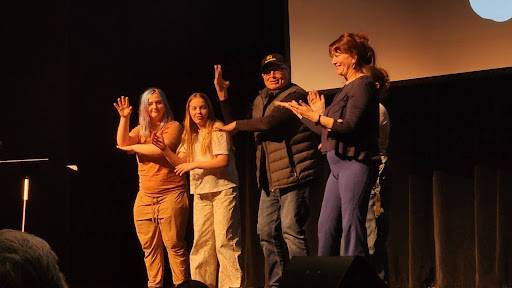
On April 17 at 7 p.m., some students and families attend an American Sign Language (ASL) event at the Central Kitsap High School’s Performing Arts Center, which was organized to give people exposure to visual language and deaf culture. This event showed how school events have the ability to connect students through shared experiences and expose them to new forms of communication and culture.
This performance focused on ASL storytelling and visual communication techniques presented through live signing. Students, families, and members of the community observed how meaning was conveyed through movement, facial expressions, and how storytelling is structured in ASL. This event was designed to allow attendees to engage with ASL in a performance based setting, while still being able to understand the message through a voice interpreter.
“This is one of those events that students tell me is a game changer for them,” ASL teacher Andrea Romano said. “So sometimes learning in a classroom is interesting, but it’s not as impactful as using your sign language, maybe with somebody that you meet in the audience and [that] just has a different experience than myself.”
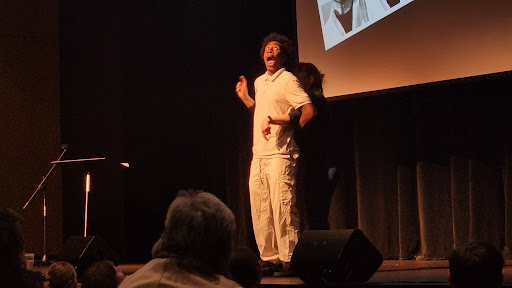
Trix Bruce, a deaf entertainer, interpreter educator, and mentor, used a variety of signed stories to demonstrate how ASL communicates ideas through visual elements rather than spoken words. Her performance included shifts in expression, pacing, and movement to represent different characters and emotions. These visual techniques remained consistent throughout the presentation, allowing the audience to follow along through observation.
“I enjoy sharing true stories that highlight the differences between Deaf and hearing cultures,” Bruce said. “Hearing audiences often find those moments surprisingly funny and eye-opening. One of my favorite pieces to perform is my personification story where I become a ball full of emotions. I transform into a golf ball, baseball, bowling ball, football, and many others. Each one has its own personality, and the audience loves the visual storytelling.”
Many students experienced ASL storytelling in person for the first time during this event. Participants entered with different levels of familiarity, ranging from beginners to fluent signers. The performance provided exposure to fluid singing in a live environment.
“This was my first [ASL storytelling performance] ever,” ASL student Gavin Meighen said. “I had no idea what to expect, but [I’m] happy I came.”
Emotion and expression contributed to understanding throughout the performance. While some found parts of the event challenging to their levels of ASL knowledge, many were still able to follow along using context and the voice interpreter. The experience highlighted how communication and comprehension can vary based on familiarity with the language.
“It was a little confusing,” Meighen said. “I’m a little new to ASL. However, I thought it was amazing being able to see people sign so fluently and speak with each other.”
Students who are continuing to study ASL can connect this event to their classroom learning. Observing multiple signers and storytelling styles provides additional examples of ASL use in practice. The event also encourages further participation in similar experiences.
“I think the most important thing is going to watch a bunch of different people sign,” junior Xavier Anderson said. “In class, you only watch one of your classmates, and Mrs. Romano sign. So it gets pretty hard to see someone else you’re not used to watching the sign for the first time.”
Some parts of the event included moments of audience interaction with the performer. These interactions evolved from brief participation from the attendants during the storytelling. One example is when Bruce used Anderson—by using his face while she signs a story—to convey facial expressions through storytelling.
“My favorite part was definitely her grabbing me because it was so funny,” Anderson said. “I knew that she was going to grab me. Everybody walked past her. I knew she was just gonna get me.”
The event was designed to guide students to a place to practice and observe ASL in a real world context. The setting and attendant’s allowed students to engage with signing in a low pressure environment. The goal was to support language application outside the classroom.
“This is a chance for students to apply their sign language, and it’s scary to sign with someone you don’t know, especially if you realize that they’re deaf and they’re fluent in the language,” Romano said. “But this is a safe space, because we’ve invited this person here. [Trix Bruce] knows we’re all students, all the people in the audience know that we’re learning ASL, and they’re happy to sign with us.”
ASL events like this allow students to engage with language and culture in a shared setting. The ASL storytelling performance at CKHS brought together students, staff, and family through visual communication. The event demonstrated how schools can create learning experiences outside of the traditional classroom.
“Storytelling tends to be the most powerful element for ASL students,” Bruce said. “It gives them a direct, visual example of how sign language can transform into creative narratives, humor, and expressive performance. Seeing ASL used in rich, dynamic ways helps students understand the language’s full potential and inspires them to explore their own storytelling skills.”
This story was originally published on Cougar Chronicle on April 22, 2026.