



![MORE THAN A GAME. With two diving catches in the outfield, the Lions showed up defensively, aiding in their victory over the Pacers. One catch was made by Atwood, and the other by McGraw. Throughout the game, the Lions knew that it wasn’t just about their victory today. “I think [playing for cancer] makes it bigger than just a game,” McGraw said. “Knowing that you have a bigger impact in this world than just who you are as one person.”](https://bestofsno.com/wp-content/uploads/2026/05/I70A1454-1-1200x800.jpg)


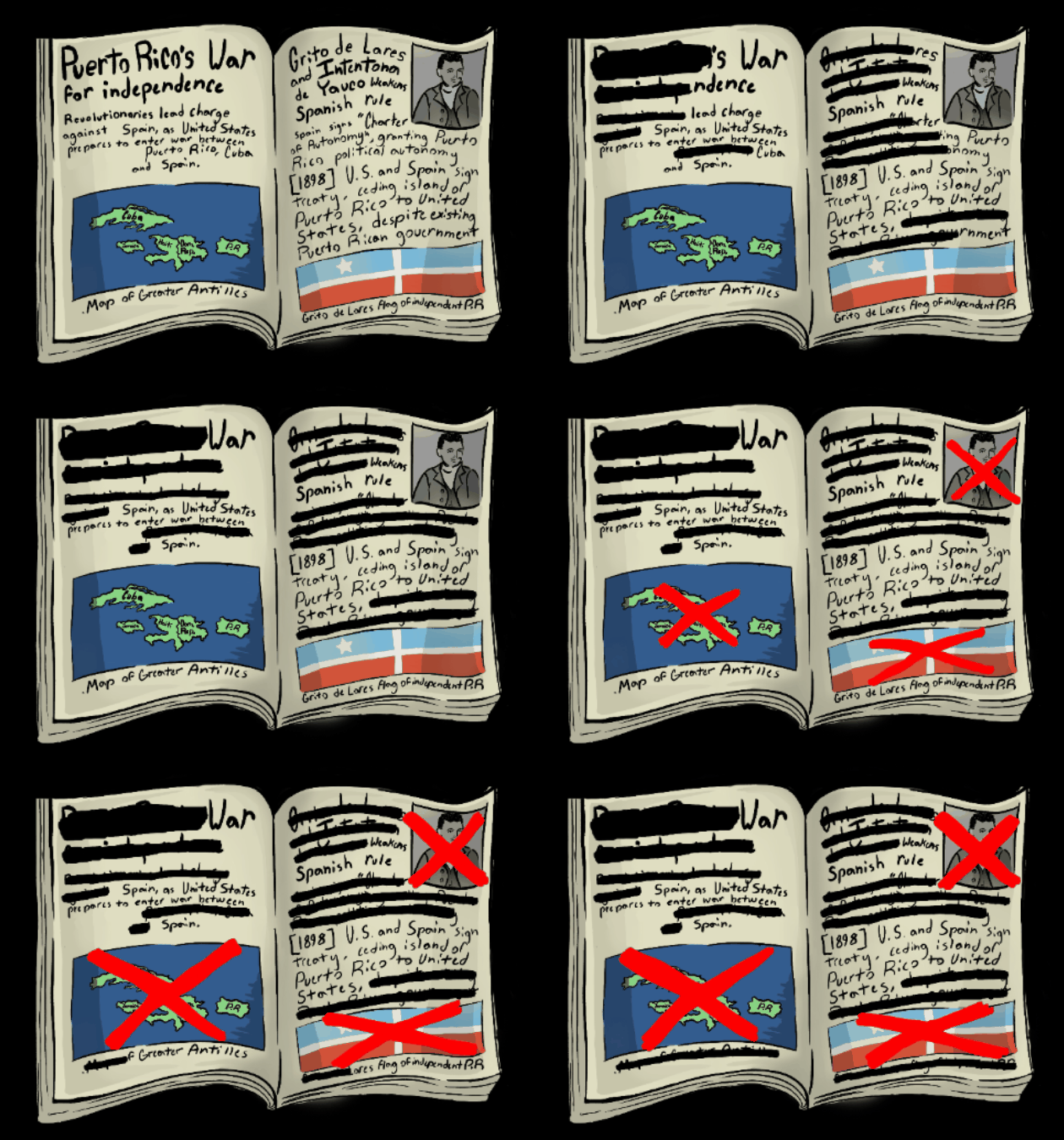
“I can remember not being taught Puerto Rican history. I didn’t learn any Puerto Rican history in school,” Micah Johnson, a Spanish and Political issues in Latin America teacher, said.
This statement reflects how others interviewed in Clayton described their exposure to or knowledge of Puerto Rican history in schools. Students like junior Lorenzo Buitrago also said that they were not taught Puerto Rican history in school.
“Puerto Rico is much closer to being a colony within the U.S. than it is [to] being another state in the way it’s treated, even in the way it’s viewed by the average U.S. citizen. So that plays into why not much is really spoken about Puerto Rican perspectives,” Buitrago said.
Puerto Rico’s official history with the United States spans back to 1898, when the United States formally took control of the island. However, even when covering the Spanish-American War, history classes in the mainland U.S. rarely go over the U.S. involvement in Puerto Rico, according to NBC.
“In a certain way, things like Puerto Rico were conveniently omitted from my history classes and my Spanish classes, because it’s really hard to study that relationship honestly, if we’re trying to stick to the premise that the U.S. always acts for good,” Johnson said.
The United States’ involvement in Puerto Rico ended the island’s attempt at independence and has left a longstanding history of conflict between the United States and Puerto Rican independence groups, some of which are militant, such as the Macheteros, one of the more prominent independence groups in Puerto Rico.
“So in that sense, different colonial powers and so on have attempted to control the decisions and policies in Puerto Rico, versus the desire for Puerto Ricans to be able to choose their own destiny,” Johnson said.
Although the United States’ annexation of Puerto Rico was a significant event in U.S. influence in the Americas, it is not discussed in depth in schools.
“So Puerto Rico falls into that conversation, the version of American history that I was raised with was very unquestioning of the actions of the U.S., of U.S. leaders, U.S. policy and so on. There was never any indication in my history classes or my Spanish classes that the U.S. got this wrong or here’s a potentially questionable policy that the U.S. had was not the way my history classes or my Spanish classes worked. It was very much ‘this was inevitable,’” Johnson said.
The history of Puerto Rico’s independence is short. This movement continued through a multitude of rebellions against U.S. control, culminating in the 1950’s with the Grito de Jayuya, an armed insurrection that declared Puerto Rico’s independence.
“That’s [Puerto Rican independence movements] not only important history, but it’s engaging stuff. That’s the kind of stuff you can build an exciting curriculum around and you can get at the angst of the resistance and how deeply they must have felt these things, if that was what they felt was their only option, right? [Pedro] Albizu Campos, right? These are not names that we learn about a lot in school,” Johnson said.
According to Johnson, the lack of coverage of the history of Puerto Rico extends to many other countries in the region, as does the lack of discussion of Latin American countries with a large amount of African diaspora.
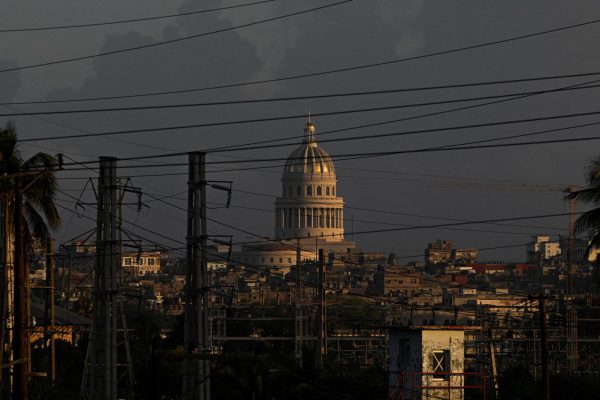
“I was in high school and junior high through the early and mid 90’s. We didn’t talk about Cuba, we didn’t talk about the Dominican Republic, we didn’t talk about Puerto Rico,” Johnson said. “I think it was potentially a blind spot, whether it was my teachers, or the curriculum, or whether it was intentional or not. There wasn’t nearly as much focus and education about people of blackness as there should have been, to be perfectly honest.”
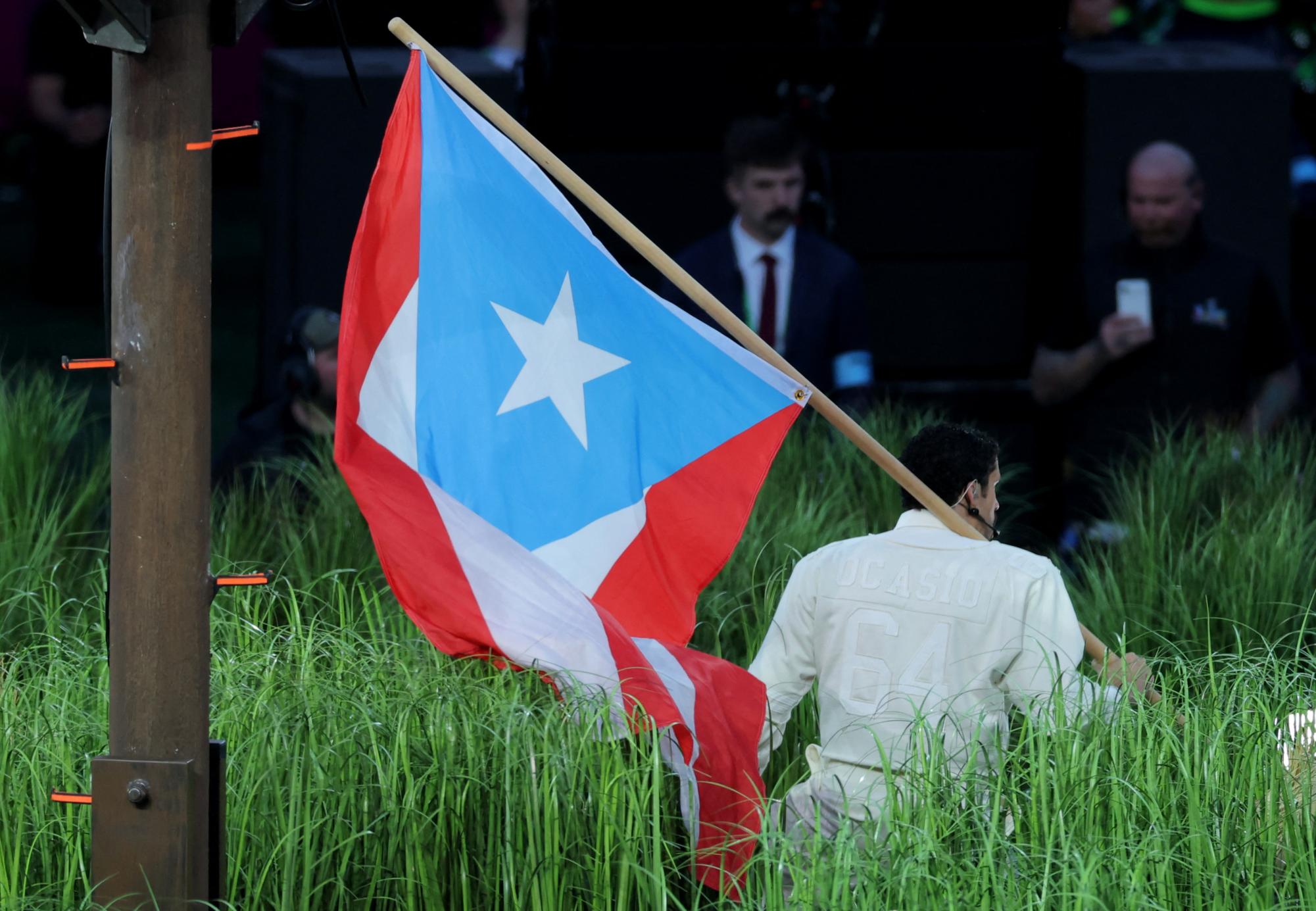
However, in the current moment, Puerto Rico has been brought onto the international stage, with stars like Bad Bunny, Rauw Alejandro and Ozuna using their stage to call more attention to both the island and its history. To add to this, Residente, one of the most prominent current Puerto Rican artists, has announced he will be directing a movie on Puerto Rico’s war for independence, starring Bad Bunny, which will be titled ‘Porto Rico,’ with the anglicized version of the island’s name being a clear political statement from him on the angle the movie will have.
“One thing about Residente that we know from his music is he doesn’t pull punches. If something needs to be said, he will say it clearly. If a point needs to be made with nuance, he’ll bring the nuance. But if he needs to hit you over the hammer to get you to recognize something, he’s got a hammer in his toolbox, too, right?” Johnson said.
The film will follow José Maldonado Román, otherwise known as Aguila Blanca, a Puerto Rican revolutionary from the Intentona de Yauco and the U.S. invasion of Puerto Rico, who led a group of convicts to fight for the island’s independence, and participated in the Intentona de Yauco, the last major armed rebellion against Spanish rule of Puerto Rico, in March of 1897. The movie’s title, “Porto Rico,” is political in and of itself, as it references a period from 1898 to 1931 when the United States officially renamed the island to Porto Rico, on the basis that Puerto Rico was unpronounceable for English speakers.
“Depending on who you talk to, depending on the version or the side we take, of history and the lens through which we view it, he’s [Aguila Blanca] either a criminal rebel or a revolutionary man of the people and a folk hero. That sort of tension between how he’s viewed by the power holders in society, because of who he’s challenging and by El Pueblo, the working class, the common folks, both on the island and off,” Johnson said.
Maldonado Román fought against the Spanish and the United States, continuing to challenge U.S. authority on the island, following the United States’ annexation of Puerto Rico after the Treaty of Paris in 1898, despite Puerto Rico already having formed a government following the signing of the Carta Autonómica de Puerto Rico, or Charter of Autonomy, by Spain, which recognized Puerto Rico sovereignty.
“It’s really difficult to look at the claiming of Puerto Rico as a territory, sweeping in and pulling the rug out from Puerto Ricans, the rug of independence, and saying, nope, you’re going from Spanish control to U.S. control, and that idea of independence is going to be denied to you, it’s hard to explain that in a conversation that doesn’t involve U.S. imperialism,” Johnson said.
The movie will most certainly be an homage to Puerto Rico’s struggle to become an independent country and to maintain its identity despite centuries of control by foreign powers.
“Residente, Bad Bunny and Ed Norton are making a movie about revolutionary times. It’s really a thing, and we get to live through it,” Johnson said.
This story was originally published on The Globe on May 6, 2026.