





![MORE THAN A GAME. With two diving catches in the outfield, the Lions showed up defensively, aiding in their victory over the Pacers. One catch was made by Atwood, and the other by McGraw. Throughout the game, the Lions knew that it wasn’t just about their victory today. “I think [playing for cancer] makes it bigger than just a game,” McGraw said. “Knowing that you have a bigger impact in this world than just who you are as one person.”](https://bestofsno.com/wp-content/uploads/2026/05/I70A1454-1-1200x800.jpg)


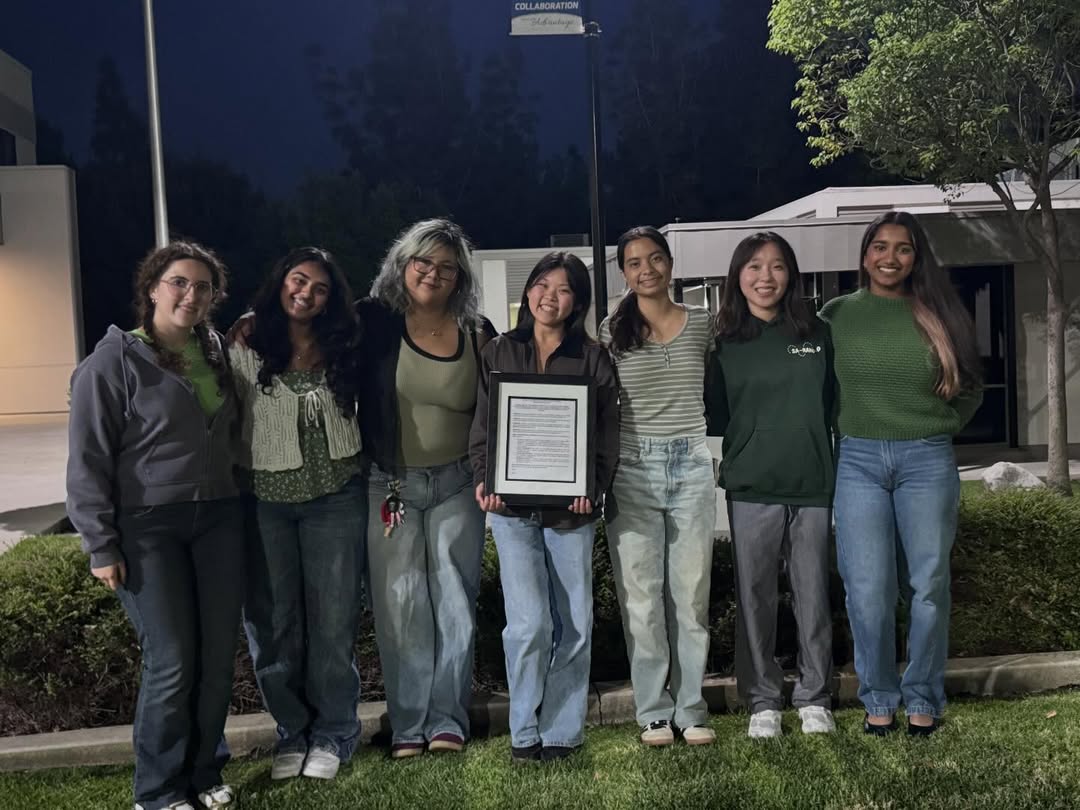
As concerns about climate change continue to grow worldwide, a group of students across the Placentia-Yorba Linda Unified School District is working to bring environmental advocacy directly into local schools.
The PYLUSD Climate Coalition aims to increase climate literacy and sustainability through student-led initiatives, policy advocacy, and education. The organization was founded by Avery Yang (12) from Yorba Linda High School and is also led by students across the entire district.
It originally formed around a single goal: passing Resolution 25-30, a district resolution focused on climate literacy and sustainability infrastructure. The resolution passed in a 3-2 vote by the district board in April, becoming the first climate-focused legislation PYLUSD has adopted in its history.
“We started the Climate Coalition to pass this resolution,” Avery explained. “That was really why we started it. We didn’t even have a name, but we were like, ‘We should probably have a name for this because it’s kind of hard to refer to this group.’”
The resolution calls on PYLUSD to, first and foremost, acknowledge the threat climate change poses to future generations. With that, it further aims to integrate climate literacy into curriculum, encourage student-led environmental advocacy, and connect educators with updated environmental resources. Samantha Hernandez (11), one of the coalition’s members, expressed her enthusiasm for the resolution passing, saying, “It felt so good, especially since we spent a year working to get it all prepared for the meeting. And we talked to so many people to help us.”
The successful passage of the resolution reflects growing student demand for stronger climate efforts across the district. Based on the organization’s district-wide survey responses, 85% support climate literacy, 71% support climate restoration education, and 93% support increased environmental education resources.
While the exact implementation process is still being developed, students behind the resolution hope its effects will eventually be visible in classrooms throughout the district.
“There’s definitely a deficit for environmental curricula,” Avery noted. “A lot of students don’t really know the severity of some of the environmental issues that are occurring in our own community and worldwide.”
According to the United Nations, climate change has contributed to rising global temperatures, worsening droughts, extreme weather events, and declining air quality worldwide. In California specifically, communities continue to face increasing wildfire risks and heat waves, making environmental education an increasingly relevant issue for students.
Rather than creating a completely separate climate course, coalition members envision climate literacy being woven into existing science curriculum. “It’s not like a specific class or anything,” Avery said. “It could just be a couple slideshows, or an acknowledgment of some of those issues in classrooms when there’s spare time here and there.”
The coalition drew inspiration from a student group in Napa County that successfully passed a similar climate literacy resolution. Through that process, members were introduced to educational resources aligned with California’s Next Generation Science Standards, including lessons centered around climate restoration.
One of the coalition’s next goals is meeting with STEM educators throughout the district to familiarize them with updated environmental resources and curriculum materials. For example, some of the standards they hope to train teachers in are the California Environmental Principles and Concepts.
In addition to environmental literacy, the second half of the resolution focuses on sustainability infrastructure across the district. Though details are still uncertain, students hope it could encourage environmentally conscious changes around campuses. Avery said she hopes students will eventually see more electric buses, for example. She added, “Many of our classrooms don’t have recycling programs. Hopefully that will be a change that we see.”
Despite being less than a year old, the coalition has already begun connecting with environmental organizations throughout Southern California, including the Citizens’ Climate Lobby, the Climate Action Campaign, and the South Coast Air Quality Management District.
Members say these connections have helped them notice how much local policy can influence environmental change. “We realized there’s kind of a need for this in our district,” Avery said, “and we can definitely continue this on and be better.” For people just getting involved in advocacy, local initiatives like the Climate Coalition are certainly a great way to start to make an impact.
The coalition also hopes to eventually expand beyond school district advocacy and become involved in city and county government initiatives. For this reason, they hope to see increased membership in the future, or at least increased general awareness of the climate crisis. Avery shares, “As high school students, I feel like we have a really unique power as part of the constituency of some of our representatives. Definitely the more people, the better.”
She also emphasized that students do not need prior experience to get involved: “It just takes a bit of dedication and learning about local government.”
Beyond environmental awareness, coalition members believe involvement in civic advocacy helps students develop leadership, communication, and community engagement skills.
“One of the least represented groups in government is young people,” Avery pointed out. “By getting more involved in civics and becoming more aware of some of these things that are happening, even in the environmental sector, it does prepare you to become a registered voter later in life.”
For Avery, climate action is not solely the responsibility of governments or large corporations. It also depends on individual decisions, which begin with small lifestyle changes. According to her, society already has the knowledge and technology to completely stop the climate crisis, but the problem is that those solutions aren’t being put into practice.
“The issue with climate change is that it’s really no one’s fault, but it’s everyone’s responsibility. People don’t really realize that the individual actions like turning the water off while you’re brushing your teeth or recycling that extra egg carton really do accumulate and make a difference,” Avery explained.
As the organization continues to grow, members hope increased student involvement can help push environmental advocacy forward throughout the district and beyond. The Climate Coalition also shows the power of student voices in sparking change. From a student-led idea to a district resolution, it proves that young people can shape the policies and priorities of their schools.
“The most powerful tool of a citizen is holding your leaders accountable; one of our responsibilities as American citizens in a democracy is to make sure that our governments are carrying out the changes we want to see,” Avery said. “And I hope that everyone would want to see a sustainable climate and a safe environment for our future and our future children.”
This story was originally published on The Wrangler on May 12, 2026.