





![MORE THAN A GAME. With two diving catches in the outfield, the Lions showed up defensively, aiding in their victory over the Pacers. One catch was made by Atwood, and the other by McGraw. Throughout the game, the Lions knew that it wasn’t just about their victory today. “I think [playing for cancer] makes it bigger than just a game,” McGraw said. “Knowing that you have a bigger impact in this world than just who you are as one person.”](https://bestofsno.com/wp-content/uploads/2026/05/I70A1454-1-1200x800.jpg)


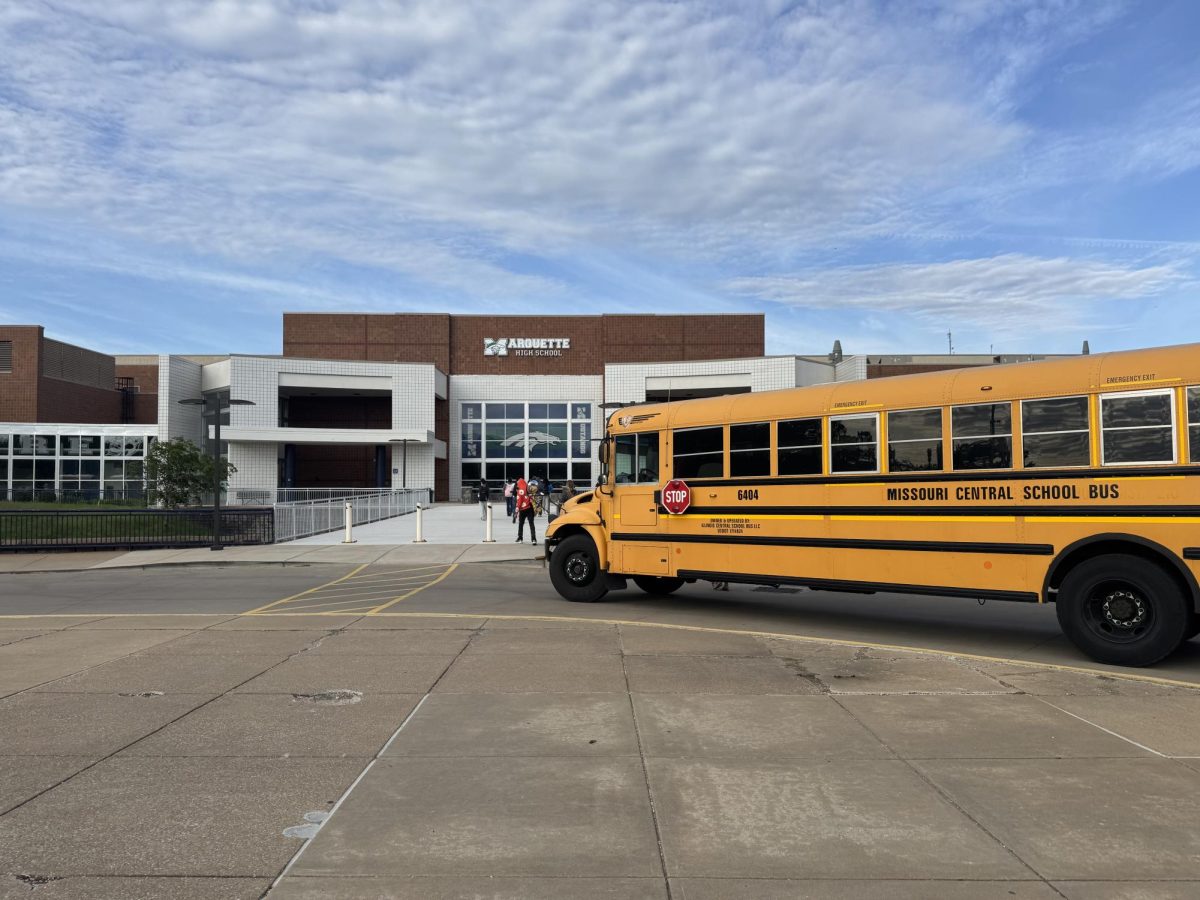
Every morning at 7:40 a.m. Ashwin Premkumar, sophomore, sees Bus 45 coming down his street before boarding it to get to school.
“Having a bus just makes life easier,” Premkumar said. “They’re definitely super important for everybody. It gives them the option to ride the bus when they don’t necessarily have another ride.”
Premkumar is one of 11,447 registered bus riders in Rockwood, according to a 25-26 district transportation update.
However, next year, changes included in the state budget could impact how transportation for students like Premkumar is funded across the state, along with other aspects of education funding.
Transportation
In Governor Mike Kehoe’s State of the State address on Tuesday, Jan. 13, he announced potentially reverting state-wide K-12 transportation funding back to fiscal year 2025 levels for fiscal year 2027.
Mary LaPak, Rockwood Chief Communications Officer and Board of Education Advocacy Committee Facilitator said the proposed change could have reduced district reimbursement by approximately $3.6 million.
The Missouri House of Representatives passed a version of the state budget with this reversion on Thursday, March 26. However, on Wednesday, April 22, the Senate restored $15.2 million in its version of the budget; an amount still $17 million short of current transportation funding levels.
The final reconciled budget was sent to Governor Mike Kehoe on Wednesday, May 6 for confirmation, and will take effect on Wednesday, July 1.
LaPak said the district is keeping a close eye on potential updates in order to have a clear picture of what to expect in terms of funding.
“Things can change very, very quickly, and we are in the final weeks of this session, and what we know, you know, this morning can change this afternoon,” LaPak said.
LaPak said costs in terms of buses, maintenance, fuel, safety training, payroll and benefits, software and supplies have already been rising prior to any discussions about budget changes for fiscal year 2027.
“These are factors outside of our control, such as the nationwide rise in fuel prices, increasing costs for parts for bus parts, the cost of the buses themselves, and rising insurance premiums,” LaPak said.
In the short term, LaPak said this deficit won’t have implications, as the budget can be adjusted as needed. However, in the long term, LaPak said it becomes increasingly challenging if the district keeps losing funding while costs continue to rise.
Chief Financial Officer Cyndee Byous said reductions in the Rockwood Transportation Department are not currently expected.
“Transportation funding is deposited into the operating fund and the [Rockwood] Transportation Department budget does not depend solely on that funding,” Byous said.
Currently, the district maintains a 1-mile no transportation zone around each building, and Byous said there are no plans in place for that to change after the budget cuts due to these multiple sources of funding.
Education Budget Shortfalls
LaPak said the budget proposal also calls for education funding levels to remain stagnant.
“To fully fund the [state] foundation formula, an increase of $190.6 million is necessary for next year,” LaPak said.
The “foundation formula” is Missouri’s system for funding schools, ensuring that each district receives a minimum level of funding per each student.
The final budget also keeps Prop C reimbursements flat without allocating a $190 million surplus, LaPak said. Prop C is a Missouri sales tax used to fund public education.
As a result, the public education budget now continues to rely partially on overestimated tax revenues, something that also happened in the current fiscal year, ending on Tuesday, June 30. This year, the state wrote education budgets on an assumption the lottery would produce $410 million, when it actually produced $350 million. LaPak said this caused a loss of $3 million which had already been budgeted, and $245 less per student.
Next year, the state budget anticipates $369 million from the lottery, and LaPak said Rockwood is expecting a funding loss of $8 million.
In Rockwood, Byous said this means further deficit spending in subsequent years, dipping into district reserves to cover shortfalls.
“If funding is not returned to the levels to which public school districts are statutorily entitled, program cuts will be required,” Byous said.
State-Wide Considerations
Caitlin Whaley is the Director of Advocacy for the Missouri School Boards’ Association (MSBA), a nonprofit supporting public school districts in Missouri. Whaley said the results of the unfulfilled foundation formula could vary across the state.
“The foundation formula is the biggest kind of bucket of money that’s used to pay for K-12 education,” Whaley said.
For about the last decade, Whaley said Missouri has fully funded the formula, but due to a number of factors, many related to an economic downturn, there isn’t a proposal this year. Across the state, Whaley said this change could have varied impacts, depending on district financial situations.
For some school districts with not a lot of money in their reserve, budget adjustments could be made for cost of living assignments and teachers; however, Whaley said they might have to pause implementing new programs.
For districts with more money saved, Whaley said they might be able to cover additional costs over the next couple years until the state is able to fully fund the foundation formula.
“So it’s really district by district, how that will, kind of impact,” Whaley said.
In regards to the $190 million Prop C budget surplus, Whaley said the logic behind not allocating it this year is that a larger budget shortfall in education is expected next year.
“Rather than fully funding the formula this year, and then being in a position of needing to make more aggressive cuts next year, they’re leaving money on the bottom line to try and keep funding flat year over year, even though that means not technically fully funding the formula,” Whaley said.
Whaley said this budget issue is most likely short term, though many economic factors can be difficult to predict.
Other legislation may also put pressure on school budgets. Whaley said the legislature passed a ballot measure that could potentially eliminate income tax, which is the majority of the money used to fund the formula. Whaley said the legislature is also interested in making changes to the property tax system, which is how many schools generate local funding.
In terms of transportation, Whaley said the Missouri School Boards’ Association has advocated for full funding.
For some districts, this budget change might mean thinking differently about transportation for extracurriculars. For others, which are only required to provide transportation outside of a certain radius but provide more than required, Whaley said considerations may be made regarding completely following those restrictions.
“It would just depend on each district’s circumstances and if they’re projecting that it’s gonna be a long-term problem or a short-term problem,” Whaley said.
This story was originally published on Marquette Messenger on May 8, 2026.