




![MORE THAN A GAME. With two diving catches in the outfield, the Lions showed up defensively, aiding in their victory over the Pacers. One catch was made by Atwood, and the other by McGraw. Throughout the game, the Lions knew that it wasn’t just about their victory today. “I think [playing for cancer] makes it bigger than just a game,” McGraw said. “Knowing that you have a bigger impact in this world than just who you are as one person.”](https://bestofsno.com/wp-content/uploads/2026/05/I70A1454-1-1200x800.jpg)


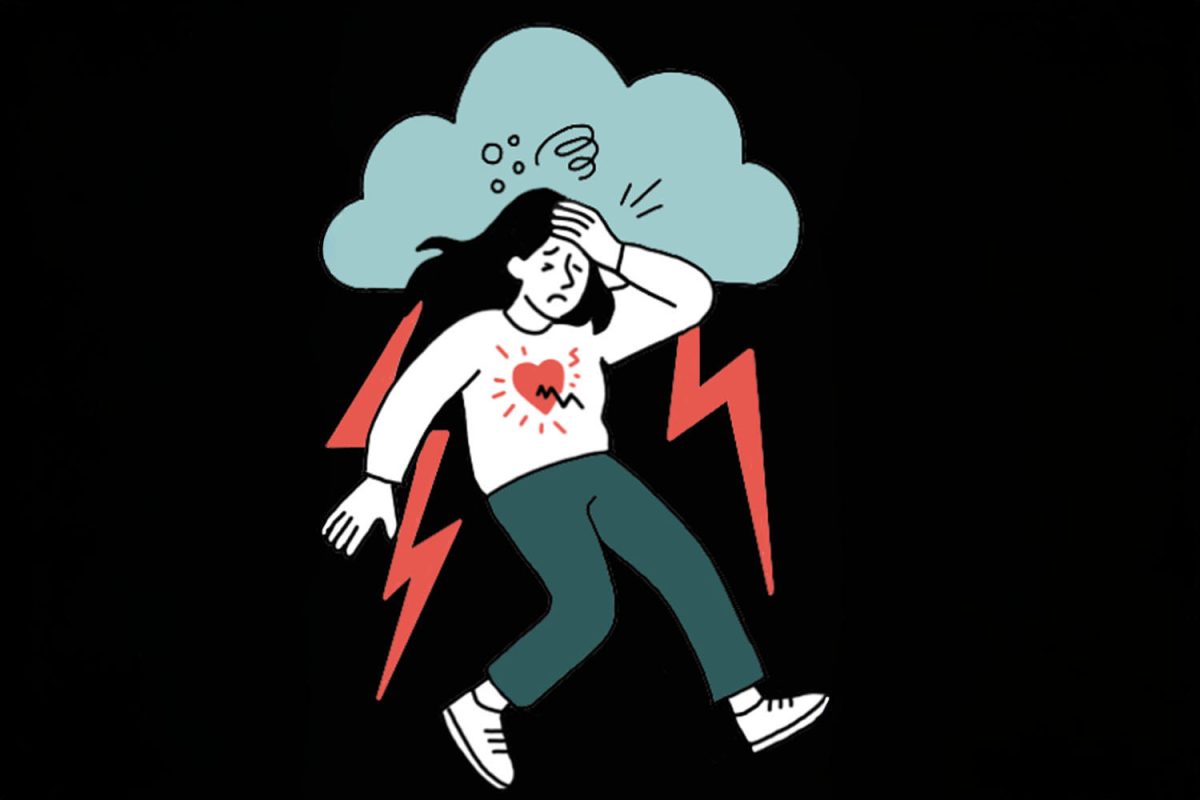
Her heart is a drum she can’t control, pounding against the cage of her ribs as if it’s trying to escape. The air around her thickens. The light bends. The world begins to slip through her fingers. But she’s only standing still.
There are no bandages, no casts, no warning signs to help the world see. The quiet collapse is an invisible war. Fought in store aisles, in classrooms, in the split second between breaths when her body forgets its own choreography.
Yet somehow, through the dizziness and dread, she rises. Not because it’s easy, but because it’s living. Because courage for her isn’t loud, it’s the whisper that says try again when every cell screams enough.
For Kristen Waldbieser, it isn’t panic. It’s dysautonomia.
She’s far from alone. Nearly 70 million people live with dysautonomia worldwide, an often misunderstood disorder that disrupts the body’s most basic functions and leaves millions fighting symptoms no one else can see.
A body’s betrayal
When Waldbieser fainted for the first time, she was 16.
“I was working a part-time job at a doctor’s office. Thankfully, I was in good care. But even then, they brushed it off. ‘You’re a 16-year-old girl; it’s probably hormones or that you didn’t eat enough.’ I remember thinking ‘Okay, that makes sense,’ but it didn’t,” Waldbieser said.
It was the first dismissal in what would become years of being misunderstood.
Dysautonomia isn’t one disease, but a family of disorders that disrupt the autonomic nervous system: the body’s internal autopilot.
“Dysautonomia is a kind of umbrella, a general term for any autonomic disorder. It means that the autonomic nervous system is not functioning properly,” said Dr. Svetlana Blitshteyn, a neurologist specializing in autonomic disorders and the founder and director of Dysautonomia Clinic.
The system regulates everything most people never think about: heart rate, blood pressure, digestion, sweating, temperature regulation, and even the ability to stand. When that system misfires, the consequences ripple throughout the entire body.
Symptoms can be numerous, fierce, and varied. According to the Cleveland Clinic, there are over 30 symptoms associated with dysautonomia.
“Standing up causes dizziness or rapid heartbeat, digestion may slow or speed up, temperature control may be off, and fatigue can be overwhelming. Even though these issues are unnoticed on the outside, they come from real physiological changes in the heart, nerves, and blood vessels,” said Dr. Abdullah Sarkar, clinical fellow in autonomic disorders and clinical scholar in cardiology at the Stanford Autonomic Disorders Program.
It isn’t just a racing heart. It’s a full-body malfunction.
Lost in a system
On average, it takes 7.7 years to receive a diagnosis of dysautonomia. Over seven years of uncertainty, misdiagnosis, and disbelief.
Symptoms are often mistaken for anxiety, dehydration, or panic attacks. Test results come back normal, leaving patients stranded in a limbo between visible wellness and invisible illness.
Waldbieser spent nearly six years searching for an answer.
“I saw every kind of specialist possible: gastroenterologists, endocrinologists, cardiologists, neurologists. Every test came back fine. I’d think, ‘Maybe this time they’ll find something,’ and then it was just more waiting,” Waldbieser said.
Her symptoms shifted every day: stomach issues, tachycardia, and dizziness so heavy she feared lifting her head from a pillow. Doctors treated each symptom like a separate mystery. According to the United Council for Neurologic Subspecialties, only 75 physicians worldwide are certified in autonomic disorders.
“Many physicians are not aware of what dysautonomia is and don’t know how to recognize it. If all doctors knew what it was, people would be diagnosed in a timely fashion,” Blitshteyn said.
Finally, at 22, the missing piece fell into place for Waldbieser. Her cardiologist ordered a tilt-table test, a gold-standard diagnostic test for certain autonomic disorders.
Waldbieser fainted.
“When I passed out during it, they were like, ‘Okay, there’s definitely something here.’ That’s when I first got diagnosed with Postural Orthostatic Tachycardia Syndrome (POTS),” Waldbieser said.
POTS is one of the most common forms of dysautonomia. It has no cure, only management. Living with dysautonomia means managing symptoms and protecting well-being, because a fix doesn’t exist yet.
But a label isn‘t the end of the journey. For many people, the world continues to look at them with a tilted head, searching for an injury that isn’t there. That’s where voices online have begun to fill the silence, as patients turn their pain into roadmaps for others who are still wandering through the dark. Social media advocates build their communities out of the very isolation that once swallowed them.
“When I first started posting, I had a mystery illness, and I didn’t know what to do. I was looking for community, and then it turned into advocating because I knew how I was treated, and I didn’t want others to be treated that way,” said Kaleigh W., better known as chronic.kaleigh, a social media influencer with almost 100,000 followers across her platforms. She requested that her last name be withheld to protect her privacy and safety.
As these voices gain visibility, they are reshaping public understanding of dysautonomia in ways that continue to expand beyond the confines of the clinical world.
Life on the edge of control
For people with dysautonomia, “normal” shifts daily. Sometimes hourly.
“I have to wake up slowly,” Waldbieser said. “If I jump right out of bed, I’ll get dizzy.”
Compression socks if she’ll be standing. Shade if it’s hot. A mental calculation at every doorway, staircase, and crosswalk.
Even showers require strategy. According to Dysautonomia International, exposure to hot or cold water can exacerbate symptoms by causing blood vessels to dilate and leading to a drop in blood pressure.
“I used to love really hot showers, but heat triggers my symptoms. I have a stool in my shower now because I’ve nearly fainted standing up,” Waldbieser said.
On bad days, everything narrows to survival.
“It might look like I’m just lying in bed, but it’s not laziness. It’s that I don’t have the energy to do anything. If I push, I faint. So the goal becomes: stay safe, hydrate, rest, breathe,” Waldbieser said.
The whiplash between functioning and failing is one of the hardest parts. According to the Cleveland Clinic, dysautonomia is a condition characterized by unpredictable symptoms.
“One hour, I feel fine, and the next I can’t stand up. You make plans, and then suddenly you can’t follow through. It’s scary. You blame yourself, even though it’s not your fault,” Waldbieser said.
Standing is not a simple act. Every step becomes a negotiation with a body that may or may not support the weight of the next moment.
“Standing involves the autonomic nervous system. If you have a problem with it, you will have trouble standing, that’s orthostatic intolerance,” Blitshteyn said.
Fluctuations shape every aspect of daily life for individuals suffering from dysautonomia, requiring ongoing adjustments to manage symptoms. Each routine action becomes a measured response to a highly volatile condition.
The burden that stays inside
From the outside, nothing looks wrong. That’s part of what hurts the most.
“If you went on my Instagram, you’d never know I was sick,” Waldbieser said. “I only post on the good days. No one sees the days I can’t eat, can’t think, can’t get out of bed.”
The pictures we choose to share with the world can be their own kind of mask. In that carefully curated space, dysautonomia slips even further from view. Some advocates are determined to pull back the curtain with honesty, providing a lifeline to those suffering.
“A lot of people say that POTS is hard to see, but if you know where to look, it really isn’t. You see it in the electrolyte bottles, compression pants, heating patches, and salt. But to everyone else, you look fine, and that’s when people start saying you’re making it up,” Kaleigh W. said.
The invisibility invites doubt. An estimated 129 million people in the United States suffer from a chronic health condition; 96% of these conditions are hidden.
“I’ve been told, ‘You just need to go to the gym; you’re out of shape.’ I thought I should be able to walk up a flight of stairs without feeling like I’m going to collapse,” Walbieser said.
As a result, the burden of proof for an unnoticeable illness often falls on the patient.
“Invisible does not mean imaginary,” Sarkar said. “I wish people understood how much effort it takes for some patients to do everyday tasks.”
The shape of courage
Dysautonomia doesn’t just change how people move through the world; it changes who they are.
“It’s definitely affected my independence,” Waldbieser said. “When my fiancé travels, I get scared to be home alone. What if I faint? What if I get hurt?”
Chronic illness forces a kind of premature vulnerability, something most people don’t confront until later in life. But within this fragility, Waldbieser has found a quiet, resilient strength.
For people navigating life with dysautonomia, resilience isn’t ornamental; it’s oxygen. It’s survival. Their strength isn’t cinematic; it’s found in the steadying of hands, the longing to stand again, and the decision to keep living inside a body that doesn’t always cooperate.
The world measures illness by what it can see: the casts, the crutches, the scars. But dysautonomia reminds us that visibility is not the same as the truth.
When someone stands silently in a grocery store aisle, gripping their cart for balance, we may see a calm response, but we don’t see the spiraling vision, the throbbing head, the tunnel closing in.
Sometimes the fiercest battles unfold in the narrow space between a steady thought and the edge of collapse, in the delicate seconds no one else notices.
“My patients remind me every day that strength doesn’t always look like what we expect — it can look like getting out of bed when dizzy, showing up to school despite fatigue, or advocating for oneself in a medical system that often doesn’t listen enough,” Sarkar said.
This story was originally published on Scot Scoop News on April 1, 2026.