





![MORE THAN A GAME. With two diving catches in the outfield, the Lions showed up defensively, aiding in their victory over the Pacers. One catch was made by Atwood, and the other by McGraw. Throughout the game, the Lions knew that it wasn’t just about their victory today. “I think [playing for cancer] makes it bigger than just a game,” McGraw said. “Knowing that you have a bigger impact in this world than just who you are as one person.”](https://bestofsno.com/wp-content/uploads/2026/05/I70A1454-1-1200x800.jpg)


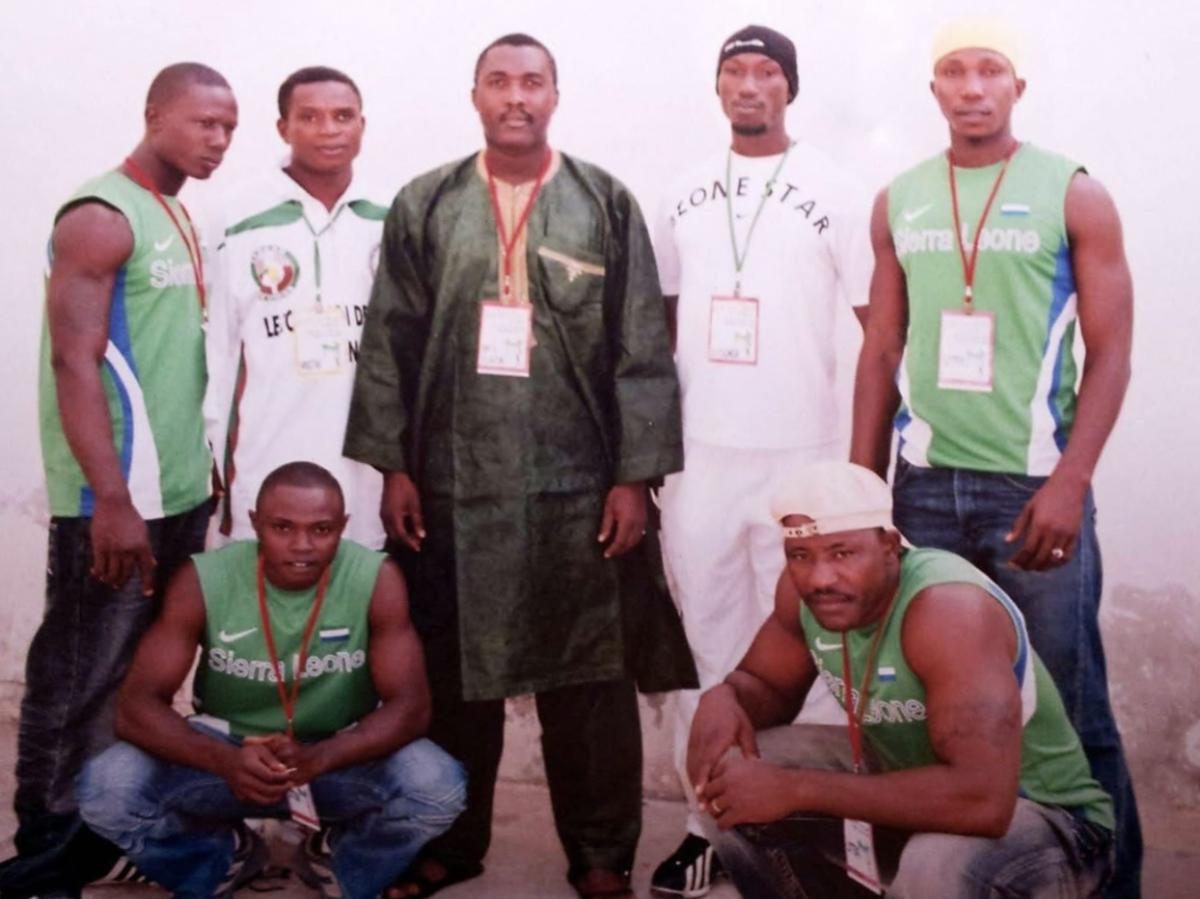
In 1994, a group of men in blue berets and camouflage uniforms walked into 15-year-old Security Officer Siddy Kamara’s home in Freetown, Sierra Leone, where families had gathered for shelter. Outside, the Sierra Leone Civil War, which began in 1991, had long brought fear to communities like Kamara’s. Inside his home, however, the arrival of what appeared to be United Nations peacekeepers brought relief to his family and neighbors.
With a series of violent attacks on civilians by the Revolutionary United Front becoming increasingly common, Kamara said families often hid together for safety. Yet, while the top floor of his house was often full of neighbors, Kamara said his mother would hide him in the lower ground floor.
“While all the kids were outside, she put me inside my room, always in there, so that people coming into our house wouldn’t even know I’m in the room,” Kamara said.
However, it was not long before Kamara’s family and the others realized that the men who had come to help them were the rebel forces, disguised as UN peacekeepers. Kamara said the rebel forces immediately began separating people into two groups: those they would take captive and those left behind.
“If they want you, they send you to a side,” Kamara said. “If they don’t want you, they send you inside the room where I was hiding, but didn’t know I was there.”
From underneath his bed, Kamara said he watched more than 20 people crowd into his small bedroom. Suddenly, the intruders set fire to the mattress under which he was hiding and fled before locking the door behind them.
“While all that is happening, I still hide, because I don’t want them to see me,” Kamara said. “As soon as I saw them [intruders] going out the door, then I said, ‘Oh, it’s about time for me to come up.’”
Instinctively, Kamara said he leaped out from under the bed, grabbed the heavy mattress, flipped it over and extinguished the flames.
Before the war intensified, Kamara said he spent much of his free time playing recreational sports with his friends. As the civil war continued and conditions worsened in Sierra Leone, Kamara said he and his friends began training in “kickboxing and fighting sports” for self-defense purposes.
“Then I said, ‘Okay, well, I think for this environment we are living now, where there is war, there’s not much control,’” Kamara said. “Only the strong survive, so I had to train.”
Under the fire-lit bed, Kamara said he felt the true “training spirit” for the first time, a moment that ignited his passion for self-defense.
“It’s just part of the inspiration that I’m a fighter,” he said.
Soon after, Kamara said he began taking his kickboxing and martial arts training seriously, as did many other Sierra Leonean teens.
“At the time, you have to be fit, because there is no law, no democracy, no nothing,” Kamara said. “Someone will just come, see something they like from you, they will just take it from you. That’s why at that time, martial arts became one of the best sports in the country. Everyone wants to, not just because of the rebels, it’s just because within the country, there is no food, no nothing, someone sees your food, they will just take it from you. So if you don’t know how to defend yourself, you can’t eat.”
In addition to learning self-defense, Kamara developed a passion for kickboxing itself. After the Sierra Leone Civil War ended in 2002, Kamara said the government organized a national kickboxing competition.
“At the time, it was the biggest sport in the country, so as soon as the war ended, they said, ‘We need to make a competition,’” he said. “I’m not a competitive man, but just because of all that goes on, I said, ‘Let me go.’”
At 19, Kamara won his category’s national kickboxing championship, and at 23, he won it again, continuing to compete. He later represented his country as an official at the 2008 World Traditional Sport, 2009 Africa Games, 2010 Commonwealth Games and 2011 World Championships.
By winning these titles, Kamara said he was frequently featured on television and was given new opportunities to thrive as an athlete.
“It’s nice, you understand, to have this kind of fame,” Kamara said. “But…it gets to some point I have to give up all because I used to have an Olympic scholarship, where I can go everywhere, I can do any course on the Olympic solidarity.”
Via the scholarship, Kamara was invited to take part in an international coaching course at Semmelweis University in Budapest. There, representing his country as the kickboxing and national wrestling coach, Kamara said he was approached by Sierra Leonean politicians who encouraged him to get involved in politics.
“These politicians, they get to me, convince me to drop sports,” he said.
Moving back to Sierra Leone at the age of 28, Kamara said he ran for his community as a presidential parliamentary candidate. However, after losing the election, Kamara went back to kickboxing, following his true passion.
Inspired by fighters like Bruce Lee, Kamara said he views kickboxing as a way to protect others when needed, not as a means to engage in street fights.
“I normally use it, like, to defend people,” Kamara said. “I’m that kind of man. If you want to come for me, you can’t get me.”
Kamara said he chooses not to engage in fighting outside of competitions because it’s not right to “use it on someone who is not trained.”
“Most of the time it’s just to defend people,” he said. “You know, ‘Don’t touch him, don’t do anything.’ But if you come to me, you accuse me, whatever, I’m okay with that.”
Kamara said training in kickboxing is like training in any other sport.
“Fighting for me is like when you play music, you say, ‘Dance,’” he said. “I know fighting is hard because I see some people, when someone says, ‘I’ll beat you,’ like, shaking. People are afraid of it because they’re not used to it.”
Additionally, Kamara said he does not feel stress or rage when fighting.
“Anger disturbs your performance, so it’s just like a dance,” Kamara said. “Because you have to have, like, a free mind. You don’t need to think of hurting the person, you just need to think of winning the person.”
After working as a kickboxing coach for several years, Kamara said he needed a change. At that time, Sierra Leone’s political situation began to worsen, and so did the quality of life.
“Everybody wants to get control of everything, because it’s a diamond country, so it’s too much,” he said.
Kamara said he decided to move to the U.K. in his 30s, not for his kickboxing career, but for survival.
“Anything can happen in the country,” Kamara said. “Food to eat is hard … medication, which, if you have an injury, you have to wait, like, nearly a year … I just said, ‘No, I need to move out, not to go and perform, just to improve my life.’”
Kamara first came to the U.K. in 2012 without a work permit and had to return to Sierra Leone. In 2014, amid the Ebola outbreak across West Africa, Kamara moved back to the U.K. and began working at Matches Fashion as a Warehouse Operative.
Although Kamara enjoyed his work there, he said he missed coaching and training. In Reading, Kamara said he began hosting community events, inviting children aged 10 to 12 to learn combat sports.
Kamara said he was able to identify each child’s natural abilities and direct them toward the sport that best suited them.
“A proper coach identifies a child on a particular sport that they are good at,” he said.
Eventually, Kamara hoped to work at a school where he could continue guiding young athletes. Joining the school as a security officer in 2023, Kamara said he has found a way to fulfill his goal by leading the Martial Arts and Fitness Community Partnership, which meets every Sunday from 1 to 3 p.m.
Kamara said learning self-defense is as important as “getting a driving license.”
“Even if you don’t go to competition, you know how to defend yourself in certain circumstances, because you don’t know, anything can happen if someone just comes at you,” Kamara said. “You don’t have to fight them, but you can defend yourself and run.”
In addition to the physical benefits of sports training, Kamara said self-defense can improve mental and emotional well-being.
“Fitness workout helps you get a sound mind,” Kamara said. “You’re always positive, and sports, again, brings love. When you train, it helps you to become a team player, because you are always training with people. Even kids who don’t want to mingle when they go to sports, when they start training, they mingle with people.”
Additionally, Kamara said he attributes his friendly attitude as a security officer, always greeting community members at the door with a welcoming fistbump, to his background in sports.
“I hate when someone comes into the school and they are sad,” Kamara said. “Sometimes it happens, you come from home with some kind of thing. That’s why you give support. Some of them, when I give a fistbump, they just ignore you. Then I’ll say, ‘Okay, I’ll wait until you come back.’ When you come back, I’ll give it again… and they smile. I like that. It’s just in me, because its part of teamwork.”
Ultimately, Kamara said he hopes to further engage students at the school through his community partnership and expand training to parents.
“The goal for the athletes, I just want to see the guys physically fit, helping their parents in kind of physical activities in the house, helping the community,” Kamara said. “My goal for myself, is I just want to become a sportsman and be with sports forever, until I die.”
This story was originally published on The Standard on May 18, 2026.