





![MORE THAN A GAME. With two diving catches in the outfield, the Lions showed up defensively, aiding in their victory over the Pacers. One catch was made by Atwood, and the other by McGraw. Throughout the game, the Lions knew that it wasn’t just about their victory today. “I think [playing for cancer] makes it bigger than just a game,” McGraw said. “Knowing that you have a bigger impact in this world than just who you are as one person.”](https://bestofsno.com/wp-content/uploads/2026/05/I70A1454-1-1200x800.jpg)


Editor’s Note: The names Santiago Rodriguez, Flor Cruz and Laura Gonzalez are pseudonyms the sources requested for fear of detention.These interviews were all conducted in Spanish and translated by reporter Amy Paz.
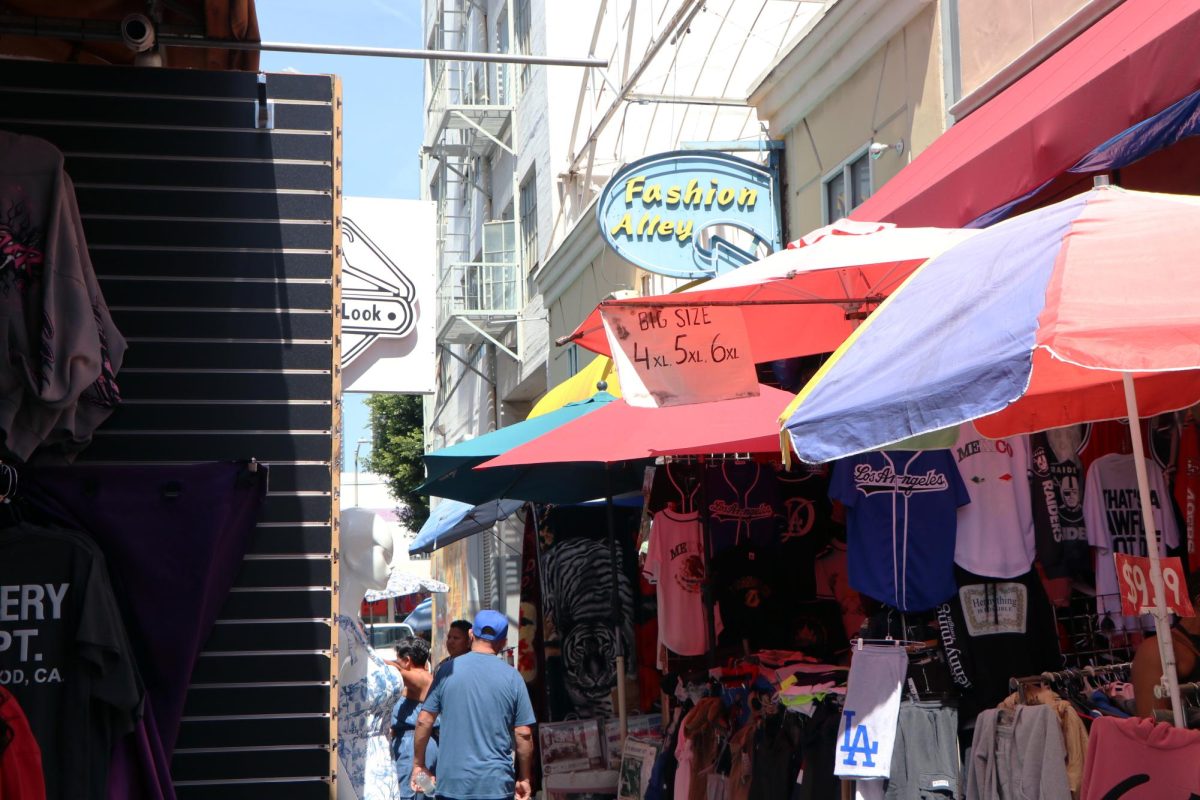
In the bustling streets of Downtown Los Angeles, store owners are struggling to pay rent, and many are leaving the stores they have had for years because they can’t afford it. There are limited solutions for many store owners since the main reason they’re losing money is due to their customers being too scared to come buy merchandise out of fear of being caught by Immigration and Customs Enforcement.
ICE is causing many shopping districts, like the fashion district and the flower district, to lose customers rapidly.
Los Angeles County has kept track of the money lost due to the ICE raids since June 17. The result of a survey they sent out found that 82% of immigrants are experiencing negative impacts from immigration enforcement, with 44% losing over half of their revenue, 52% experiencing reduced daily sales and revenue and 51% reporting decreased customer traffic. ICE’s presence has led to many people losing their jobs because they are scared to work.
Immigration lawyer Janette Zanipatin has 30 years of experience and is currently the director of policy and advocacy at the Coalition for Humane Immigrant Rights of Los Angeles.
“In many instances, in order to arrest someone for a civil law violation, you still need a warrant,” Zanipatin said. “But they are basically just picking up people based on what they look like, how they speak, if they’re speaking Spanish or another language, or where they work.”
Fear leads to declining sales
Los Angeles store owner Santiago Rodriguez owns a bulk clothing store and has recently been struggling to make a profit from his business. He said ICE has scared many of the fashion districts’ customers away, which has led to many of his and other store owners’ bankruptcy.
“Well, people are scared. When people notice immigration around these places — well, people, more than anything, in businesses and small businesses, people stop coming,” Rodriguez said. “They leave immediately for the fear of what could happen to them.”
Rodriguez said there have been rent cuts by landlords to help small businesses, but it is still not possible to pay rent since there are no customers. He said stores are only paying 70%, 50% or 30% of their rent.
Rodriguez said he has been personally impacted as his business has gone bankrupt and will be closing in four months. In tears, he said he has lost $12,000, in rent in the past six months.
Loss of revenue’s impacts store owners, children
Flor Cruz owns two stores in Downtown Los Angeles that sell t-shirts. She said she goes to work in fear every day because of the multiple raids in the neighborhood.
“Immigration has affected me in the way that I can’t go out freely as I used to. I could go to whatever store and anywhere I wanted without fear. Well, right now we go out looking for anything that is going on and we are hearing stuff about ICE,” Cruz said. “Before, I could travel more, to Texas and right now, I don’t go because I have the thought of immigration and if something could happen to me. So, right now, emotionally, it has affected me, all of it, it is depressing.”
Zanipatin also talked about the long-term effects ICE has had on immigrants. She said there are services provided by CHIRLA that help immigrants who are scared to go to the grocery store or get other resources.
“They can’t go to work. They’re scared to go grocery shopping. They’re scared to get school supplies for their kid,” Zanipatin said. “There are organizations in LA County that we’re working with to pick up those supplies and deliver — make those deliveries to people’s homes. So there is help for people out there.”
Rodriguez said he knows many children in the community are scared. He knows his daughter is just as scared as he is, too.
“The fact that an adult can have fears to these agencies, it’s obvious that children have them. In the same way, they feel it, and they see it, they have fear,” Rodriguez said. “Because in the eyes of our kids, we are the parents, we are the ones who can do it all, we are these invincible people, we are there shield and their security.”
Hope for the future
Cruz said she has hope because she knows her husband, who has legal documentation, will take care of her store and possibly bring her back if she gets deported. She and her family have taken precautions, such as not opening the front door of the store unless they see the customer up close.
“When we know immigration will be around the area we close, and we are very on top of if they will come near our store,” Cruz said. “Though I don’t worry that much because my husband will be in charge of the children and the house and everything.”
On the other hand, Rodriguez said he prays to God every morning for the well-being of his wife and daughter. Even if he is going bankrupt, he wants to hold his head up high and have hope.
“Well, I have faith that in a couple of months in the future, our situation will change and it will get better and our sales will be the same as they used to be,” Rodriguez said. “While our minds are focused on making the situation of sales get better, I have hope that it will be better.”
Zanipatin shared how her own experience has influenced her work as a lawyer.
“Well, first, I would tell immigrants — and I’m a daughter of an immigrant myself I would — tell immigrants that they need to know that there are a lot of people that are working really hard every day, every weekend, every holiday to help our community,” Zanipatin said. “I don’t think there’s been a day that I’m not working to try to help a family, to try to help an individual to get reunited or to get medical care.”
Zanipatin also said she encourages immigrants who are suffering because of ICE to find help if they need it.
“We’re using every tool that we can,” Zanipatin said. “So CHIRLA, especially. We have immigration lawyers. I work with policymakers. I’m working with members of Congress. I’m working with our US senators to help on every case that we have because no case has just one issue, right? There are many issues.”
This story was originally published on The Oracle on May 25, 2026.