





![MORE THAN A GAME. With two diving catches in the outfield, the Lions showed up defensively, aiding in their victory over the Pacers. One catch was made by Atwood, and the other by McGraw. Throughout the game, the Lions knew that it wasn’t just about their victory today. “I think [playing for cancer] makes it bigger than just a game,” McGraw said. “Knowing that you have a bigger impact in this world than just who you are as one person.”](https://bestofsno.com/wp-content/uploads/2026/05/I70A1454-1-1200x800.jpg)


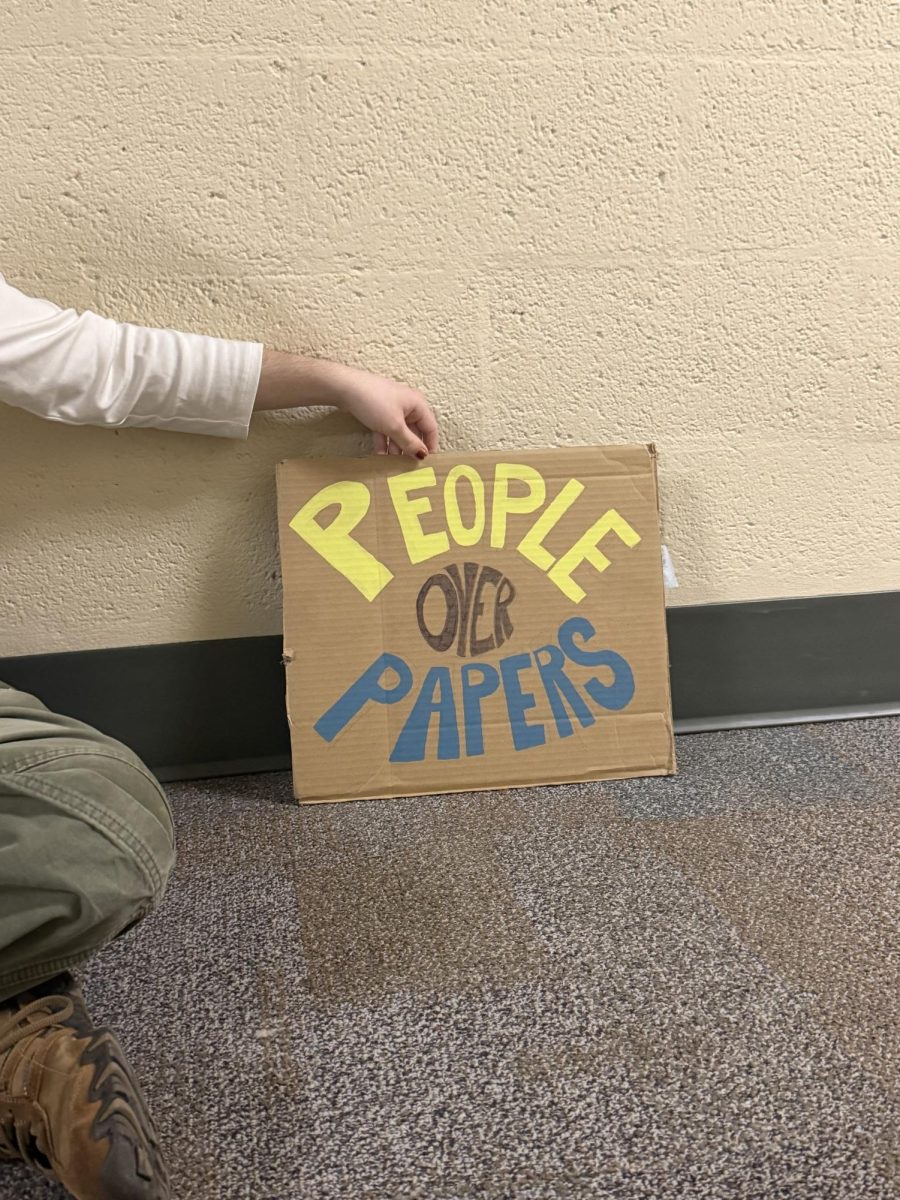
A Hamline policy forbidding students from displaying political posters has recently been called into question over concerns that it limited free speech on campus and contradicted the university’s civility statement.
Last Monday, March 16, senior Alex Bailey received a formal warning that they had violated a lesser known ResLife policy related to endorsements of political figures. When Bailey fought back, Hamline offered to expunge the incident from Bailey’s record — if they cleaned the office of a high level administrator.
By the weekend, the university had backtracked on that decision and the original policy had been removed from the ResLife website.
What makes a sign ‘political’?
The incident came as a shock to Bailey, two year long resident of the first floor in the Hamline Apartments, who did not feel the sign was a political endorsement but rather a show of support for their immigrant neighbors. The sign read “People over Papers.
“I didn’t feel like this phrase [People over Papers] represented a specific political party or ideology. It was more so a gesture of empathy and community focus,” Bailey said.
The policy in question states students are not to have political signage or other items on display in residence halls where it may be seen by members of the community. But the policy also doesn’t define the word “political,” nor does it explain who decides what is or isn’t considered “political signage.” In practice, it seems this decision has been left up to Resident Assistants and Area Coordinators, although it can be appealed to the Dean of Students Patti Kersten, and Director of Residential Life Yolanda Hanson. So Bailey appealed. Bailey emailed Kersten and Hanson to explain the meaning of the phrase People over Papers, and to request reevaluation of the situation.
After the email to Kersten and Hanson was sent, Bailey was referred back to their Area Coordinator to sort out the issue. Later, they received an email from Maxient — a software used to track student violations — outlining the previous conversations and issuing a formal warning. What followed left Bailey stunned.
“Half an hour after I got that decision letter, I received another email from the Area Coordinator,” Bailey said. “At the end of the email, it said the leadership team had an option for you—that we are willing to expunge your record in exchange for cleaning or helping to clean [Associate Dean of Students] Carlos’ [Sneed] office,” Bailey said.
Bailey was shocked. They thought this offer to expunge the record if they helped clean an administrator’s office was an inappropriate quid pro quo.
“The precedent that this sets is that if you are a student who is in trouble, you can do a personal favor to admin in order to expunge your record. And that is a dangerous precedent to set,” Bailey said.
From the first floor up
Bailey’s case wasn’t an isolated incident. After Bailey pushed back against the policy, other students had similar experiences. On Thursday, March 19, the Hamline Apartments Area Coordinator went door-to-door requesting that students remove any and all “political signage” they observed.
Sophomore Ellie Carson was also asked to take down a sign from her apartment window.
“I was scared because we got that same aggressive knocking that you get when facilities comes over, so I was thinking we were in trouble,” Carson said.
The sign Carson was asked to take down read, “Kidnapping people isn’t cool.” The policy itself only mentions political endorsement and not issues related to civic matters. Administrators believe it often comes down to trying to create a safe and cohesive community. There has been an effort put into these decisions by the administration.
“I know we have had lots of conversations around what’s political and what’s not, what creates community, what doesn’t and that people’s views are in different places,” Kersten said.
Though Hamline is within its rights as a private institution to enforce a policy like this, many feel it contradicts other statements made by the University.
Distinguished professor of Political Science David Schultz authored the University’s Civility Code, which is housed on the Office of Inclusive Excellence’s website.
“That code is supposed to promise incredibly broad protections for speech and disagreement on campus,” Schultz said.
The contradiction of this policy and previous statements and actions taken by the University may be attributed to a lack of review of policies before being posted in the student handbook. With student pushback to this policy, the administration is reevaluating its policy.
“We were drafting something, and it got posted sooner than it should have, and I’m not sure it should be up anymore, and we’re evaluating that,” Kersten said.
Upon learning of this event, President Hostetter personally called Bailey to discuss the incident and solutions to support students going forward while out of office with family.
Hamline also sent a statement to The Oracle supporting students’ rights to display signs that align with their values.
Below is the official statement from Hamline University:
“University administration is taking this seriously and immediately looked into the circumstances. Unfortunately, revised language pertaining to the posting of materials in residence halls was added to the Residential Handbook without being fully reviewed and approved, which ultimately resulted in an enforcement process that simply should not have occurred. We reached out directly to the students who were impacted by this mistake to apologize and make the situation right. Further, we are committed to making changes to our Residential Handbook and investing in training to prevent this from happening in the future.”
The policy for which Bailey has cited has since been removed from the ResLife website.
“My entire intention with pushing back on this sign is to address the contradictory nature this university sometimes has,” Bailey said. There is a follow-up meeting set for March 23 with Bailey, Hanson and Kersten.
Story written with reporting contributions from Matías Vega.
This story was originally published on The Oracle on March 22, 2026.