





![MORE THAN A GAME. With two diving catches in the outfield, the Lions showed up defensively, aiding in their victory over the Pacers. One catch was made by Atwood, and the other by McGraw. Throughout the game, the Lions knew that it wasn’t just about their victory today. “I think [playing for cancer] makes it bigger than just a game,” McGraw said. “Knowing that you have a bigger impact in this world than just who you are as one person.”](https://bestofsno.com/wp-content/uploads/2026/05/I70A1454-1-1200x800.jpg)


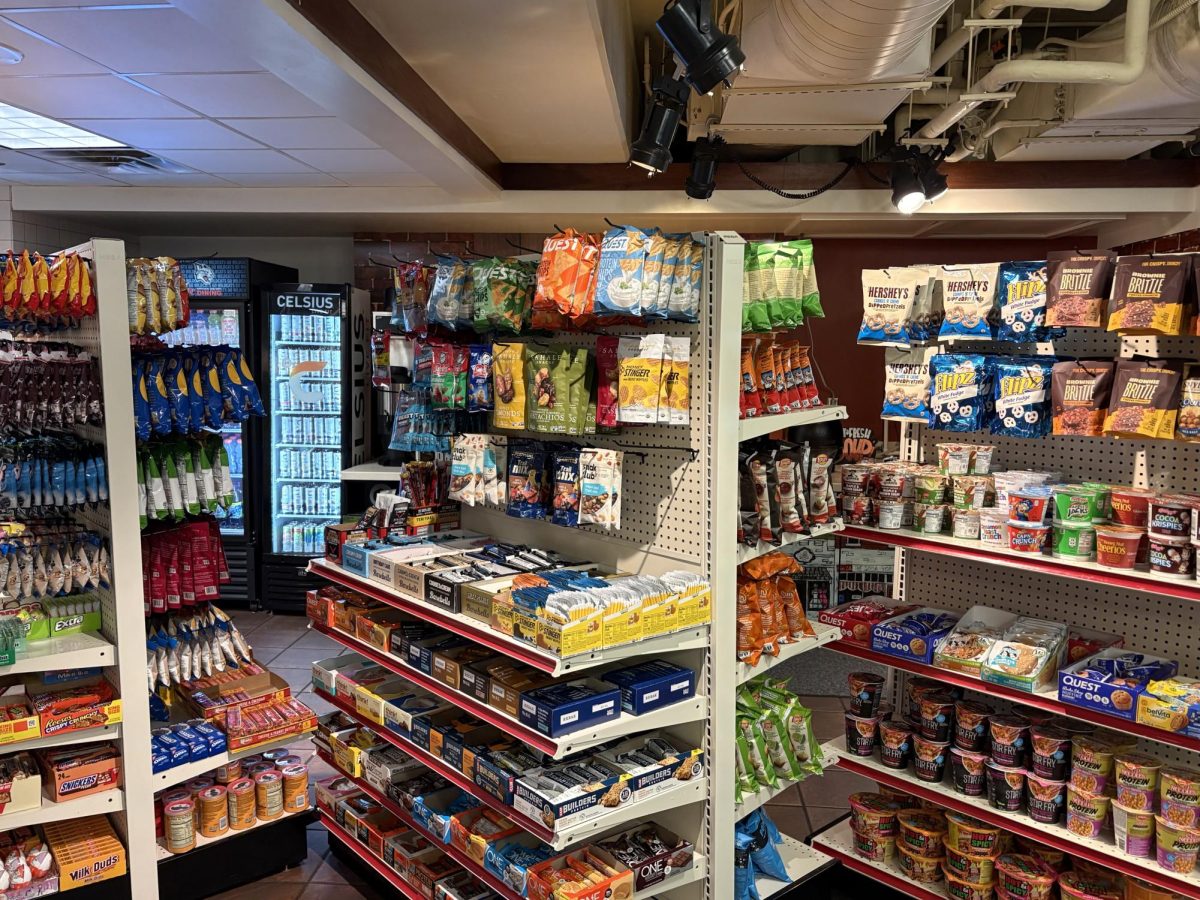
A can of Celsius that costs $2.28 at Walmart sells for $4.49 on Davidson’s campus, a markup of nearly 97% for a staple among college students nationwide. For students required to pay into the college’s dining system, price disparities like that sharpen frustration over food costs and raise broader questions about how prices are set at Davidson’s dining locations.
Director of Dining Services Pinky Varghese said those prices reflect the realities of operating a smaller campus system, where vendor costs, labor and timing all affect what students see on the shelf. The same item may be ordered from different suppliers at different wholesale prices, and managers do not always update shelf prices at the same time. But for many students, the result is the same: paying more on campus for products they know cost less elsewhere.
“The cost of ingredients change, and the cost of ingredients for the different vendors is different,” Varghese said. “If you’re buying it from US Foods, which is our major vendor, the prices are much cheaper for certain products, but they don’t carry all the products […] so we get it from Hackney, or we get it from Unify,” Varghese said.
This means dining services buys different items at different prices. Richard Terry, director of auxiliary services, said that translates to different prices on the shelf. In principle, both administrators said identical products should be priced the same.
“If it’s the same product, it ought to be the same price,” Terry said.
In practice, however, the system does not always work that cleanly. Different locations operate under different managers, vendors shift and products move quickly, which can create mismatches.
Administrators rejected the idea that these differences reflect a deliberate attempt to charge more based on location. Instead, they described the discrepancies as a product of changing supplier costs and inconsistent timing in price updates.
“There’s no secret strategy where we’re saying we think they’ll pay a quarter more over here,” Terry said.
Varghese said higher prices also reflect unique operating costs: labor costs account for about 45% and food costs range from 30% at Vail Commons to 50% at Commons Market.
Still, many students said high prices have become a source of tension. Identical items sold in Commons Market and Davis Cafe are sometimes priced differently, and many grab-and-go products appear to cost noticeably more than they do at nearby stores such as Walmart or Harris Teeter. Hershey chocolate covered pretzels, for example, cost $4.50 at Commons Market, $3.09 at Davis Cafe and $2.30 at Walmart.
For Charlotte Comeaux ’28, the everyday cost of buying food on campus is a major concern.
“I think it’s ridiculous,” she said. “The prices, I understand that, you [dining services] have to get items from wholesale retail places or whatever. But it shouldn’t be this much more expensive.”
Comeaux pointed to the gap between campus prices and local grocery prices as one of the clearest examples of that frustration.
“If you’re spending 20 bucks on a box of goldfish, like a carton of goldfish, where it would be $8 at a regular grocery store, that’s just not fair,” she said.
Lennox Goslin ’28 said students are increasingly focused on what food costs on campus, particularly at Commons Market and Davis Cafe. He said some markups on packaged items are hard to justify. “Some of them are more than 100%,” Goslin said. “It’s just not student friendly.”
Dining administrators explained that surplus revenue can flow into the College’s capital budget, where the money may later support future projects, including dining-related ones.
Administrators pointed to Chick-fil-A as a recent example. Though that renovation was not funded directly out of the current dining operating budget, they explained that past dining surpluses contributed to the larger capital pool that made the project possible.
“Meal plan money helps fund those future capital projects, which means […] there’s money from your meal plan now that will be available for capital projects of the college going forward,” Terry said.
That means a student meal plan does not only support immediate dining costs. Over time, those dollars can also help fund larger institutional improvements.
The broader concern, Comeaux said, is the lack of transparency about how Dining Services prices goods.
Ezra Steinman ’28, SGA food and housing chair, said this is exactly why students want clearer answers. Part of his work, he said, has involved pushing for a more detailed explanation of how dining costs are structured and where student money goes.
“Students are the ones paying, or their parents are paying, or someone close to them is paying,” Steinman said. “They deserve to know how their money is being spent very specifically.”
That is where SGA hopes the conversation continues. Steinman said he hopes to secure more detailed budget information and clearer communication to students.
For now, Davidson Dining maintains that its goal is to feed students well and respond to their needs. Students, meanwhile, are asking for something more concrete alongside that promise: a fuller explanation of how the system works, why prices vary and where their money ultimately goes.
“Dining dollars are still real money, even if it doesn’t feel like it,” Comeaux said.
This story was originally published on Davidsonian on April 15, 2026.