




![MORE THAN A GAME. With two diving catches in the outfield, the Lions showed up defensively, aiding in their victory over the Pacers. One catch was made by Atwood, and the other by McGraw. Throughout the game, the Lions knew that it wasn’t just about their victory today. “I think [playing for cancer] makes it bigger than just a game,” McGraw said. “Knowing that you have a bigger impact in this world than just who you are as one person.”](https://bestofsno.com/wp-content/uploads/2026/05/I70A1454-1-1200x800.jpg)


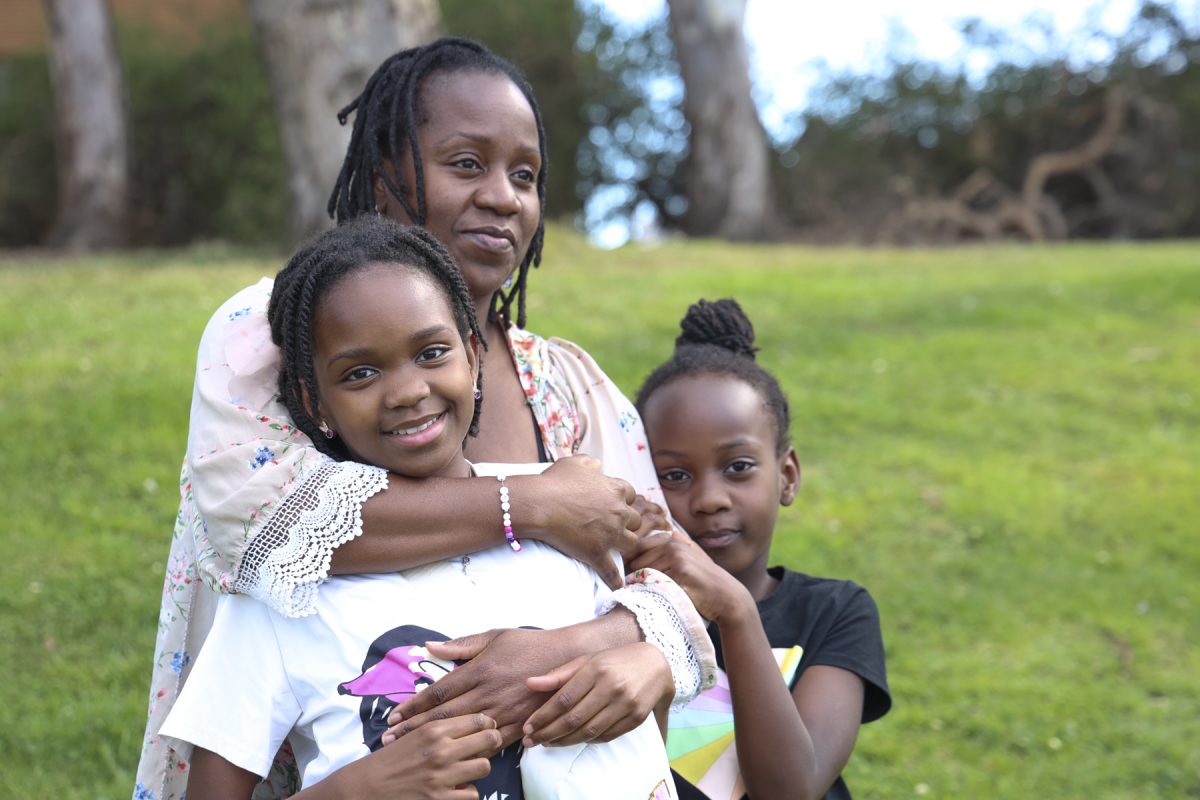
Mothers are often expected to take care of everyone, but when they begin to struggle, that expectation doesn’t always come with support.
Francia Telesford created a business to change that.
Telesford, 41, is a Los Angeles-based medical social worker, certified maternal mental health specialist and lactation counselor with 20 years of experience across nonprofits, hospitals, government agencies and private practice.
Now, she brings this experience into community spaces across Los Angeles County, including El Camino College gatherings such as the Black History Flea Market, Taste of Soul, Business Exposition and more.
She is the founder of Gracelamp Wellness, which offers self-care resources, wellness products and support groups designed for mothers to be heard, feel seen, supported and connected.
Her business’s name is deeply personal, being inspired by her daughters’ first names — her oldest child’s name meaning “Lamp of the lord” and her second born’s meaning “God’s grace.”
The meaning doesn’t just live within the name.
It shows up in how she creates a welcoming space for others.
Standing behind a wooden table, Telesford greets visitors with a calm, steady demeanor.
Her posture relaxed, her hands are open as she speaks with an ease that invites conversation.

A fluffy pink rug stretches across the ground in front of her display, where neatly arranged flyers sit alongside wooden scent sticks and jars of body butters and oils.
One small ray from the sun hits directly through the glass window in the roof, shining on her Jamaican-raised, brown skin.
It brightens her colorful shawl with hues of orange, blue and black. The splashes of pink from her shawl, echo her bracelet and earrings tucked beneath thick black locs that frame her face and graze her shoulders.
Likewise, Telesford’s visibility shines through to the regional and statewide level.
Through pitch competitions, media recognition and community partnerships, her work continues to expand. Recently, she was named an Unsung Excellence finalist and received funding support from the Black Business Association to grow her business.
She has also been celebrated by local municipalities and the California Senate with certificates of recognition.
These achievements, however, sprouted from something deeper.
Born in St. Ann’s Bay, Jamaica, and raised in Los Angeles since age 4, Telesford grew up seeing migration and sacrifice early on.
Her parents built their lives through trades. Her mother was a nurse and her father a mechanic. Both went without access to higher education because in Jamaica, higher education stops being free after middle school.
“I remember my dad would say, ‘We came to America for a better life,” she said.
After her parents separated when she was 10, Telesford took on added responsibilities, which often meant helping care for her younger sister.
During periods of instability, including homelessness and her mother’s gambling addiction, she experienced what she described as “parentification,” when a child takes on caregiving responsiblities typically held by a parent.
While she still considers her childhood positive in many ways, she developed a desire to understand trauma and human behavior better.
At Redlands High School, about 60 miles east of Los Angeles, she took a psychology class that shifted her perspective and made her want to understand people and her childhood.
That curiosity led her to study psychology at the University of California, Los Angeles, where she received her bachelor’s with a minor in French, followed by a master’s in social work with a Children and Families concentration from the University of Southern California, where she worked as a financial aid counselor.
Her early career out of college focused on children and families in crisis. At United Friends of the Children, she supported foster youth transitioning into adulthood, helping them build independent living skills.
“Imagine the things your parents would normally teach you,” she said. “A lot of them didn’t have that.”
Later, she worked as a social worker for the Los Angeles County Department of Children and Family Services, where she managed up to 35 cases at a time, writing court reports that offered referrals for substance abuse and domestic violence for families.
Among her proudest moments at this job was the reunification of families.
She now works part-time at St. Mary’s Medical Center in Long Beach, supporting patients facing chronic illness and housing instability.
Across each of her roles, a common theme prevailed: people need support groups as basic stability can feel impossible without them.
“Social isolation puts you in a position where you’re not connected to the community,” Kimberly Gray, director of perinatal maternal health equity at Maternal Mental Health NOW , said. “It can limit your access to resources.”
At the Pasadena-based organization, Gray contributes to its mission of addressing mental health during the perinatal period.
Similar to the reasoning behind Gracelamp, Maternal Mental Health Now was founded in 2007 by Kimberly Wong due to her own experience with severe postpartum depression.
Despite years of professional experience, Telesford said nothing fully prepared her for motherhood.
“The idea that you have of motherhood before you became a mom is totally different,” she said.
After the birth of her first daughter in 2014, she struggled with the new adjustment.
Stopping work — something she had done since age 15 — felt foreign. As a child of immigrants and an immigrant herself, all she knew was work.
At times, her childhood trauma resurfaced: The lack of protection she felt as a child, the feeling that she didn’t have enough food and her fear of abandonment.
These feelings crept into her parenting.
“I had her and immediately just had this sense of like, ‘I just want to protect you. I need to be the one to protect you.’ I felt like I was failing even though I had a whole support system, part of me felt like I was abandoning my child,” she said.
Telesford experienced postpartum depression and anxiety.
“I would get really scared that I wasn’t doing a good job,” she said.
Some memories from that time feel like fragments. She recalls having photos she doesn’t remember capturing, that serves as reminders that she was present, even when it felt like she was moving through life on autopilot.
Experts say that experience is not uncommon and is often misunderstood and overlooked.
“Baby blues and mental health conditions are often misconstrued,” Gray said. “It can diminish what someone is experiencing.”
Karla Cardoza, Spanish language operations manager for Postpartum Support International, said that many mothers internalize the pressure to manage alone.
“They feel like I’m supposed to be doing this all on my own,” she said.
Founded in Santa Barbara in 1987, Postpartum Support International is an organization dedicated to increasing awareness about the emotional changes that women experience during pregnancy and postpartum.
The founding of PSI, along with activists during the time, were part of the reason postpartum awareness gained recognition in the 1980s, according to the University of Iowa.
The now-Oregon headquartered organization is also where Telesford received her certifications in perinatal mental health through online courses.
She also received her lactation certification online at the University of San Diego while she was pregnant.
Cynthia Cervantes, full-time child development professor and advisor of the Child Development Club at ECC, said that the effects can extend further beyond the mother.
“If the parent is not okay, they will not be able to provide as much as they would like for their child,” she said. “It’s important to have a village.”
For Telesford, those experiences became the foundation of Gracelamp Wellness.
With a focus on creating judgement-free spaces, she began Mommy Wellness Groups, which are gatherings held in parks, community spaces and online. These sessions include guided reflection, mindful practices and open conversation designed to reduce isolation.
At Charles H. Wilson Park in Torrance, she led one session on a Saturday afternoon.
Telesford’s floral, white-lace fringed shawl blows gently in the breeze as she guides a mother, a young boy and the mother’s mom on what Telesford calls a 10-minute mindful walk.
Around them, the park hums with life, birds chirping, couples walking by and children playing in the distance with the faint squeak of swings in the distance.
The purpose is for the child and mother to take in the surroundings around them together, be present and deepen their connection.
Afterward, the family and Telesford gather on pink, purple and blue yoga mats with heart-shaped pillows to match, arranged in a circle. Telesford sits at the center, leading a quiet meditation under the sun.
Gradually, the atmosphere shifts.
The mother begins to open up; her once tense posture softens and relaxes.
Within these groups, Telesford excels at providing a level of comfort for mothers to express themselves, not focused on outsiders, but on the one-on-one conversation being held.
Elizabeth Alvarez, a stay-at-home mother of a 3-year-old who now both reside in Ohio, agrees, having attended a Mommy Wellness Group session in person before moving.
Alvarez expressed that the surroundings immediately put her at ease.
The atmosphere felt “serene” from the moment she arrived. Soft music played in the background as she took in the setup — pillows arranged on chairs in a circle as calming, scented oils filled the air.
“Everything just envelopes you,” she said. “You feel like you don’t have any worries.”
Within the groups, shared moments from Alvarez and other mothers brought resonance, agreements that motherhood can often be portrayed as “more tangible” — the topic often being “fluffed up” and not emphasizing the struggles and hard times.
“It just immediately gives you that sense that you’re not alone,” Elizabeth Thomas, a peer support programs outreach manager at PSI, said. “There are other people who are going through the same thing.”
After Alvarez noticed how her body responded to the environment, the tension and tightness she once carried lightened even without her realizing it.
She said Telesford brought out “a new structure, where it’s okay to need to talk and have big feelings and the way we go about.”
“One of the biggest challenges in postpartum mental health is isolation, and peer support helps break that by creating safe, non-judgmental spaces for connection,” Thomas said.
And that, Telesford says, is where the healing begins.
“Sometimes you just need to hear that someone else is going through the same thing,” she said.
Support groups, experts say, are often one of the most accessible forms of support and help.
“Especially when someone may not be ready for clinical services,” Thomas said.
Beyond conversation, Gracelamp Wellness emphasizes self-care.
“I can’t take care of myself if no one makes room for me to take care of myself,” Gray said. “Self-care can’t be done in isolation.”
For Telesford, this philosophy is personal as she offers curated wellness boxes.
To Cardoza, self-care creates “a path of wellness, to manage different stressors and feel grounded,” she said.
Gracelamp Wellness boxes include affirmation journals, handmade vegan body butters, oils, soap and a sisal soap scrubber and a soap savor for $55.99 online.
Each product reflects care, culture and intention.
Scents are inspired by her Jamaican roots like Sweet Lady Apple and Magnolia Jasmine. Others, like Tropical Trio and Passionfruit Peach, were helped named by her daughters and husband and are personal favorites.
“My favorite scent that my mom makes is Sweet Lady. She is good at taking care of moms,” her oldest daughter said.
Her youngest said her favorite scent is Coconut Crush. These body butters and oils are sold for $29.99 each.
Telesford highlights her husband, Chrisbert Telesford, who she has been together with since October 2010, as a major part of her support group during her postpartum times and continues to be after and for her business.
“Strawberry shortcake on my wife [is my favorite scent]. I lovethat Gracelamp Wellness has awesome products and services that help support women of all ages,” he said.
Outside of her wellness work, Telesford finds her sense of grounding in time spent with her husband and two daughters, leaning on those moments at home.
Dance parties in the living room, watching sci-fi shows, attending her daughter’s cheer competitions, or simply stepping away from the stress and demands of work to rest and reset.
Those moments, she said, are what keep her centered as she balances motherhood, social work and running Gracelamp Wellness, remaining intentional to protect time for herself and her family.
Looking ahead, Telesford hopes to expand Gracelamp Wellness beyond pop-ups and community events into a permanent space where mothers can easily and consistently gather to access mental health support and find resources all under one roof.
With a vision of a wellness hub that removes barriers mothers face when seeking help, her mission focuses on impact.
“I want moms to feel like they’re not alone,” she said. “Like what they’re feeling is real and it’s valid.
This story was originally published on El Camino College Union on May 19, 2026.