




![MORE THAN A GAME. With two diving catches in the outfield, the Lions showed up defensively, aiding in their victory over the Pacers. One catch was made by Atwood, and the other by McGraw. Throughout the game, the Lions knew that it wasn’t just about their victory today. “I think [playing for cancer] makes it bigger than just a game,” McGraw said. “Knowing that you have a bigger impact in this world than just who you are as one person.”](https://bestofsno.com/wp-content/uploads/2026/05/I70A1454-1-1200x800.jpg)


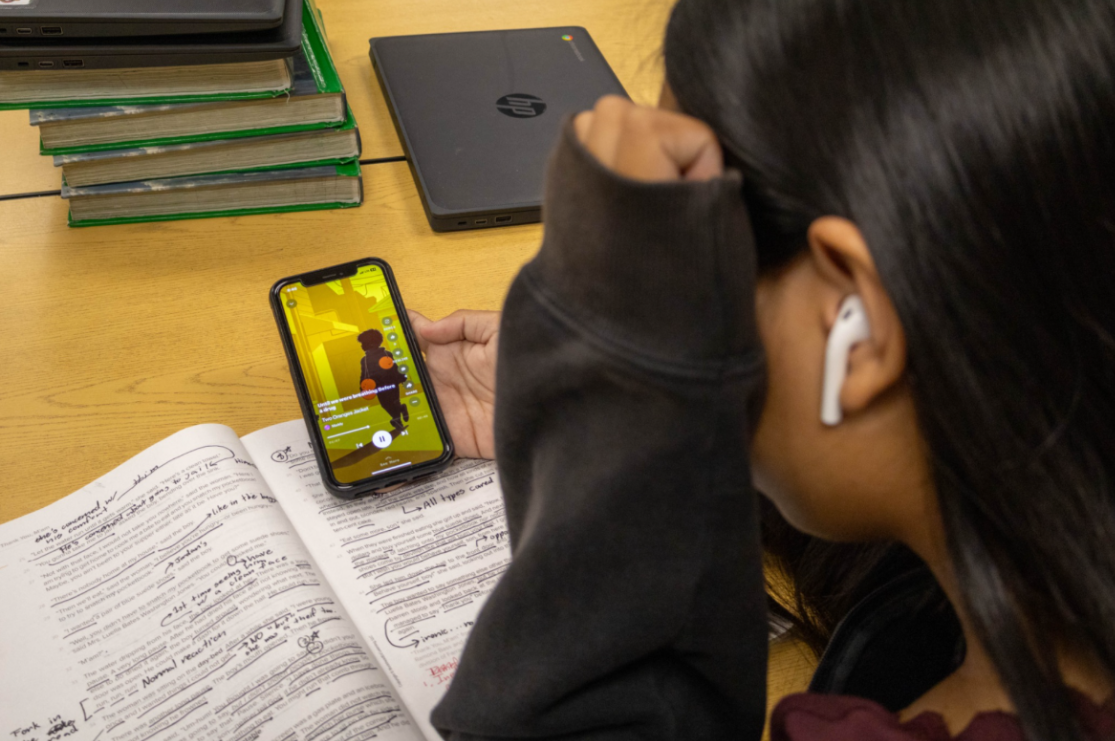
On a late Tuesday night, the words of “Oranges” by Gary Soto play through a student’s headphones as she crams for an ELA final. Normally, studying means rereading annotations, flipping through pages of notes, and hoping enough repetition will make the poem stick. But this time, Soto’s words have been transformed into a song. The chorus is catchy, the beat is stuck in her head, and somehow, the lines are easier to remember. What once felt exhausting suddenly feels entertaining.
That possibility is what makes Suno so intriguing. Suno is an AI music generator capable of creating a full song in seconds from a simple prompt and a chosen genre. Students can turn vocabulary words into pop lyrics, science notes into rap verses, or emotional journal entries into music.
“I listen to music when I’m stressed because it helps my mind wander so I can focus again,” said Claire S. “If I was able to put my notes into a song, I think it would help me study better because I’d be able to memorize it like I do with songs on the radio. Music would be a much more fun way of studying than flash cards.”
Day Creek band teacher Ms. Miller agrees that music can help students focus and retain information. “I like chill lo-fi beats when I study, just something in the background to help you focus because it’s easy to get distracted,” Miller said.
Although Suno is mainly known as an entertainment platform, turning school material into songs can make studying feel less like a chore and more like something students actually look forward to.
The idea also raises a bigger question: what if studying became something students wanted to replay? What if a student-created song spread beyond one pair of headphones?
Imagine a student dropping a history rap into a group chat before class, only for the chorus to echo through the hallways by lunchtime. In middle school, trends spread quickly. Students already share playlists, memes, and videos daily, so sharing a song designed to help memorize notes would not feel out of place. Music naturally sticks in people’s heads, potentially turning group studying into something both productive and enjoyable.
“When you work together, it helps because you speak the same way and are able to share ideas differently than your teacher might,” seventh grade teacher Mrs. Mares said, encouraging the idea of using music apps to prepare for class.
That sense of collaboration is already a major part of music education. Whether students are rehearsing together in a band room or sharing study songs with friends, music often becomes a shared experience rather than an individual task.
Beyond collaboration, AI-generated music could also give students a new way to express themselves academically. Some students do not see themselves as artistic, while others dislike public speaking or struggle to connect with traditional assignments. Tools like Suno may remove some of the pressure of needing to feel “good enough” to create something meaningful. History summaries could become songs, poetry could be transformed into music, and presentations backed by AI-generated soundtracks might encourage more students to share their ideas.
Ms. Miller sees creativity as something deeply personal. “In band, we have students who perform all sorts of pieces and they get to express that piece through their interpretation of it. Or we have kids who compose their own music and get to show their own composition style. Some just take in what we learn and make it something of theirs too and they have a way to interpret it themselves,” Miller said.
Her perspective suggests that music is about more than hitting the right notes. It allows students to take information and transform it into something uniquely their own.
Still, not everyone views AI-generated music positively. Some students question whether turning notes into songs would actually strengthen learning or simply make schoolwork easier to avoid. Others worry that another phone app could become more distracting than helpful.
“If an app could turn my notes into a song,” said Gianna L. “I probably wouldn’t use it because it seems kind of lame.”
“For me, turning my notes into a song wouldn’t help me memorize my work,” said Riyan K. “If I see it on paper, it’s easier for me to understand. If I listen to it, I’d have to hear it a lot to memorize it.”
Riyan’s perspective highlights an important distinction: memorization is not the same as understanding. While AI-generated music may help some students recall information more quickly, true learning requires students to explain ideas, make connections, and apply concepts in new situations.
“Memorizing is more short-term,” Mares said. “Understanding means you can explain it, draw it, and think of your own examples.”
Technology also has limits, especially when it comes to creativity.
“AI generated music can’t be that creative,” Mares said. “You need composers that know what to do and how to resolve things. There is AI music that is okay, but you can never really replace composers or in person musicians. You can’t replace human band directors to do what we do, you can’t replace teachers with AI.”
Her comments reflect a common concern surrounding AI. While the technology can produce impressive results, it cannot replace the creativity, emotion and personal connection human teachers and musicians bring to their work.
The concern extends beyond music. AI tools are increasingly capable of generating essays, artwork, and now full songs in seconds. Used thoughtfully, these tools could help students engage with material in new ways. Used carelessly, they could become shortcuts that replace the critical thinking school is meant to build.
“I think all tools, even cell phones, are great tools if you use them correctly,” Mares said. “AI can open up another thought process and help create a deeper meaning to what you’re learning.”
Even with her skepticism toward AI, Ms. Miller still believes creativity can be accessible to everyone. “Honestly, there’s ways anybody can create music,” Miller said.
Whether through tapping pens on a table to make beats or experimenting with random sounds and melodies, music has rarely been limited to one method of creation. Tools like Suno may not replace human originality, but they could make creativity feel more achievable for students who might not otherwise explore it.
At the same time, Ms. Miller believes students should not lose sight of the value of in-person learning. “I think we still need to move away from technology, and do more in-person education,” Miller said.
Even so, AI shows no signs of slowing down. Tools like Suno may eventually become a normal part of student life. Music could evolve from background noise during study sessions into part of the studying itself. Instead of searching for songs that vaguely match their emotions or experiences, students may one day create music that feels entirely their own.
Whether AI-generated music becomes a serious academic tool or remains a creative novelty, it offers a glimpse into a future where learning is more personal, interactive, and perhaps a little more memorable.
Unfamiliar with Suno? Here’s a track the Howl created to give you an idea of how to use the app.
This story was originally published on The Day Creek Howl on May 19, 2026.