





![MORE THAN A GAME. With two diving catches in the outfield, the Lions showed up defensively, aiding in their victory over the Pacers. One catch was made by Atwood, and the other by McGraw. Throughout the game, the Lions knew that it wasn’t just about their victory today. “I think [playing for cancer] makes it bigger than just a game,” McGraw said. “Knowing that you have a bigger impact in this world than just who you are as one person.”](https://bestofsno.com/wp-content/uploads/2026/05/I70A1454-1-1200x800.jpg)


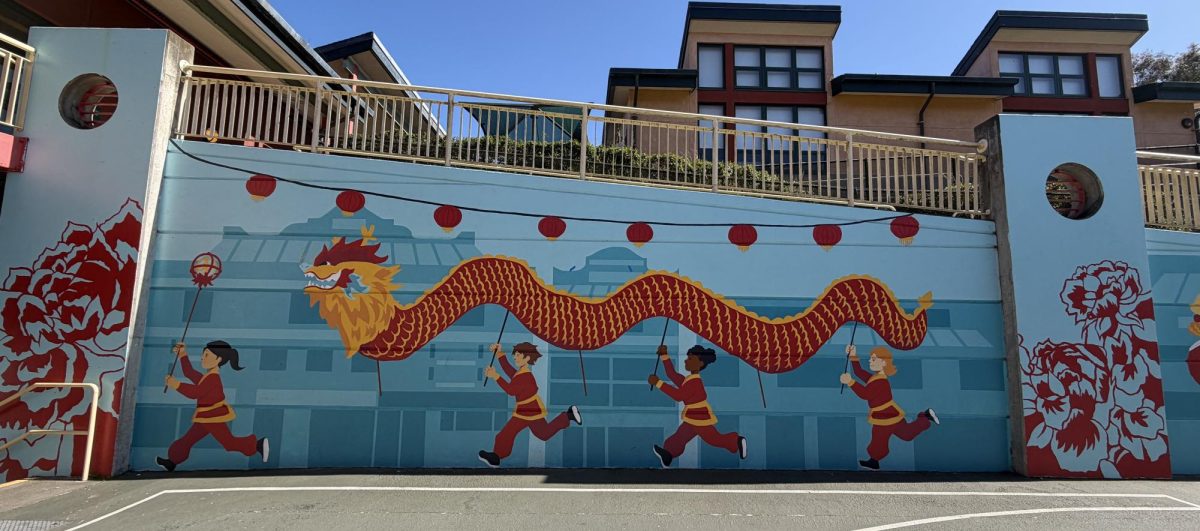
One of the handful of cities in America with a significant Chinese population, San Francisco has historically been home to a large Cantonese-speaking community.
San Francisco has the second largest Cantonese-speaking population in the U.S. While the city’s Chinese communities have advocated for and implemented more Cantonese classes in K-8 education, the language isn’t being taught at undergraduate and graduate levels.
Over 75% of Chinese speakers within the San Francisco Unified School District use Cantonese at home, according to the district. The U.S. Census Bureau’s San Francisco language diversity data shows that out of 139,427 people who speak Chinese, 81,451 of them are people with limited English proficiency.
In a 2026 Language Access Compliance Summary report from the Office of Civic Engagement and Immigrant Affairs in fiscal year 2024-2025, city departments saw 517,643 LEP client interactions in Cantonese, an increase of 42% compared to the previous fiscal year and 41% increase from the five-year average.
The reports evaluate San Francisco’s compliance with the Language Access Ordinance. Recent reports on San Francisco’s LEP population demonstrate a high need for Cantonese language in the workforce, community and other public services. It raises questions on why a widely-spoken language in San Francisco is not taught at the city’s colleges and universities.
Sandra Zhao has been a Cantonese bilingual teacher at Alice Fong Yu Alternative School for 16 years, stepping up into the role of assistant principal this year. AFYAS is the nation’s first Chinese immersion K-8 public school.
“There was no state-issued Chinese curriculum that was in Cantonese,” Zhao said. “All materials were curated by teachers that worked at this school, all done by hand.”
The program revolves around teaching various subjects like math, science and social studies in Cantonese.
“Most of the day is taught in Cantonese, teaching content in Cantonese specifically. From kindergarten to third grade, 85% of the day is taught in Cantonese,” Zhao said. “We only have a dedicated time block of one and a half hours for English time.”
The San Francisco Unified School District later adopted MeiZhou HuaYu (美洲華語), a curriculum from Taiwan. Zhao said there is only one person who acts as the liaison between SFUSD and the rest of the city’s Cantonese bilingual teachers.
AFYAS still had to cut an 8th grade Cantonese class from their six-period day. A few years ago, the school district realigned middle school start and end times. According to Zhao, the entire district now has three start or end times instead of the previous 21, and because of the realignment, they had to cut a period.
“We ultimately decided that it was going to be Cantonese,” Zhao said. “Not because we don’t believe that Cantonese is very useful, and we should retain it, it’s because there’s no higher education track for it. In high school, there’s no Cantonese class right now. And then in college, I haven’t really seen it.”
As of this academic year, there is no high school Cantonese program within the SFUSD.
San Francisco State University used to have a Chinese Flagship Program funded by the U.S. federal government and a Confucius Institute sponsorship from China, both of which were closed following threats of slashing federal funding at universities.
According to Yang Xiao-Desai, a professor in Chinese in the department of modern languages and literature at SFSU, the federal government required American universities to close their campuses’ Confucius Institutes or have federal funding withdrawn during President Donald Trump’s first term.
“The U.S. government really had a hostile or negative view of the Confucius Institute because they think they serve as a propaganda agency for the Chinese government in American higher education,” Xiao-Desai said. “That became the narrative, and that really is published by Republican senators, particularly Ted Cruz and Marco Rubio. So there was a nationwide movement to close all the Confucius Institutes.”
Without the Confucius Institute or Chinese Flagship Program at SFSU, the university lags behind in Chinese language, culture and immersion programs. That education is not carried on from K-8 levels to higher education.
Gevenieve Leung, program director in Asian Pacific American Studies at the University of San Francisco, said that another challenge with Cantonese education is with the dual language immersion model.
“The pipeline issue, from grade 6 through 8 or high school, the curriculum is different. There’s other pressures of standardized tests,” Leung said. “From the comments from some of the students that 4th and 5th graders we’ve talked to who’ve gone through DLI and we ask them, do you want to, you know, continue with it? And they say, ‘Well, it’s really hard to learn science in Cantonese. We’re not actually going to be tested in science in Cantonese moving forward, so what’s the value of it?’”
Xiao-Desai spoke about the challenges in attaining bilingual authorization to teach higher education as compared to early education.
“A multiple-subject credential teacher can get a bilingual authorization to teach elementary school students in mathematics, music, any other subject,” Xiao-Desai said. But in higher education where professors teach a specialty or concentration, an additional bilingual credential is harder to obtain.
Frederik Green, professor of Chinese in SFSU’s department of modern languages and literatures and former academic advisor of the university’s Chinese Flagship Program, said the university’s Chinese program is still “going strong” with a new way to get teaching credentials in Chinese. In an effort to open up a pathway for obtaining those credentials, SFSU’s Chinese program will be partnering with the Graduate College of Education for a newly approved Chinese Integrated Teacher Education Program major.
“It’s a joint major with the school of education to train the next generation of Chinese teachers and simultaneously provides a teaching credential,” Green said. “We suspended the Chinese Flagship track and redirected it as Chinese ITEP. It’s aimed at students who already speak Mandarin, but it would also work if you’re a Cantonese speaker.”
The program will be centered around a Mandarin curriculum and not Cantonese, similarly to most higher education Chinese programs. City College of San Francisco’s Certificate of Cantonese is an outlier.
In 2022, CCSF’s Board of Trustees passed resolutions for creating two new Cantonese certificates: a nine-unit in conversational Chinese and a 16-unit comprehensive certificate, but the latter was killed early on due to a lack of grammar classes, according to the San Francisco Standard.
CCSF also faces a lack of courses and faculty. In 2023, the school posted a job listing for a part-time Cantonese lecturer, but failed to find a qualified candidate.
Nam Kue Chinese School is a private Chinese school with after-regular-school and weekend programs teaching Chinese culture, history and language. In the early 2000s, their curriculum was Cantonese focused, but swapped to only Mandarin. Bing Lok Choi, the current principal of Nam Kue, said that Mandarin became the main language in schools in China and Taiwan.
“For the students… having to study in America, will use Mandarin,” Choi said. “But in the family environment, social environment, are all Cantonese. So even if you don’t learn at a Cantonese speaking school, you can still grasp the language.”
Choi said that 90% of Chinese people in San Francisco came from Guangdong, a Cantonese-speaking region in Southern China, and that Mandarin-speaking immigrants have increased.
“Right now, there are still Hong Kongers, people in Chinatown, however it is really limited in people speaking Cantonese,” Choi said.

Still, San Francisco fights to sustain Cantonese culture and language. Zhao said she’s at the epicenter of various academic and community efforts.
“People globally that are trying to make sure this language continues to live on,” Zhao said. “Yes, a fading language in the global sense, but I don’t know if it’s because I’m in all of those things that I feel like there is some traction going to making sure that this language is maintained and sustained.”
Despite the fragile academic pipeline, there has been a rise in more efforts outside of academia to preserve Cantonese language and culture, from pop culture to social media videos.
One of Leung’s recent research was on karaoke as a medium for language learning. In the study, she asked Cantonese learners what they like to sing at karaoke, and many people who didn’t take Cantonese lessons loved to sing Jackie Chan songs. Leung said that karaoke-goers would make their “own version of pinyin” by listening over and over to memorize the lyrics.
Pinyin is the official standard system for romanizing and transliterating Chinese. Cantonese uses “jyutping,” using both Latin letters to spell out sounds and serving as a phonetic guide for pronunciation. While Pinyin uses marks above letters, jyutping uses numbers to indicate tones.
“Cantonese in the confines of karaoke and our homes is a way to measure the robustness, the vitality of Cantonese, and pushes back on the discourse of ‘is Cantonese dying?’” Leung said.
Leung’s perspective on the future of Cantonese education is that it is still thriving.
“Anywhere Cantonese is spoken and used, ways people are using it to communicate effectively in those spaces, it’s thriving and continues to thrive,” Leung said. “If you want to learn, you could learn… no amount of top-down policy stuff can affect your language if the community keeps producing stuff.”
This story was originally published on GoldenGateXpress on May 21, 2026.